
Your mental game in pickleball determines whether you win or lose. By focusing on what you can control, you'll stop wasting energy on things outside your influence.
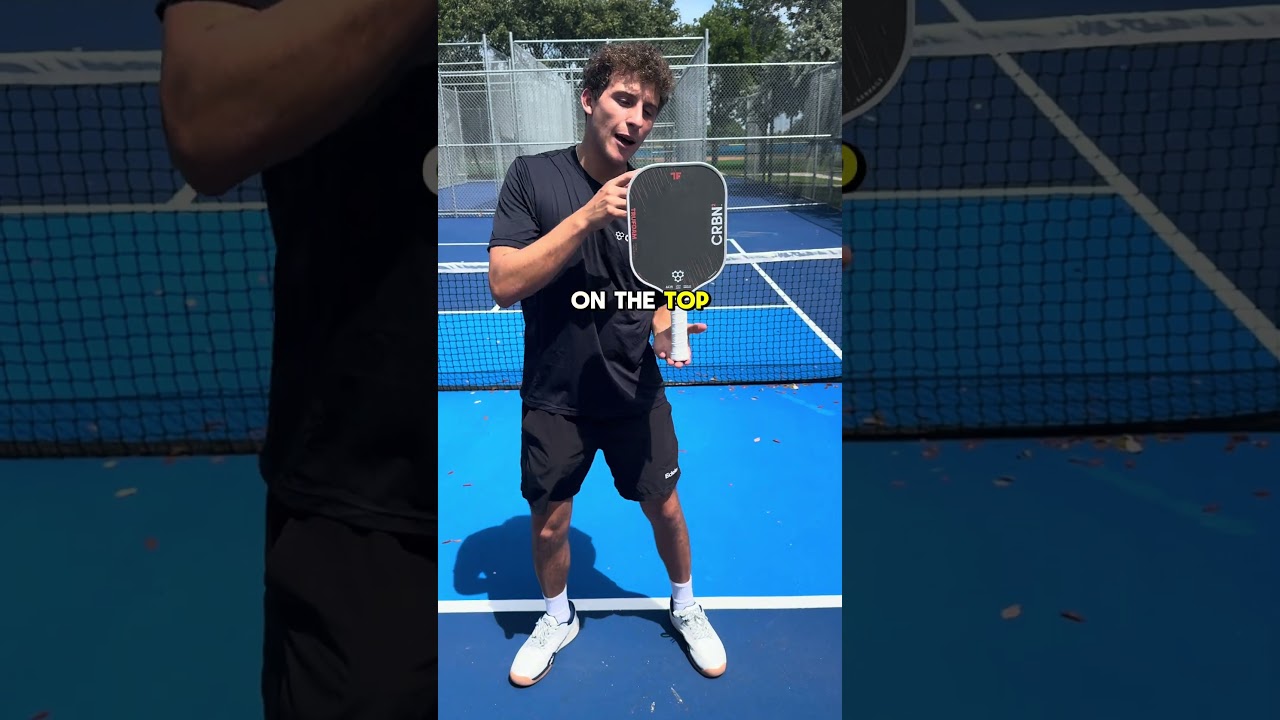
Here's where top APP pro and coach Tanner Tomassi's teaching gets creative. He demonstrates the power of focus using a simple paddle balance trick.
When he focuses on the tip of the paddle, he can balance it with ease. The paddle stays steady. His control is complete.
Then he shifts his focus to the bottom of the paddle. Suddenly, the same paddle becomes impossible to balance. It wobbles. It falls.
Nothing changes about the paddle itself, only where his attention goes.
This isn't just a neat party trick. It's a metaphor for your mental game in pickleball.
When you focus on the tip of the paddle, you're focusing on what you can control: your partnership, your mental state, your confidence, your shot selection, your positioning.
These are the controllables. When you focus on the bottom, you're focusing on the wind, the ball, the net cords, your opponent's skill level, the court conditions. These are the uncontrollables.
Love pickleball? Then you'll love our free newsletter. We send the latest news, tips, and highlights for free each week.
Why Your Thoughts Determine Your Match Outcome
Here's the thing about pickleball: your thoughts are so powerful they literally determine the outcome of your match.
This isn't motivational fluff. This is neuroscience meeting sport psychology.
When you're standing at the net and you start thinking about the wind, the sun in your eyes, or whether your opponent is better than you, you're dividing your mental resources.
You're burning energy on things you have zero control over.
Meanwhile, your actual game suffers because you're not fully present.
Tanner's core insight is that if you're focusing on things you don't have a say in, you're just wasting your energy.
Every ounce of mental effort spent worrying about uncontrollables is energy not spent on executing your shots, reading your opponent, or staying confident.
The best players in pickleball, whether they realize it or not, have mastered this mental discipline. They've learned to redirect their focus toward the controllables.
What Actually Falls Under "Controllables" in Pickleball?
Let's get specific. When Tanner talks about focusing on controllables, he's talking about things like:
- Your effort level on every single point
- Your communication with your partner
- Your shot selection and court positioning
- Your emotional response to mistakes
- Your breathing and composure between points
- Your willingness to adjust your strategy mid-match
- Your confidence in your abilities
These are the levers you can pull. These are the things that separate winning players from losing players at the same skill level.
Notice what's not on that list: your opponent's skill, the weather, the court surface, the net cord that bounces the wrong way, the line call you disagree with.
You can't control any of that. So why spend mental energy on it?
The Uncontrollables That Steal Your Focus
On the flip side, here are the things that will absolutely destroy your mental game in pickleball if you let them:
- The wind direction and speed
- The sun position and glare
- Your opponent's power or consistency
- Bad bounces and net cords
- Questionable line calls
- The crowd noise or distractions
- Your partner's mistakes
- The court conditions
Every single one of these will happen during your matches. Some of them will happen multiple times per match.
The question isn't whether you'll face uncontrollables. The question is whether you'll waste mental energy on them.
 The Dink Media Team
How to Retrain Your Focus During Matches
So how do you actually apply this? How do you train yourself to focus on controllables when your brain naturally wants to blame external factors?
Start by becoming aware of where your focus goes. During your next match, notice when you're thinking about the wind or your opponent's skill.
Notice when you're frustrated about a net cord. That awareness is the first step.Then, consciously redirect.
Alex E. Weaver
After a point ends, take a breath and ask yourself: "What did I control well on that point?" Maybe it was your positioning. Maybe it was your communication.
Maybe it was your decision to hit a third shot drop instead of attacking. Focus on that.
Over time, this becomes automatic. Your brain learns to filter out the noise and lock onto what matters.
This is where mental toughness in pickleball actually comes from.
It's not about being aggressive or fearless. It's about being disciplined with your attention.
The Dink Media Team
The Partnership Angle: Controlling What You Can Control Together
One thing Tanner emphasizes is that your partnership is a controllable.
You and your partner can control how you communicate, how you encourage each other, how you adjust your strategy together, and how you respond to adversity as a team.
This is huge. Because in doubles pickleball, your mental game isn't just individual. It's collective.
If one partner is spiraling about uncontrollables while the other is locked in on controllables, you're not operating as a unit.
The best doubles teams have synchronized mental discipline. They've both trained themselves to focus on what they can control.
They support each other when one person starts drifting toward the uncontrollables.
They celebrate the controllables they executed well, even if the outcome wasn't what they wanted.
The Dink Media Team
Confidence as a Controllable
Here's something that might surprise you: your confidence is a controllable.
You can't control whether you win the match, but you can control whether you believe in yourself during the match.
This is where the mental game in pickleball gets really interesting. Because confidence isn't something that just happens to you.
It's something you build through deliberate practice, through focusing on what you did well, through trusting your training, and through refusing to let external factors shake you.
When you step on the court, you can't control your opponent's level.
But you can control your belief that you've prepared well and that you're going to execute your game plan.
That belief, that confidence, is entirely within your control.
The Dink Media Team
The Bigger Picture: Why This Matters Beyond Pickleball
Tanner's lesson about focusing on controllables isn't just pickleball wisdom. It's life wisdom.
It's the same principle that sports psychologists teach to elite athletes across every sport. It's the same principle that therapists teach to people dealing with anxiety.
The human brain is wired to worry about things outside our control. It's an evolutionary hangover.
But in modern life, and especially in competitive sports, that wiring works against us.
By training your mental game in pickleball, you're actually training a skill that transfers to everything else.
You're learning to be more present, more focused, and more resilient. You're learning to direct your energy toward things that matter.
Frequently Asked Questions
What does "controllables" mean in pickleball?
Controllables are the aspects of your game and mindset that you have direct influence over, such as your effort, shot selection, communication with your partner, and emotional response to mistakes. Uncontrollables are external factors like weather, opponent skill, and net cords that you cannot change.
How can I improve my mental game in pickleball?
Start by becoming aware of where your focus goes during matches. When you notice yourself thinking about uncontrollables, consciously redirect your attention to what you can control. Practice this awareness repeatedly until it becomes automatic. Over time, your mental discipline will strengthen.
Does mental toughness matter more than skill in pickleball?
Both matter, but at higher levels of play, mental toughness often separates winners from losers. Two players with similar technical skills will have very different results if one has superior mental discipline and focus. Your mental game in pickleball can be the deciding factor.
How do I stay confident when my opponent is playing better than me?
Confidence comes from focusing on what you can control: your effort, your strategy, your communication, and your execution. Even if your opponent is more skilled, you can control how hard you try, how smart you play, and how you respond to adversity. That's where real confidence lives.
Can I improve my mental game without changing my physical game?
Yes. Many players have untapped potential simply because they're not mentally disciplined. By training your focus and redirecting your energy toward controllables, you can immediately improve your results without changing your technique or fitness level.
Love Pickleball? Join 100k+ readers for free weekly tips, news & gear deals.
Subscribe to The Dink