
Pickleball Knee Injuries: What They Look Like and How to Choose the Right Support
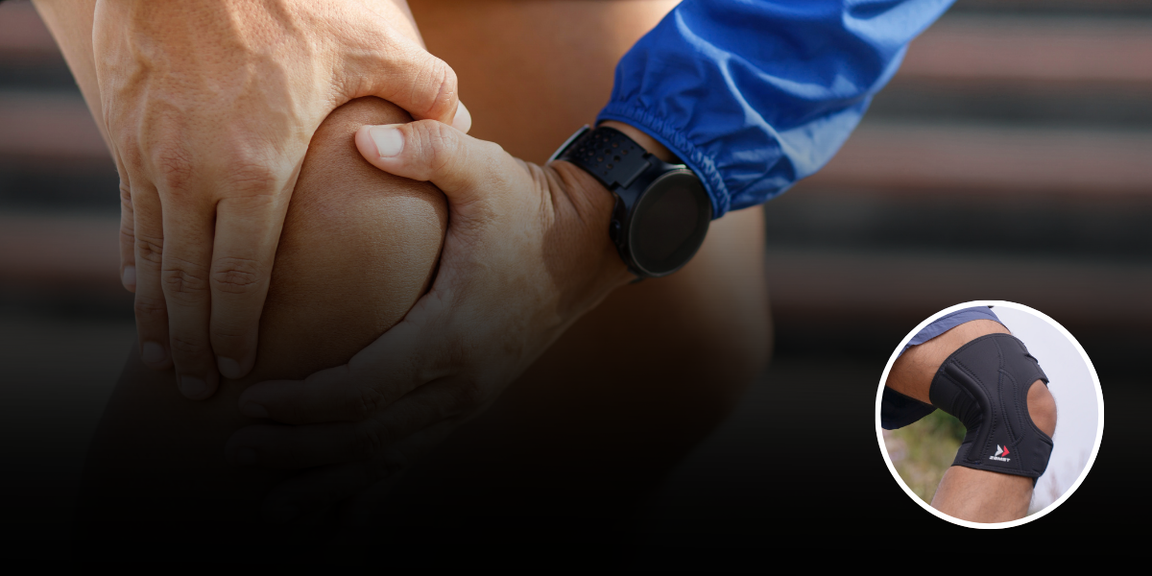
You drop into a dink, push off, and feel it: an ache below the kneecap that was not there last week. Pickleball knee injuries rarely begin with a dramatic moment. More often they start with a twinge you ignore for three more games.
A quick note: this is general information, not medical advice. If something feels off in your knee, see a doctor or physical therapist.
Why Do Knee Injuries Happen in Pickleball?
Knee injuries happen in pickleball because the court is small, so nearly every movement is a quick burst followed by a hard stop, and your knees absorb much of that force.
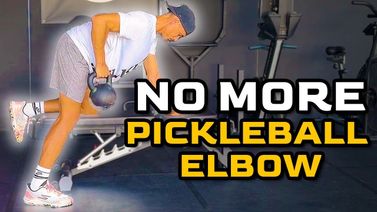
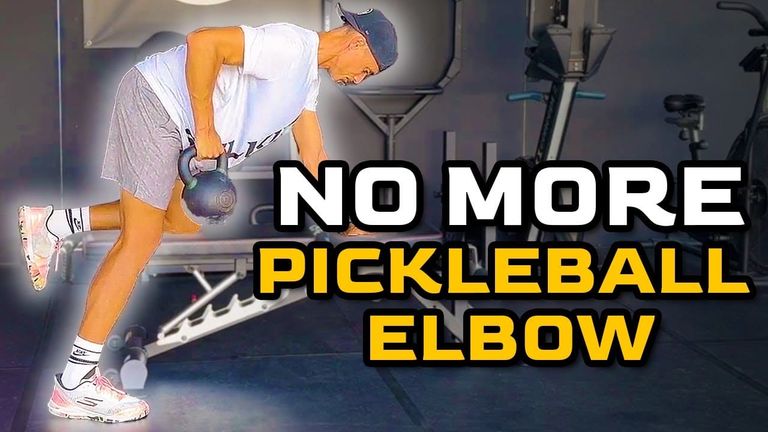
The way Connor Derrickson, That Pickleball Trainer on YouTube, puts it: pickleball is a deceleration sport, not a speed sport.
This pattern repeats all match long: move, brake, move, brake. When your muscles cannot absorb the force of stopping, more of that force can shift to your joints instead, such as your knees and back.
Left unchecked, that load can show up as tendinitis and nagging pain around the joint.
Think about a normal session. You split step, lunge for a dink, push off to cover the middle, then drop into a deep stance again and again for two hours, often on a hard court.
Derrickson's framing is simple: the pain is not random. It is often a signal that load has outpaced capacity.
Key Takeaways from Connor Derrickson (That Pickleball Trainer):
- Pickleball is a deceleration sport. Knee pain can mean the load from repeated lunges and hard stops has outpaced what your muscles and tendons can handle.
- Sharp or lingering pain below the kneecap is a sign to stop and reduce the load.
- Come back gradually: light conditioning first, then short court sessions, adding load only when the knee stays quiet.
- A brace can add compression or support but doesn’t treat an injury. Check with a doctor or physical therapist, then match the brace type to your knee and how you play.
What Are Common Pickleball Knee Injuries?
Derrickson’s guidance centers on tendon pain and general overload around the joint, which show up in three common ways.
Patellar tendinitis, as Derrickson describes it, is irritation of the tendon that connects your kneecap to your shinbone.
Tendinopathy is the broader term. It describes a tendon that has become overloaded and stops tolerating the work you ask of it, whether or not there is obvious inflammation.
What about ligament sprains and meniscus tears? Those are different injuries, and they fall outside the scope of this guide.
If you twisted your knee, landed awkwardly, or your knee swells or feels unstable, see a doctor or physical therapist.
When Should You Stop Playing With Knee Pain?
Derrickson's rule is blunt: if you are in pain or discomfort, you should not be training at that point.
He treats sharp or lingering pain below the kneecap as a hard stop, not a suggestion. Here is how to let pain guide you:
- Pain during a movement: stop that movement and reduce the load.
- Pain that lingers after a session: you may have done too much, so pull back next time.
- Pain that is gone and stays gone: you can slowly add load back in.
- Pain that returns when you add load: you may have moved too fast, so step back one level.
Playing through pain can keep the tendon irritated and lengthen recovery. A short break now often beats a long layoff later.
What Should You Do First When Your Knee Hurts?
Derrickson's starting point is to protect the joint: limit the load going through it, and do it immediately.
That doesn’t mean wrapping yourself in bubble wrap. It means reducing what the knee has to absorb until it can tolerate normal life again.
Here are his five moves for patellar tendinitis:
- Limit the load. Reduce total stress through the knee, whether that is weight, volume, or impact.
- Cut your training frequency. For example, if you lift three days a week, Derrickson suggests dropping to once or twice.
- Swap lifts for conditioning. Replace heavy sessions with lighter conditioning that spares the joint.
- Let it rest and heal. Give the tendon real time, not a day or two of token caution.
- Let pain guide your return. Come back based on how the knee feels, not on a calendar or your ego.
These are general guidelines, so your own doctor or physical therapist may adjust them for your knee.
At this point, many players ask: does a knee brace belong in the picture while the joint settles?
Do You Need a Knee Brace for Pickleball?
Not every pickleball player with knee pain needs one, and a knee brace is not a cure.
What a knee brace can do is add compression, stability, or support while you move.
Whether you want a knee brace for pain or extra stability, the right kind depends on what is going on in your knee and how much support you want.
It's recommended that you consult a doctor or physical therapist before choosing to wear a knee brace for pickleball. If support does make sense for you, the next step is knowing your options, starting with how the main types of knee braces differ.
What Are the Different Types of Knee Braces?
Knee braces differ less by brand than by design, and design decides two things: how much support you get and how much freedom of movement you give up. For a sport built on lunges, pivots, and quick stops, that trade-off matters.
Most braces fall into four types, from lightest to strongest.
- Low-profile / Compression. A low-profile knee brace or compression sleeve is a snug, flexible wrap around the whole knee. Something like the Filmista Knee adds light compression and a secure feel with very little bulk, which makes this the easiest type to wear for a full session.
- Strap and patella-support braces. Instead of covering the whole joint, these apply targeted pressure around the kneecap and the tendon just below it, using a strap or a patella pad. A strap like the JK Band is built for this, and this type comes up most often around patellar tendinitis, also known as jumper’s knee.
- Structured braces with stays. Stays and straps add side support while staying lower profile than a hinged design. Knitted versions like the ZK-Motion pair a compression knit with flexible resin stays, so the brace guides the knee through bending and straightening instead of locking it in place.
- Hinged braces. Hinges and side stabilizers, like those on the ZK-X, limit sideways and forward movement of the knee. They offer the most support and the least freedom, and they are designed with ligament injuries in mind. This is the type most worth running by a doctor or physical therapist before you buy.
For a broader breakdown, check out Zamst’s guide to knee brace types.
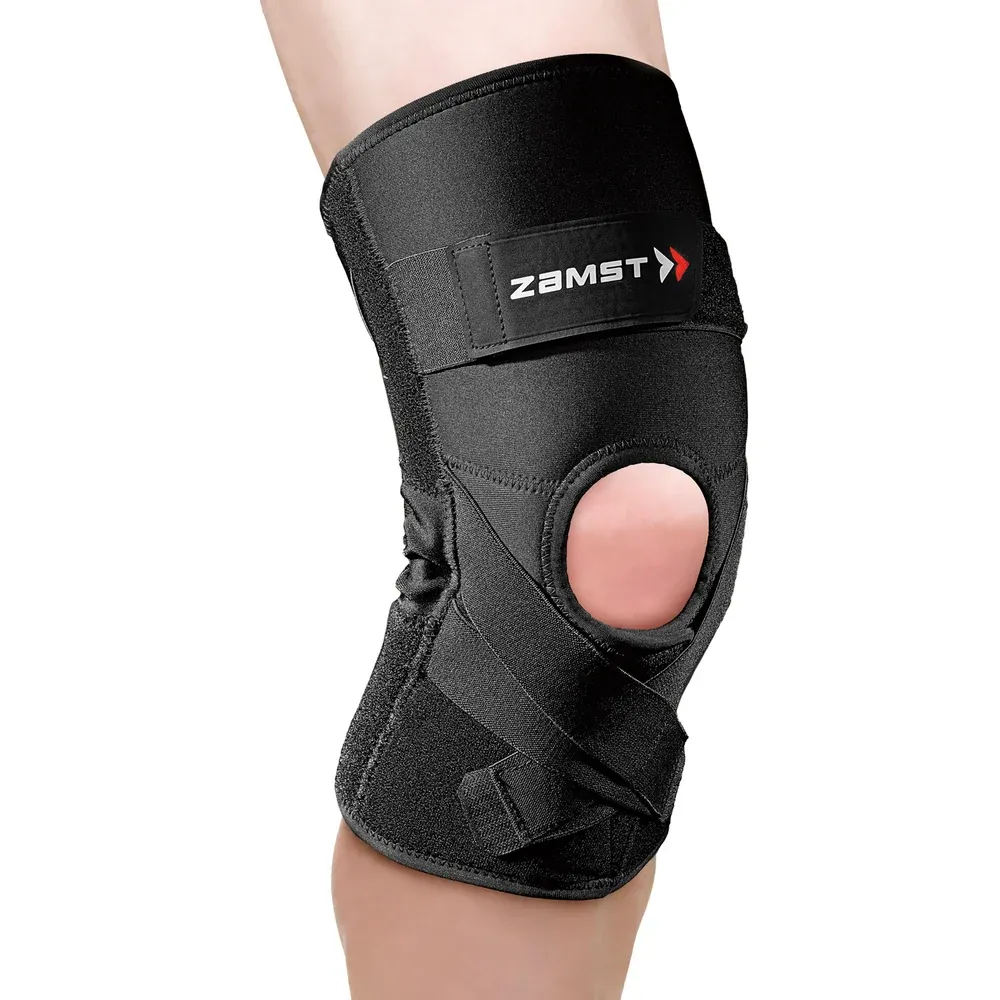
Zamst knee braces are trusted by professional athletes across a wide array of high-impact sports like tennis, pickleball, and volleyball.
The ZK-Protect adds resin stays that guide smooth bending and straightening while limiting excess side-to-side movement, and its Double X-Strap compresses the thigh and lower leg to help stabilize against forward movement.
What Features Matter in a Pickleball Knee Brace?
Beyond the type, a few design details decide how a brace feels on court. Zamst, which makes sport-specific knee supports, builds several of these details into its braces.
Let's take a look at what each design detail does.
- Resin stays. Flexible stays run along the sides of the knee to guide it through bending and straightening while limiting excess side-to-side movement.
- Patella pads. A pad that surrounds the kneecap adds compression and helps keep the kneecap stable as you move.
- Strap systems. Crossed straps, like the X-strap designs on Zamst's stronger braces, wrap the thigh and lower leg to help limit forward movement of the knee.
- Knit base layers. A breathable, quick-drying knit keeps a brace comfortable through long sessions. Zamst's knitted braces add antibacterial, deodorizing fabric.
- Anti-migration design. Grippy edges keep a brace from sliding down mid-lunge. Zamst uses nano-level fibers at the top and bottom of its braces for this.
Zamst also sorts its knee braces into four support levels, so these features scale with how much support you want.
How Do You Choose the Right Knee Brace for Pickleball?
Choosing a knee brace comes down to matching the level of support to what your knee needs and how you play. Start with five questions:
- What is going on in the knee? If you have a diagnosis, let it guide the type. If you do not, start with a doctor or physical therapist.
- How much support do you need? More support means less freedom. A slim sleeve moves with you, while a hinged brace limits movement on purpose.
- Can you still move like a pickleball player? Try the brace through a split step, lunge, and pivot, and notice whether it shifts mid-point or feels more restrictive than you expected. If something feels off, a doctor or physical therapist can help you adjust to find the right fit.
- Does it fit? Size and side matter. A loose brace slides, and a tight one is hard to tolerate through a two-hour session.
- Will you actually wear it? Comfort and breathability decide whether a brace makes it out of your bag.

Zamst’s Brace Finder is a helpful tool to narrow the field, and the knee brace collection filters by support level, size, and left or right knee.
How Do You Return to Pickleball After a Knee Flare-Up?
You build back gradually, adding load only after the knee tolerates your current level without pain.
Derrickson says the biggest mistake is jumping straight from rest back to your old schedule. That is how a nearly healed tendon can end up right back where it started. His progression once you are pain-free:
- Resume light conditioning that does not provoke the knee.
- Return to one lifting day with reduced loads.
- Add a second lifting day only if the knee stays quiet for about a week.
- Increase court time in short sessions before returning to long ones.
- Re-test your full schedule slowly, watching for any pain signal.
Timing varies from person to person, so we recommend working with your doctor or physical therapist to set the pace that's right for you.
If you choose to wear a brace on your return, treat it as an addition to that plan, not a replacement for it.
Frequently Asked Questions
How can I prevent knee injuries in pickleball?
Derrickson's approach centers on building the muscles around the joint and training your body to brake. Knee stretches after playing pickleball may also help.
Do I need a knee brace for pickleball?
A brace adds compression or support but does not diagnose or treat an injury. Zamst offers pickleball knee braces across four support levels, and a doctor or physical therapist can help you pick the right one.
What is the best knee brace for pickleball?
There isn’t one best knee brace for every player. The right pick depends on what’s going on in your knee, how much freedom of movement you need, and how much support you want. A low-profile sleeve like the Filmista Knee suits players who want light compression without bulk. A strap or patella-support design like the JK Band targets the area around the kneecap and is the type most often used for patellar tendinitis. Structured braces with stays, like the ZK-Motion, add side support while still letting the knee move. Hinged braces like the ZK-X give the most support and the least freedom, so they’re best saved for ligament concerns. A doctor or physical therapist can help you match the type to your knee.
Can I play pickleball with patellar tendinitis?
Derrickson's answer is maybe, but only if you can play without pain and only after you have reduced the overall load on your knee. Playing through sharp pain can keep the tendon irritated and can lengthen your recovery.
Is patellar tendinitis the same as tendinopathy?
They are closely related. Tendinitis implies inflammation, while tendinopathy is the broader term for a tendon that is overloaded and no longer handling the work you give it.
What knee brace is available for patellar tendinitis?
Strap and patella-support designs are the types most often made for patellar tendinitis, and Zamst offers several across its light and moderate support levels. Browse the full patellar tendinitis collection and talk with a healthcare professional about what fits your knee.


Love Pickleball? Join 100k+ readers for free weekly tips, news & gear deals.
Subscribe to The Dink