Doubles Stacking 101: The Fool-Proof Positioning Strategy That Wins Points
Stacking might be the single most underrated positional tool in doubles pickleball – and it's way simpler than you think
If you've been playing pickleball doubles for any length of time, you've probably heard someone mention "stacking" at the court.
Maybe it sounded complicated. Maybe it sounded like something only advanced players worry about. Here's the thing: stacking might be the single most underrated positional tool in doubles pickleball, and it's way simpler than you think.
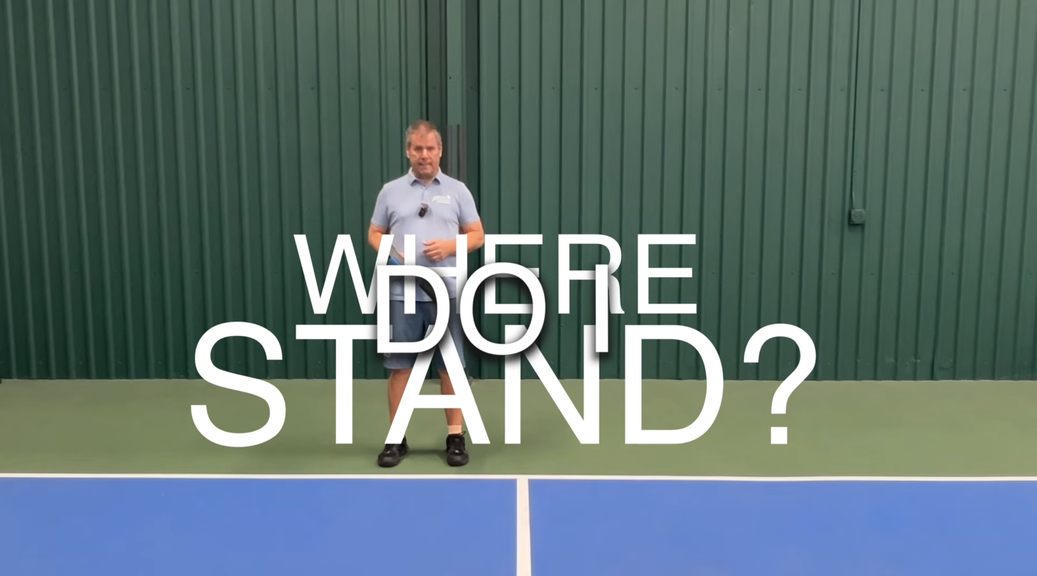
In a recent coaching video from Better Pickleball, Tony Roig breaks down exactly what stacking is, why it matters, and how to actually implement it without getting lost on the court.
The lesson is straightforward but powerful, and it addresses one of the biggest misconceptions about doubles positioning.
Love pickleball? Then you'll love our free newsletter. We send the latest news, tips, and highlights for free each week.
What Stacking Actually Is (And Why It Matters)
Let's start with the basics.
Most recreational players let the score dictate their positioning. If you're serving on an even score, you're on the right side. Odd score? You move to the left. It's simple, it's automatic, and it's also leaving points on the table.
Here's the reality: most doubles teams are stronger with one player on the right and the other on the left.
Maybe you've got a killer forehand and you're more comfortable on the right side. Maybe your partner is a lefty who dominates the left. Whatever the case, stacking lets you optimize your team's positioning for every single rally, not just the ones where the score happens to work in your favor.
 The Dink Media Team
The Confusion Problem (And How to Solve It)
Here's where most players get tripped up: they don't know where they're supposed to stand when they're stacking.
- The positioning feels weird
- The communication feels awkward
- So they abandon the whole idea.
Roig addresses this head-on with a simple framework that removes the guesswork. The key is this: whoever's serving has to go to their position anyway. That's your anchor point. You start from there and fill in the rest.
Let's say you're the even player (meaning you serve when the score is 0, 2, 4, 6, 8, 10, etc.).
- When the score is even, you serve from the right side, and your partner naturally positions on the left. No stacking needed.
- But when the score is odd, you move to the left to serve.
- Now, before you serve, you tell your partner: "We're stacking. Come over here."
- Your partner moves to your side, you serve, and then you slide over to your preferred position to play the rally.
That's the whole mechanism. Two questions to ask yourself:
- Am I in the right spot to serve from?
- Do we want to stack when I'm serving from this side?
Starting Simple (And Building From There)
Roig's advice is to start with stacking on the serve side only. Forget about return-side stacking for now. Get comfortable with the basic concept, understand the positioning, and build your confidence before you layer in additional complexity.
Stacking on serve is where you have the most control. You're the one initiating the point. You know where you want to be. You can communicate clearly with your partner. It's the perfect place to develop the habit.
Once you've got that down, you can explore reverse stacking, return-side stacking, and all the other variations. But mastering the fundamentals first is what separates players who actually use stacking from players who talk about it.
 The Dink Media Team
The Real Secret: Know Your Strengths
Before you even think about stacking, decide which side you and your partner want to play on.
This requires some honest self-assessment. Are you better on the right side? Does your partner dominate the left? If so, you've got your answer. You want to play mostly on the right, and your partner wants to play mostly on the left. Stacking becomes the tool that lets you do that consistently.
Heads up: hundreds of thousands of pickleballers read our free newsletter. Subscribe here for cutting edge strategy, insider news, pro analysis, the latest product innovations and more.
What if you both prefer the same side? Then you've got options.
- You can make a strategic decision to put one of you there and accept that the other player is playing a less comfortable position.
- Or you can just play the score and skip stacking altogether. There's no shame in that.
Stacking isn't mandatory; it's optional. But when it works for your team, it's powerful.
Why This Matters Beyond the Court
Stacking is really about one thing: control.
In pickleball, like in most sports, the teams that control the variables tend to win more points. Stacking lets you control your positioning instead of letting the score control it for you.
Too many players spend their time trying to fix their weaknesses when they could be amplifying their strengths. Stacking is a tool that lets you do that.
- If you're a right-side player, you get to be a right-side player more often
- If your partner is a left-side specialist, they get to specialize
Stacking isn't something you need to be a 5.0 player to understand. It's a straightforward positional tool that lets you optimize your team's placement on the court. Start on the serve side, keep it simple, and build from there.

Love Pickleball? Join 100k+ readers for free weekly tips, news & gear deals.
Subscribe to The Dink