

Even seasoned intermediate players get tripped up by obscure pickleball rules that aren't talked about enough. From serve momentum tricks to hidden kitchen faults, mastering these five rules will give you a competitive edge on the court.
Even seasoned intermediate players get tripped up by obscure pickleball rules that aren't talked about enough.
From serve momentum tricks to hidden kitchen faults, mastering these five rules will give you a competitive edge on the court.
The players who win consistently aren't just the ones with the best strokes. They're the ones who know the pickleball rules inside and out.
Love pickleball? Then you'll love our free newsletter. We send the latest news, tips, and highlights for free each week.
The Serve Momentum Trick Nobody Talks About
Here's what most players get wrong about the pickleball serve: they think both feet have to stay behind the baseline until after the ball leaves their paddle.
That's not actually true.
The real rule is simpler but more nuanced.
As long as just one of your two feet stays behind the baseline at the moment of contact, you can move into the court with your stroke.
This means you can legally walk into your serve.
Your forward momentum can carry you into the court as long as at least one foot is on the ground at the point of contact.
Coaches have noticed more and more advanced players using this to their advantage, gaining momentum on their serves that puts immediate pressure on their opponents.
Why does this matter? Because it changes how you think about serve placement and power. You're not locked in place.
It's a small obscure pickleball rule that opens up a completely different serving strategy.
If you want to put this into a complete system, check out this simple 4-step approach to winning more games in 2026.
What Happens After You Volley? The Pickleball Kitchen Still Counts
Here's an obscure pickleball rule that almost nobody knows: when you volley the ball, no part of you can touch the kitchen even after the shot is complete.
Not your paddle. Not your clothing. Not even your hat.
This sounds obvious until you see it happen in real matches. Players accidentally drop their paddle after hitting a volley, and it lands in the kitchen. That's a fault.
Someone's hat falls off during a rally and bounces into the pickleball kitchen. That's a fault too. The rule doesn't care if it was intentional.
It doesn't care if you were already committed to the shot.
If any part of you or your gear touches the kitchen after you volley, you lose the point.
This is one of those pickleball rules for doubles that trips up entire teams at the net.
The practical takeaway? Keep a firm grip on your paddle at all times.
Make sure your hat or any other accessory is secure before you step up to the net.
But here's a legal bailout that works: if you feel yourself falling into the kitchen, jump to the sideline.
You can catch your balance and maintain forward momentum without getting penalized.
It's a smart move that keeps you in the rally. Pair this awareness with the 12 drills you need to play your best pickleball in 2026 and your net game will tighten fast.
The Backspin Bounce-Back Rule That Wins Games
This obscure pickleball rule is wild, and it actually happens more often than you'd think.
If you hit a ball with a lot of height and backspin that barely clears the net, and that ball bounces and finds its way back over to your side, the other team is required to hit it. If they don't, you get the point.
But there's a nuance here that matters. If the ball spins back and hits the net post or metal bar, that's a redo. If it bounces back and just hits the net, it's not a redo.
The distinction is small but crucial. You need to be ready to hit that ball as it's moving back toward you, but don't hit the net first.
If it's going to cross back over the plane of the net, make sure you're the one hitting it.
This rule rewards creative shot-making and punishes lazy defense.
It's the kind of obscure pickleball rule that separates players who really know the game from those who just play it.
Understanding why professional pickleball players abandoned the slice shot in 2025 gives you even more context on how spin strategy is evolving at the highest level.
How Does the Backspin Rule Affect Your Shot Selection?
It directly expands your offensive toolkit. A well-placed backspin shot near the net can win you points without the opponent even swinging.
Once you know this rule exists, you start looking for opportunities to use it rather than just hoping it happens by accident.
 The Dink Media Team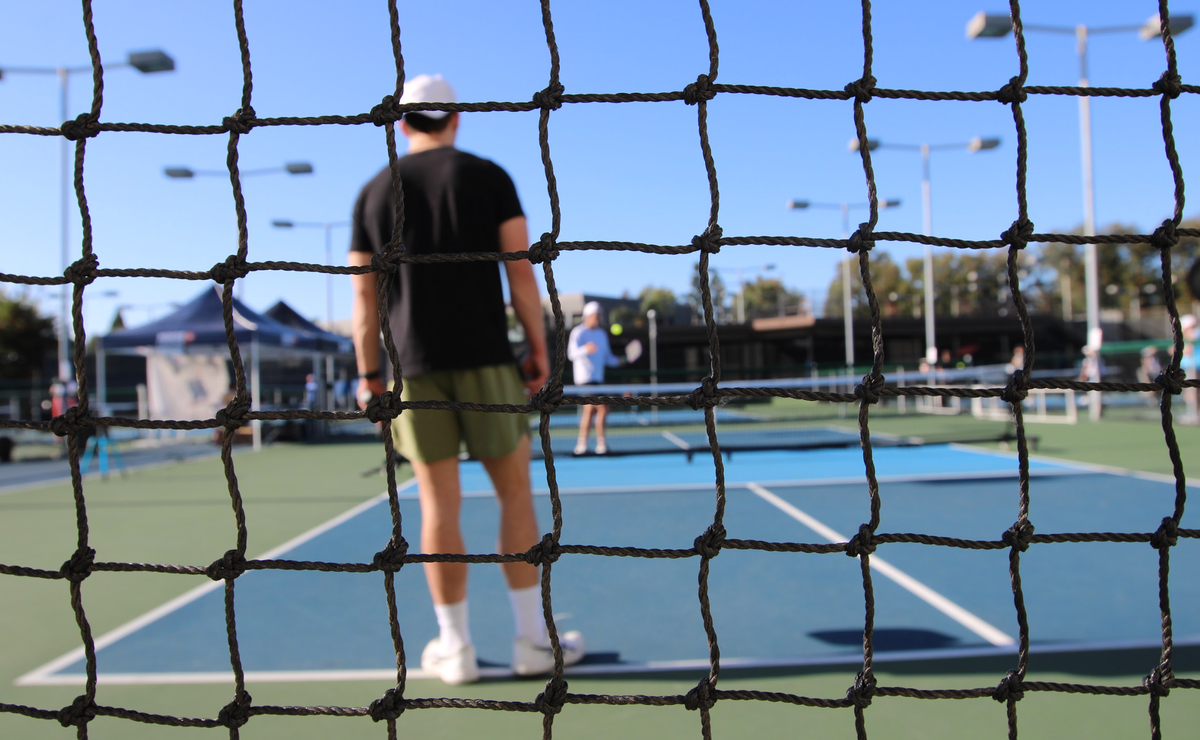
The Double Hit Rule: One Motion, One Swing
The double hit rule is straightforward in theory but tricky in practice.
If you hit the ball in one continuous motion, but that ball hits off your paddle and then your paddle comes back and hits it again, that's a double hit and it's a fault.
The only way a double hit is legal is if it happens in one smooth, continuous swing.
You can't catch the ball and then hit again. You can't pause mid-swing and hit twice. It has to be one fluid motion.
This pickleball rule exists to prevent players from essentially getting two shots in one turn, which would be unfair.
Most players understand this, but the execution is where things get murky.
What counts as "one continuous swing"? How much separation between contacts is too much?
If you're looking to build the kind of mechanics that make these calls obvious, these 6 essential pickleball shots to master for 2026 are a strong starting point.
The answer is simpler than you think: if it looks like one swing, it probably is. If there's any hesitation or pause, it's a double hit.
What Is a Legal Continuous Swing in Pickleball?
A legal continuous swing is one fluid, uninterrupted motion from backswing to follow-through.
The paddle may contact the ball twice during that motion, but if there's any visible pause or reset between contacts, it becomes a fault. Referees watch for hesitation, not just contact count.
The Dink Media Team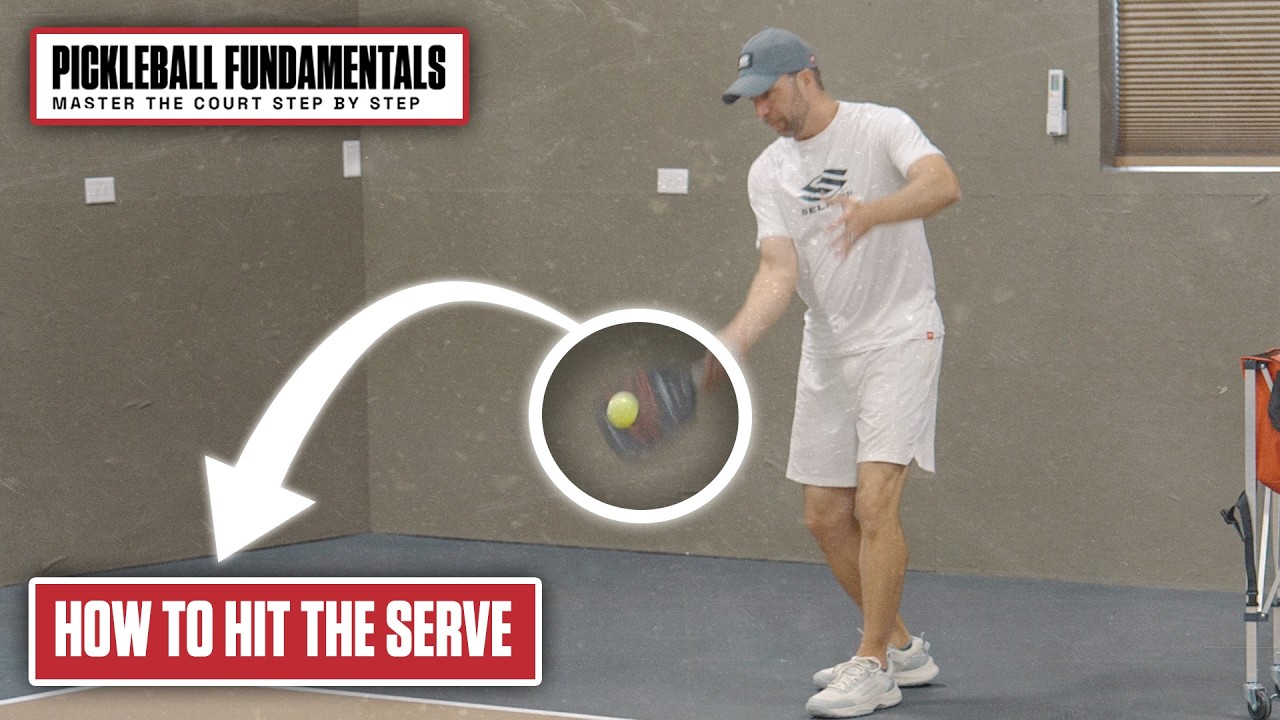
The Erne and the Plane of the Net: An Obscure Pickleball Rule That Ends Rallies
The Erne is one of the most exciting shots in pickleball. You run around the net post and hit the ball from the opponent's side of the court.
It's flashy, it's aggressive, and it's legal. But there's one critical rule that catches even pro players.
You have to contact the ball on your side of the net.
Your follow-through can take you across to the other side. Your momentum can carry you over.
But the moment you make contact with the ball, you have to be on your side of the net. If you contact the ball beyond the plane of the net, it's a fault.
Ben Johns and Colin Johns were playing in a pro-level match a couple of years ago when an up-and-coming team nearly beat them. The crowd was electric.
Then one of the opposing players got called for a fault because he contacted the ball beyond the plane of the net on an Erne attempt.
It was a momentum-killer, and it's a perfect example of how this obscure pickleball rule can change the outcome of a match.
Curious how Ben Johns could structure his men's doubles partnerships in 2025 given how much net positioning matters at the pro level? Worth a read.
The same rule applies to other shots too.
If you're hitting a ball that bounces up high near the kitchen and you run up to put it away, make sure you contact the ball on your side of the net.
Then your follow-through can take you across.
It's a subtle distinction, but it's the difference between a winner and a fault.
How Do You Execute the Erne Legally?
Start wide, move fast, and contact before the plane.
Plant your outside foot beyond the post, swing while your body is still on your side of the court, and let your momentum carry you across only after the ball has left your paddle.
Timing is everything. Pro players who drill this shot make it look effortless because the footwork is automatic.
If you want to break down the advanced shot library required to pull off plays like this, the 5 pickleball shots you must master before 2026 covers the mechanics in detail.
The Dink Media Team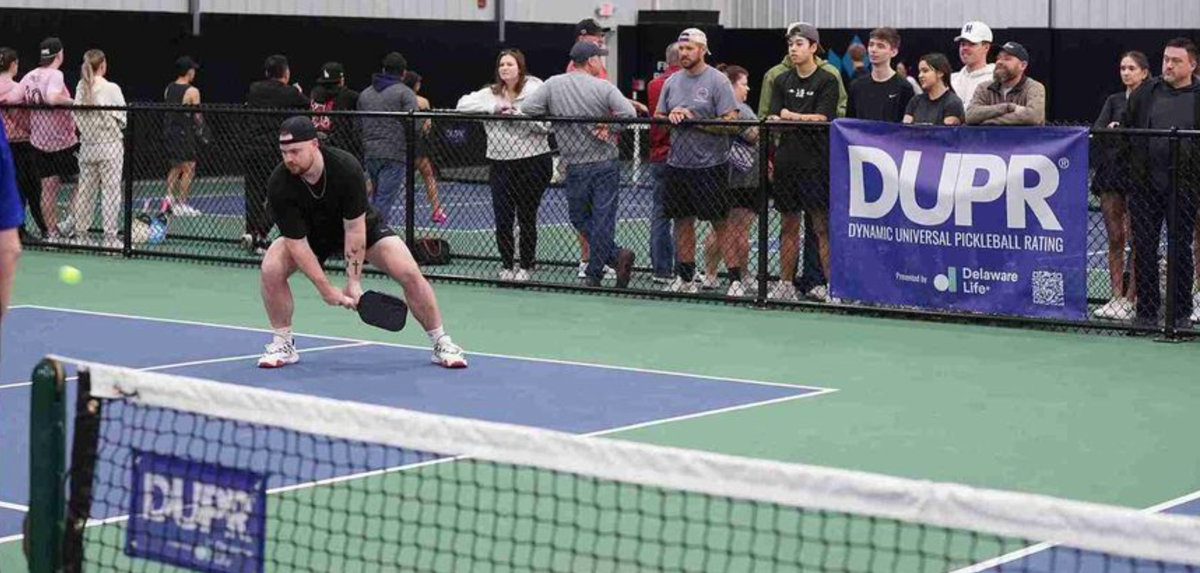
Why These Obscure Pickleball Rules Matter More Than You Think
Knowing obscure pickleball rules isn't just about avoiding faults. It's about understanding the game at a deeper level.
It's about recognizing opportunities that other players miss.
When you know that you can walk into your serve, you change your entire serving strategy.
When you understand the backspin bounce-back rule, you start hitting different shots in different situations.
These are the kinds of details that separate 3.5-level players from 4.0-level players.
They're the difference between giving away easy points and elevating your game.
The players who win consistently aren't just the ones with the best strokes.
They're the ones who know the pickleball rules inside and out and use that knowledge to their advantage.
For a complete look at what it takes to dominate at every level, modern pickleball's four key strategies to winning in 2026 is essential reading.
This is what separates casual players from serious competitors. Not athleticism. Knowledge.
Frequently Asked Questions
Can I Step Into the Kitchen While Serving in Pickleball?
Yes, as long as at least one foot is behind the kitchen line at the moment of contact. You can walk into your serve and gain forward momentum, which is completely legal under current pickleball serve rules.
What Happens If My Hat Falls Into the Kitchen During a Volley?
If any part of your clothing or gear touches the kitchen after you volley, it's a fault. Make sure your hat is secure and keep a firm grip on your paddle to avoid these accidental faults that cost you points.
Is the Erne Shot Legal in Pickleball?
The Erne is legal, but you must contact the ball on your side of the net. Your follow-through can carry you across the net, but the initial contact has to happen on your side or it's called a fault.
What's the Difference Between a Double Hit and a Legal Continuous Swing?
A double hit is when your paddle contacts the ball twice with a pause or hesitation between contacts. A legal continuous swing is one fluid motion where the paddle might contact the ball twice, but it's all part of one uninterrupted stroke.
Can a Ball Bounce Back Over the Net After Backspin in Pickleball?
Yes, and when it does, the other team must hit it or you win the point. The exception is if the ball hits the net post on the way back, which results in a redo rather than a point. This obscure pickleball rule rewards smart, creative shot-making.

Love Pickleball? Join 100k+ readers for free weekly tips, news & gear deals.
Subscribe to The Dink