

15 Pickleball Tips That Fix the Small Mistakes Costing You Points
A new video breaks down 15 rapid-fire pickleball tips designed to fix the small mistakes that quietly cost you points. These aren't theory—they're practical cues you can actually remember and execute during a rally.
Here's the thing about pickleball: the players who dominate aren't necessarily the ones with the flashiest shots or the most power.
They're the ones who've eliminated the tiny, almost invisible mistakes that quietly drain points from their scoreline.
A new breakdown of 15 pickleball tips from Your Pickleball Guideman does exactly that, offering practical, mid-rally-friendly cues that address court positioning, paddle prep, footwork, and timing.
Love pickleball? Then you'll love our free newsletter. We send the latest news, tips, and highlights for free each week.
The Midcourt Mindset: Why Position Beats Reaction
Most players think fast hands come from superhuman reflexes.
They don't. Fast hands start with paddle prep, and that begins the moment you're standing at the kitchen line.
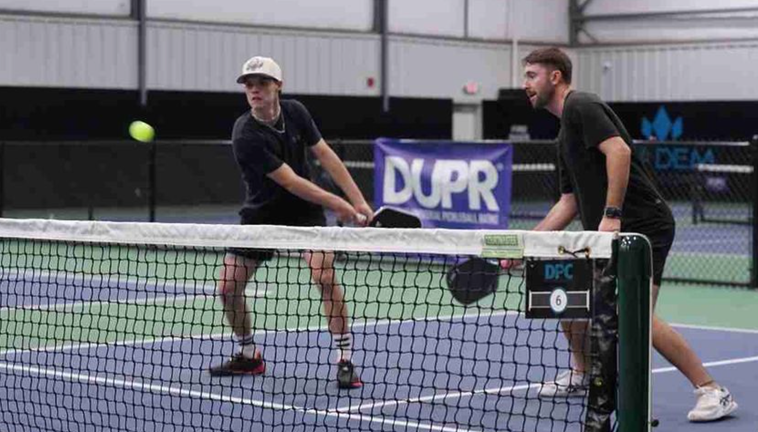
According to the video, the single best positioning hack is angling your paddle tip toward 11 o'clock, biasing yourself toward the backhand.
Why? Because the backhand covers your chest and body more naturally, and most speedups end up in that zone anyway.
 Alex E. Weaver
Beginners sit neutral or even forehand-heavy, which means they're already late before the ball even leaves your opponent's paddle.
Think of it like starting a race two steps ahead.
The same principle applies to the midcourt itself. The higher your opponent's paddle gets when they're about to attack, the lower you should get.
It's a seesaw effect: if they're up high, you're down low.
This makes you a smaller target and gives you a better chance to block or counter anything coming fast at your body.
The most common mistake is standing upright in the transition zone, then trying to react after the smash happens. By then, it's too late.
Why Your Third Shot Matters More Than You Think
The third shot is where rallies are won or lost, yet most players treat it like a winner attempt. That's backwards.
Keep your third shot drive around 70% power and focus on making it dip.
The whole goal is to force your opponent to volley up, meaning they make contact lower and block instead of attack.
When you rip full power, strong players just punch it back and suddenly you're the one in trouble.
Smooth dipping pressure is better than reckless speed.
Here's another critical detail: after you serve, get yourself back behind the baseline so you can step into your third shot with forward momentum.
A common mistake is serving and slowly creeping forward, then getting jammed on the return. That's when the ball floats and you get attacked.
Give yourself space, stay behind the line, and walk into the third shot so your weight is moving forward through contact.
The Dink Media Team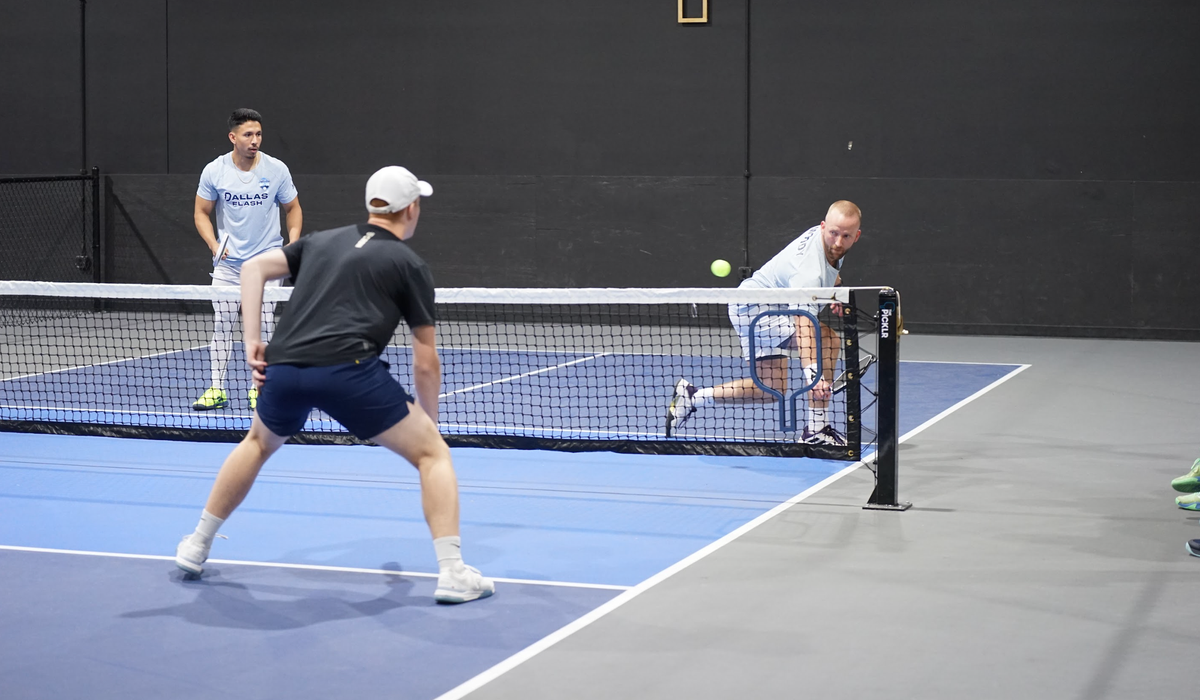
The Dink Defense: Footwork Over Panic
When someone hits a sharp, aggressive dink at you, your instinct is to panic swing. Don't. Use footwork instead.
A great pattern is a quick cross-step with your inside foot, then set the paddle sideways and bunt the ball back toward the middle.
The key is you're not trying to win that dink. You're neutralizing it and resetting the rally to a safer shape.
It's a simple move, but it keeps you from popping the ball up or getting pulled off balance.
This connects to a broader principle: whenever you're hitting a soft shot, your paddle should stay in your peripheral vision.
If your swing gets big and your paddle disappears behind you, your touch gets worse and pop-ups show up.
The fix is simple: compact motion, paddle stays visible, and everything stays controlled.
The Dink Media Team
What Your Paddle Position Reveals About Your Game
Here's something most players don't realize: your paddle position at the kitchen line tells the whole story.
A lot of people hold their paddle too high. A smarter default is around belly-button height.
Why? Because most attackable balls you actually need to react to will be coming at your torso, hips, or feet.
When your paddle starts too high, you're late getting down. And if a ball comes high at your shoulder, there's a good chance it's going out anyway.
So starting lower makes it easier to leave those balls instead of panic blocking them.
Love pickleball? Then you'll love our free newsletter. We send the latest news, tips, and highlights for free each week.
The same logic applies to tracking. If you keep getting chicken-winged, it usually means your paddle tracking is wrong.
Wherever the ball goes, your paddle tip should point directly at the ball.
The common mistake is letting the paddle drift sideways when the ball moves.
And then when an attack comes, your paddle is stuck in a weak position and you can't respond.
If your paddle is tracking the ball like a laser pointer, you can react with less motion and stop getting jammed.
The Dink Media Team
Attacking the Weakness: Reading Your Opponent
Not all opponents are created equal, and smart players exploit that.
If you notice your opponent doesn't have a two-handed backhand, attack their extended backhand.
Reaching with one hand, especially stretched wide or jammed, is hard to control. It's one of the easiest find-it-and-repeat-it patterns in pickleball.
If they do have a two-hander, you'll often see the difference immediately: more stability, more pace control, fewer errors.
This is where court awareness becomes a weapon.
If your opponents are still back and you're already at the kitchen line, don't give them a free ride in with a soft drop or an easy ball.
Keep them back. Make them earn the kitchen. A lot of players accidentally give away advantage by hitting a ball that lets the opponent stroll forward comfortably.
When you're up and they're back, your job is to maintain pressure and keep the advantage.
The Dink Media Team
The Reset and the Speedup: Two Shots, Two Rules
The reset is one of the most misunderstood shots in pickleball.
In the midcourt, when you're resetting, a lot of players slice because they came from tennis or they think it adds control.
But for most people, slicing resets adds underspin that makes the ball float and pop up.
A more consistent approach is to push the reset: clean, simple, controlled.
Push gives you a straighter, more predictable ball and makes it easier to keep the reset unattackable.
The speedup has its own rule. If you're going to speed up off the bounce, you have to get your lead leg behind the ball.
You cannot reach for it out wide and expect control. When your foot gets behind the bounce point, you can get your paddle tip down and manipulate spin.
When you're stretched, the paddle can't get into a good position, and your speedup becomes a wild guess.
The Dink Media Team
Setting and Timing: The Invisible Skill
After you hit a third shot drop and you're moving in, you want to be completely set and still before your opponent contacts their next ball.
The common mistake is running through the moment of contact, still moving, still drifting, still unstable. Then the ball comes fast and you're late.
If you stop, set your feet, and load your stance before they hit, everything becomes easier to handle. It's a tiny timing change with huge results.
This is why getting set before the opponent makes contact is one of the most underrated fundamentals in the sport.
The Overhead and the Lob: Defensive Weapons
If you pop a ball up and your opponent is about to smash, don't just stand there and hope.
The instant you recognize the popup, retreat quickly and take as much ground as you can before they make contact.
That early retreat buys time. And the low set position makes your block and reaction cleaner.
On the flip side, if your opponent keeps taking your dinks out of the air, that's a big green light.
Their weight is leaning forward, and forward weight is exactly what makes a well-timed lob effective.
Instead of getting annoyed that they're volleying everything, use it against them.
Let them show you they're creeping, then throw the lob over their head while their momentum is going the wrong direction.
The Dink Media Team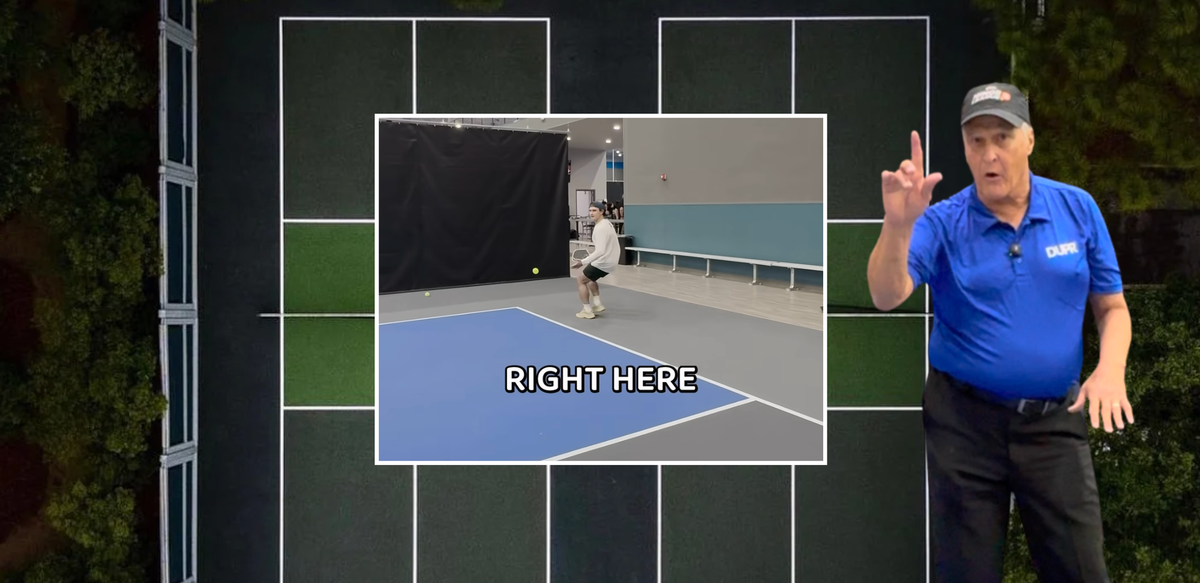
Why These Tips Actually Stick
The reason these 15 pickleball tips work is because they're not theory. They're practical cues you can actually remember mid-rally.
You're not thinking about biomechanics or swing mechanics. You're thinking about simple, actionable adjustments: get lower, keep your paddle visible, set your feet, push the reset.
That's the difference between tips that sound good and tips that actually change your game.
Frequently Asked Questions
What's the most important pickleball tip for beginners?
The most important tip is paddle positioning at the kitchen line. Keeping your paddle at belly-button height instead of high gives you better reaction time to balls coming at your torso and hips. This single adjustment eliminates a huge category of mistakes.
How do I remember all 15 tips during a match?
You don't need to remember all 15 at once. Pick one or two that address your biggest weaknesses and focus on those for a week. Once they become automatic, add another. The video is designed so you can revisit specific tips as needed.
Why is the third shot so important in pickleball?
The third shot determines who controls the net. If you hit it too hard, strong opponents punch it back and you're in trouble. If you hit it soft and dipping, they're forced to volley up and you get an easier fifth shot. It's the shot that transitions you from defense to offense.
What's the difference between pushing and slicing a reset?
Pushing a reset creates a straighter, more predictable ball with less spin. Slicing adds underspin that makes the ball float and pop up, giving your opponent an easier attack. For most players, pushing is more consistent and reliable.
How do I stop getting chicken-winged?
Chicken-wing happens when your paddle tracking is wrong. Your paddle tip should point directly at the ball wherever it goes. If you let your paddle drift sideways when the ball moves, you'll be stuck in a weak position when an attack comes. Focus on keeping your paddle tip tracking the ball like a laser pointer.

Love Pickleball? Join 100k+ readers for free weekly tips, news & gear deals.
Subscribe to The Dink