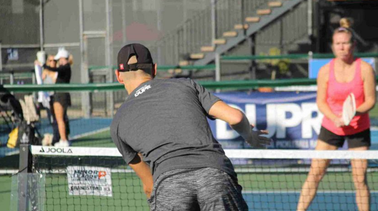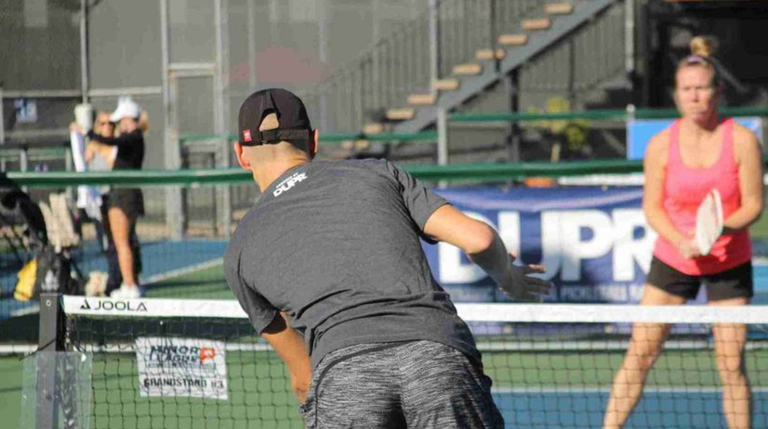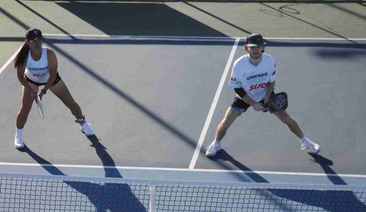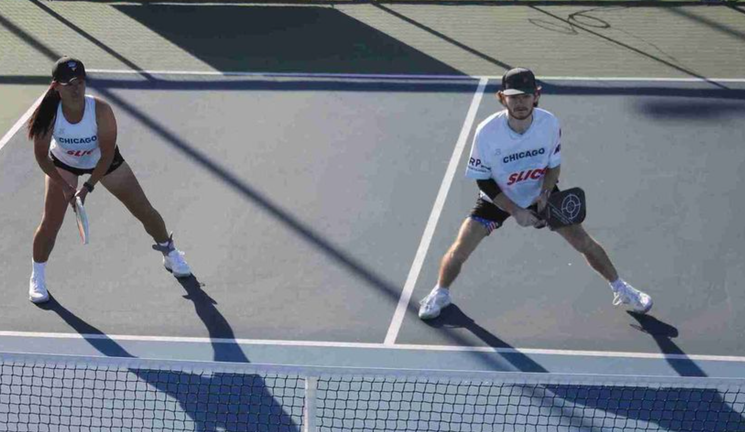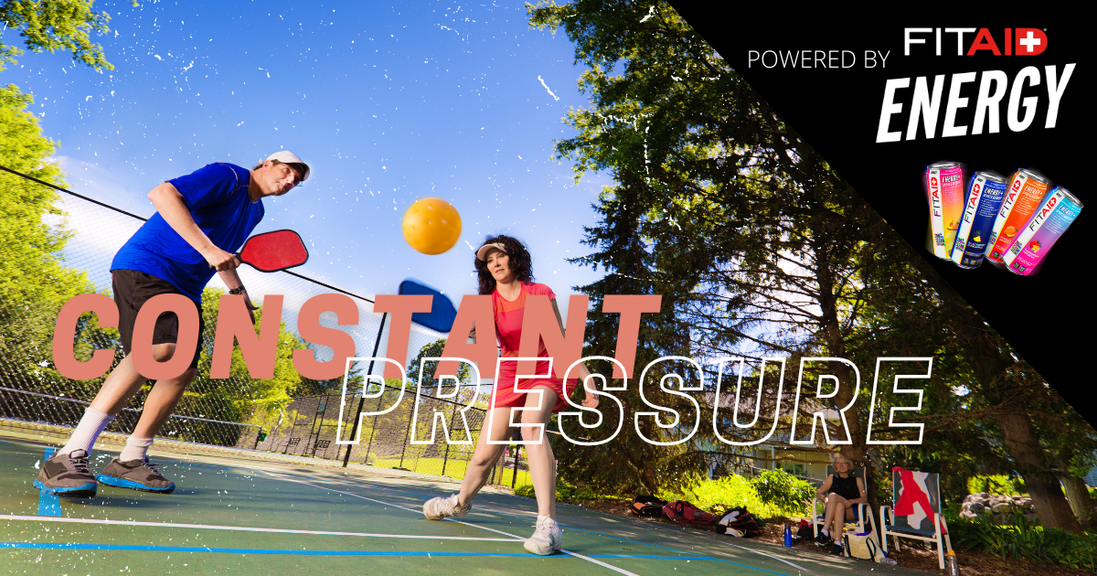
What wins games? Most of the time, it is whoever makes the fewest unforced errors. What causes unforced errors? Constant pickleball pressure.
There are a few different ways to create pressure on opponents. This is crucial to win games in general, but especially tournament matches. Effective pickleball pressure is what separates players who dictate points from players who simply react to them.
Everyone is already tight and nervous going into a tournament, so be the one to dictate the points and force pickleball pressure on opponents.
Let's get into different ways to apply pickleball pressure.
Applying Pickleball Pressure From the Serve
This is pretty simple, but hitting a good, deep serve forces the other team to think about hitting a good ball. If the serve is inconsistent and maybe goes out or is soft and short, it's an easy return every time and the opponent has nothing to worry about.
The return doesn't have to be hit hard, but it needs to be deep. It is actually better to hit a return with some height because it gives you more time to get up to the non-volley zone and get ready to hit that fourth shot.
So often, players hit a serve and take one or two steps in. When the return is deep, this forces the player to hit their third shot off their back feet or heels. Anything hit off balance isn't going to be as precise when off-balance.

Pickleball Pressure at the Non-Volley Zone
To beginners or players first coming into pickleball, there is a misconception about dinking. "Hit dinks continuously until someone pops it up." Although this is true, there is more to it.
Don't sit back and wait for a pop up. Force the pop up. Sustaining pickleball pressure at the non-volley zone means actively creating problems, not simply avoiding them.
Even with shots as simple as a dink, there are always ways to make the opponent uncomfortable. Dink to where they aren't. Move them around.
Never allow the opponent to sit back with confidence, knowing it's going to be an easy shot.
Pickleball Pressure Through Smart Dinking
- When cross court dinking, go to the outside foot of the opponent, then inside foot. Go back and forth, never allowing the opponent to get comfortable hitting the same shot.
- DINK MIDDLE. The higher levels tend to be implementing this strategy a lot. It makes the opponent think about who is going to take the shot, and even the smallest hesitation can lead to a pop-up or a ball in the net.
- Move the ball around. Middle, cross court, straight ahead, back to middle.
- Change the depth on dinks. Some bounce in the kitchen, others bounce at the opponent's feet, forcing them to decide whether to take the ball out of the air or off the bounce.
- Change the speed of dinks. Some extremely soft that lull the opponent to sleep, next time put some pace on the ball.
Keep 'em Guessing
Applying pickleball pressure through dinking is about constant unpredictability. Each rally is an opportunity to deepen the pressure in pickleball that you established from the very first shot. The moment your opponent knows what is coming, you have surrendered your advantage.
Dictate Pace
The first step is to determine what YOU do best. Is it the slow, patient, outlasting opponents style? Firefight legend?
Force the opponents to play your game.
As CBS Sports notes, strategy and a soft touch are often more important in pickleball than how hard you can hit the ball. Understanding your strengths is the foundation of any effective pickleball tournament strategy. Build every point around what works best for you.
Winning in the Trenches
Let's say we are most successful in the long dink rallies.
Hit a third shot drop, rather than a drive, and get to the kitchen. Be patient and force that pop-up. Use all the strategies from above to force pop-ups or mishits.
Block or reset any speed-up and force the opponent to dink with you. This approach sustains pickleball pressure from the kitchen line. When players get sucked into the opponents play style instead of theirs, it rarely results in victories.
Maintain Pickleball Pressure in Attack Mode
If players win only 51% of firefights or hands battles, shouldn't they be speeding up every opportunity that presents itself? Yes.
Speeding up anything and everything is a recipe for disaster. Be selective. But with that being said, any ball high enough (off the bounce or out of the air) should be an attack if the player feels like they win the point when things get hot. Remember to reach.
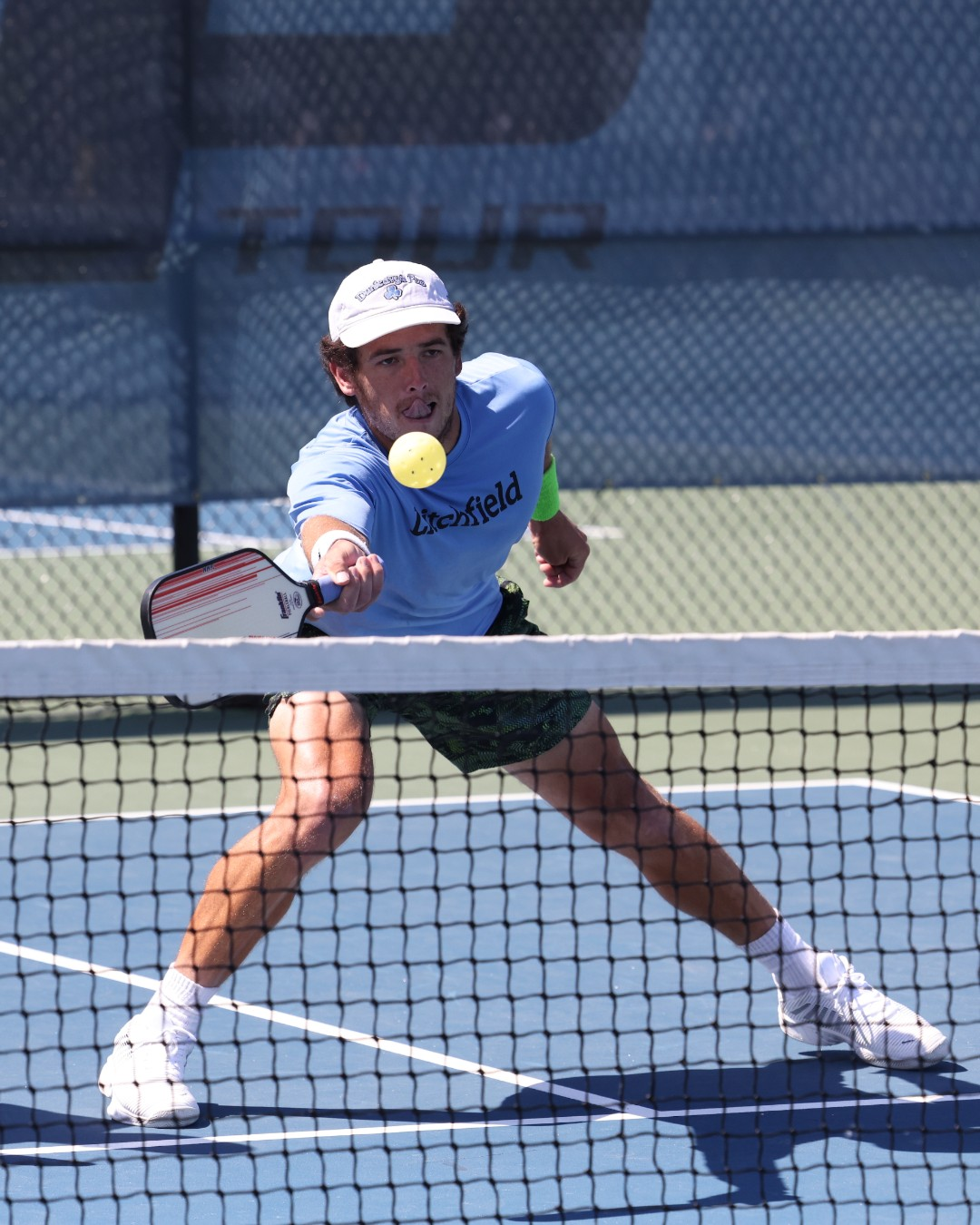
Force the other team to play your game. Dictate the type of point that produces success.
Pickleball pressure on opponents in a tournament is a necessity. Make them second guess themselves. Overall, make them THINK about what you might do.
Pickleball is an incredibly intellectual game. Realize ASAP that a pickleball tournament strategy going into the match may not work as well as previously thought. A change in strategy and having a quality game plan is the difference in a win or loss, especially in a tournament.
See what doesn't work and stop doing that. See what works and keep doing it.

Frequently Asked Questions
What is pickleball pressure and why does it matter in a tournament?
Pickleball pressure is the act of consistently placing your opponent in uncomfortable positions so they are forced into unforced errors. In a tournament setting, players are already nervous, so applying constant pickleball pressure amplifies those mistakes and gives you control over the pace and direction of every single point.
How do I apply pressure in pickleball through the serve and return?
A deep, well-placed serve forces the returner off balance and limits their shot selection immediately. A deep return keeps the serving team pinned at the baseline, preventing them from advancing to the kitchen line with confidence and shifting the momentum of the point before it truly begins.
What dinking strategies create the most pickleball pressure at the kitchen line?
Moving the ball to different locations and varying the speed of your dinks keeps your opponent constantly reacting instead of planning. Targeting the middle of the court is especially effective in doubles because it creates hesitation between partners, often producing a pop-up or a ball into the net.
How do I build a pickleball tournament strategy around my personal strengths?
The key is identifying which style of play wins you the most points, then anchoring your entire pickleball tournament strategy around that approach. If you win the majority of hands battles, attack selectively and aggressively. If patience is your edge, reset speed-ups and grind long dink rallies until your opponent makes an unforced error.
How can I adjust my pickleball pressure tactics when something stops working mid-match?
Pickleball rewards adaptability above almost everything else. If your current approach is not producing results, identify the pattern quickly and shift tactics without hesitation. Never repeat a losing strategy when a winning adjustment is available right there on the court.
Matt Calvert
Love Pickleball? Join 100k+ readers for free weekly tips, news & gear deals.
Subscribe to The Dink