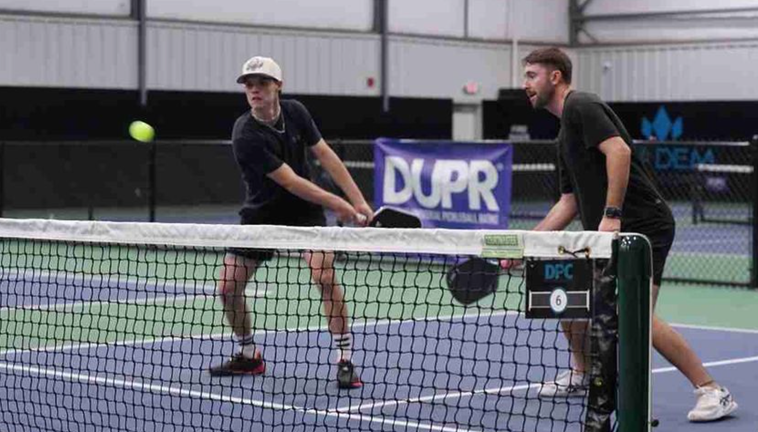

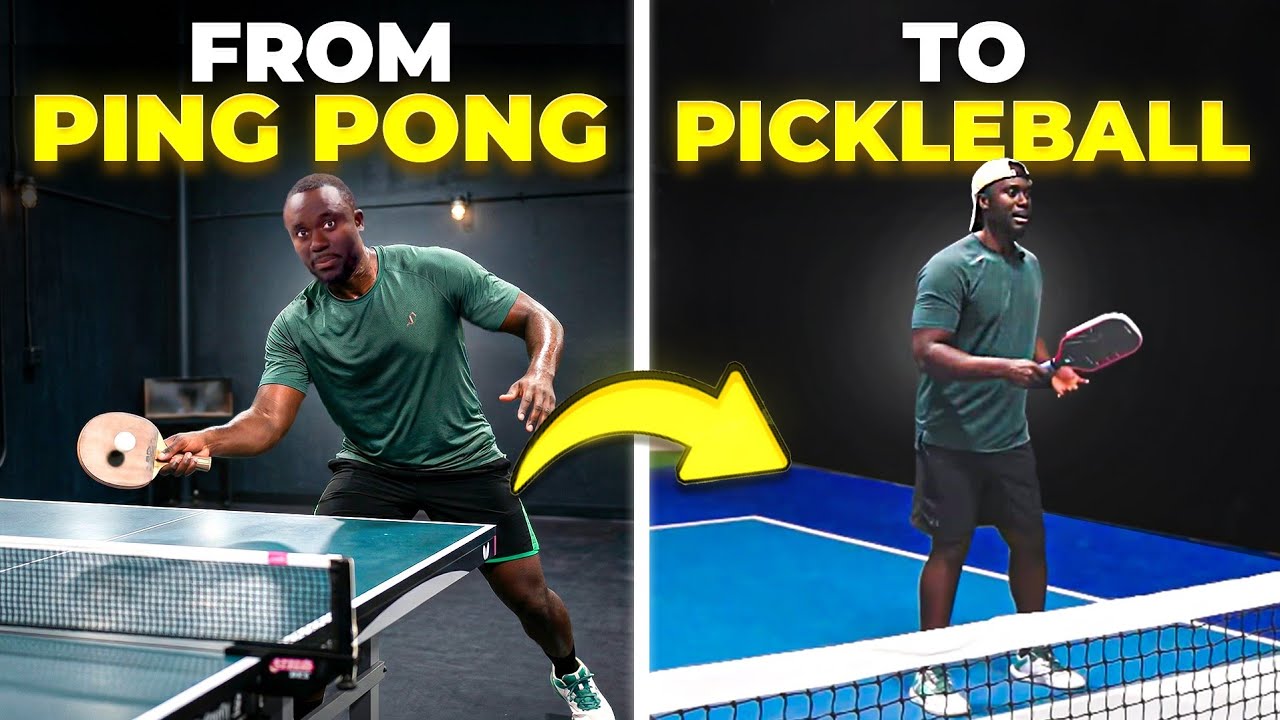
These three proven techniques from table tennis can be adapted to pickleball to help you react faster, create more spin, and put away points at the kitchen.
The table tennis shot has quietly become one of the most underrated weapons in modern pickleball.
While most players come from a tennis background, bringing their baseline rallies and big serves to the court, a growing number of competitive pickleball players are discovering that ping pong mechanics offer something tennis doesn't:
Compact swings. Lightning-fast hands. The ability to generate spin in tight spaces.
Cliff Pickleball, a coach with a table tennis background, has built his game around translating three specific table tennis shots into pickleball strategy.
The result? Faster reaction times, better ball control, and a competitive edge that catches opponents off guard.
Here's what you need to know about adapting table tennis techniques to your pickleball game.
Love pickleball? Then you'll love our free newsletter. We send the latest news, tips, and highlights for free each week.
Why Table Tennis Mechanics Matter in Pickleball
The connection between table tennis and pickleball isn't obvious at first glance.
One sport uses a small rubber paddle and a bouncy ball on a hard table; the other uses a larger composite paddle and a slower ball on a court.
But the fundamental principle that makes table tennis players dangerous in pickleball is simple:
Compact swings create faster hands.
In table tennis, you don't have the luxury of a long backswing. The ball comes at you quickly, and you need to react in milliseconds.
This forces players to develop what's called "hand speed" and "anticipation."
When a table tennis player transitions to pickleball, they bring that muscle memory with them. Common mistakes tennis players make when transitioning to pickleball can slow that process down, but ping pong players often skip those pitfalls entirely.
The kitchen (the no-volley zone) is where pickleball is won and lost.
Most players struggle there because they're used to tennis mechanics that require bigger swings. A table tennis shot, by contrast, thrives in tight spaces.
It's designed for the exact environment where pickleball points are decided.
1. The Forehand Counter: Your Fastest Table Tennis Shot at the Net
The first table tennis shot that translates directly to pickleball is the forehand counter.
This is a blocking or attacking stroke that allows you to hit the ball before your opponent expects it, often before they've even finished their swing.
Here's how it works: instead of taking a full backswing, you position yourself in what's called "neutral position" and use a compact, forward motion to meet the ball early.
The key is staying ready between every shot.
Neutral position is everything.
After you hit a dink or any shot, you should immediately return to a balanced stance with your feet shoulder-width apart, knees slightly bent, and paddle up.
From this position, you can move to your forehand or backhand with equal ease. Most recreational players get locked into their follow-through, which means they're caught flat-footed when the ball comes back quickly.
The forehand counter works because it eliminates wasted motion.
You're not swinging from your shoulder; you're using your forearm and wrist to generate power and control. Your eyes stay locked on the ball the entire time, and your body remains stable.
When your opponent hits a ball at you with pace, you're already in position to block it back with authority. Knowing when to block vs. counter against pickleball bangers is what separates reactive players from dominant ones.
The mechanics are straightforward. From neutral position, take a small backswing (no more than a few inches).
Love pickleball? Then you'll love our free newsletter. We send the latest news, tips, and highlights for free each week.
As the ball approaches, move your forearm forward and slightly upward, making contact in front of your body. Keep your wrist firm but not rigid.
The follow-through should be short and controlled.
What makes this table tennis shot so effective in pickleball is that it works against aggressive opponents.
If someone is trying to speed up every ball at you, the forehand counter turns their aggression into a liability. You're not trying to out-rally them; you're hitting the ball back before they can even set up their next shot.
How to Build the Forehand Counter Into Your Game
 The Dink Media Team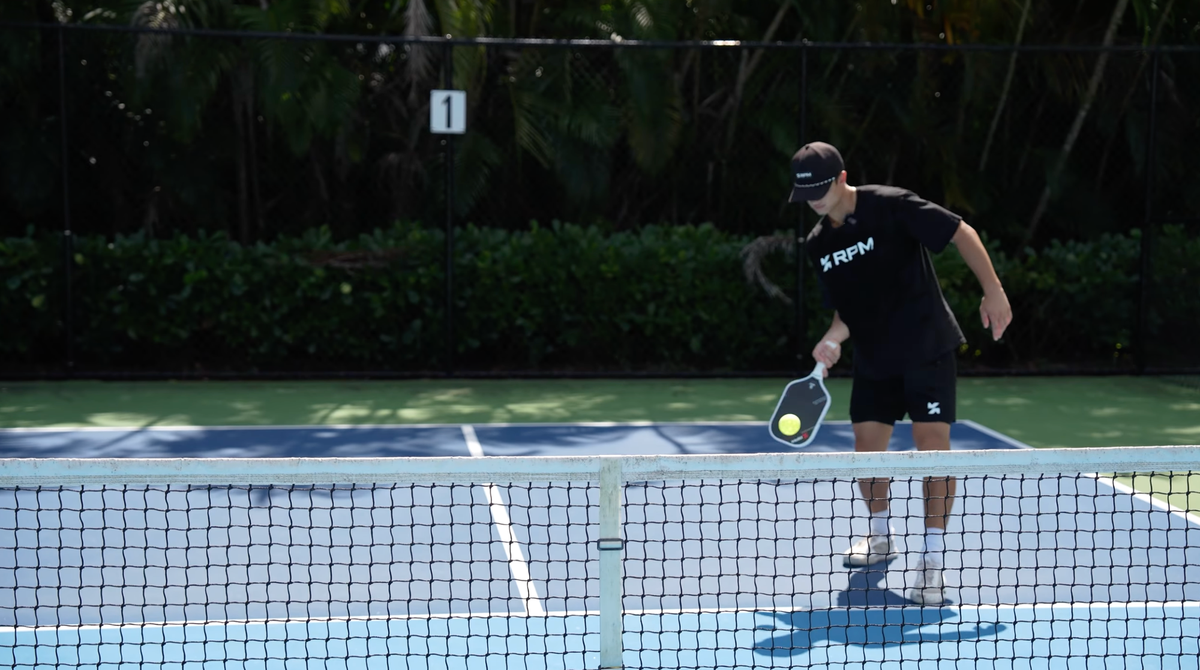
2. Forearm Spin: How a Table Tennis Shot Controls the Dink Battle
The second technique borrowed from table tennis is the forearm spin, sometimes called a "loop" in ping pong circles.
This is where you use your forearm to brush under the ball, creating topspin while keeping the ball low and controlled.
In pickleball, the dink is sacred. It's the shot that sets up everything else.
But most players dink with a flat paddle face, which means they're relying entirely on touch and feel. A table tennis shot like the forearm spin adds a new dimension: you can dink with spin, which makes the ball harder for your opponent to attack.
Here's the technique: as you approach the ball, get low with your knees.
Your forearm moves underneath the ball in a slow, controlled motion, brushing upward as you make contact. Your forehand dink needs work if you can't execute this brush motion consistently – it's the foundation of everything here.
Alex E. Weaver
The paddle face stays relatively closed (angled downward), and your body stays stable. You're not moving your whole body; you're isolating the forearm.
The benefit is twofold.
- First, the spin makes the ball dip faster, keeping it lower over the net and harder to attack.
- Second, the motion is so compact that you can stay at the net without backing up.
You're not retreating; you're staying aggressive even while playing a soft shot.
This is where table tennis players have a massive advantage. They've spent thousands of hours brushing balls with spin, so the motion is automatic.
For a pickleball player learning this for the first time, it takes practice, but the payoff is worth it. Mastering topspin in pickleball starts with understanding exactly this kind of forearm brush motion.
3. The Backhand Put-Away: Finishing Points with a Table Tennis Shot
The third table tennis shot that translates to pickleball is the backhand put-away.
This is an attacking stroke used when the ball pops up above net height, giving you an opportunity to finish the point.
In table tennis, the backhand attack is often a wrist-heavy motion. You're using your wrist to generate speed and spin on a ball that's coming at you quickly.
In pickleball, the principle is similar, but the execution needs adjustment because the ball is slower and the court is larger.
The key difference is grip adjustment. In your neutral continental grip (used for dinking), your paddle face is relatively square.
But when you're preparing for a backhand put-away, you need to rotate your grip slightly so that your paddle can come through the ball with more angle and power. Understanding the three pickleball grips and when to use them will make this adjustment click immediately.
Early preparation is critical.
You need to recognize when the ball is coming high enough to attack. The moment you see that pop-up, your paddle should already be moving into position.
Your backswing should be compact, and your follow-through should be smooth and controlled.
When you make contact, you're using your wrist to roll through the ball, creating a combination of speed and spin. The ball should come off your paddle with pace, making it difficult for your opponent to get it back under control.
You can hit it down the line, cross-court, or even at an angle toward the kitchen.
How to Recognize the Right Moment to Attack
Ball height is everything. Ball height and court positioning work as a 1-2 checklist for pro-level shot selection, and the backhand put-away is the payoff when both factors align.
The Dink Media Team
Bringing It All Together: How to Practice These Table Tennis Shots
Learning a table tennis shot isn't about memorizing mechanics; it's about building muscle memory through repetition.
The forehand counter, forearm spin, and backhand put-away all require practice in game-like situations.
Start with the forehand counter.
- Have a partner feed you balls at varying speeds and heights.
- Focus on staying in neutral position and reacting with a compact swing.
- Once that feels natural, move to the forearm spin.
- Practice dinking with a partner, focusing on the brushing motion underneath the ball.
Finally, work on the backhand put-away.
- Have your partner drop balls that pop up slightly above net height.
- Your job is to recognize the opportunity and finish the point with a controlled attack.
The beauty of these table tennis shots is that they work together. The forehand counter keeps you in the point when your opponent attacks.
The forearm spin gives you control during the dink battle. The backhand put-away finishes points when opportunities arise.
Simple wall drills can accelerate all three of these skills faster than almost any other solo practice method.
If you've ever played ping pong or table tennis, you already have the foundation for these shots. If you haven't, don't worry.
The mechanics are learnable, and the payoff in terms of hand speed, control, and anticipation is significant. Developing faster hands in pickleball is exactly what these ping pong-derived techniques are designed to build.
It's also worth noting that pro ping pong players have already started teaching the punch volley to pickleball audiences, which confirms the crossover value is real and recognized at the highest level.
Frequently Asked Questions
What is a table tennis shot in pickleball?
A table tennis shot in pickleball refers to any technique borrowed from ping pong mechanics, including compact swings, forearm spin, and wrist-driven attacks. These shots are especially effective at the kitchen line where tight spaces reward hand speed over power.
What's the difference between a table tennis shot and a tennis shot in pickleball?
A table tennis shot emphasizes compact swings and hand speed, while a tennis shot relies on bigger, longer motions. Table tennis mechanics are better suited to the tight spaces and quick exchanges of pickleball, especially at the net.
Do I need a table tennis background to use these shots?
No. While a table tennis background helps, anyone can learn these techniques through focused practice. The key is understanding the principles: compact swings, early preparation, and staying in neutral position.
Which table tennis shot should I learn first for pickleball?
Start with the forehand counter and neutral position. This is the foundation for everything else. Once you're comfortable staying ready between shots, add the forearm spin and backhand put-away.
How long does it take to master these table tennis shots in pickleball?
Most players see improvement within a few weeks of consistent practice. True mastery takes months, but the benefits appear quickly. You'll notice faster reaction times and better control at the net almost immediately.
Can table tennis shots work against advanced pickleball players?
Absolutely. In fact, these table tennis shots are especially effective against advanced players because they're unexpected. Most competitive pickleball players come from a tennis background, so ping pong mechanics often catch them completely off guard.

Love Pickleball? Join 100k+ readers for free weekly tips, news & gear deals.
Subscribe to The Dink