Dedicated ball storage. Roomy water bottle pockets. Slick paddle sleeves. And magnets... so many magnets.
Most pickleball bags follow a pretty familiar formula: take a backpack, add a paddle sleeve, slap a pickleball logo on it and call it a day.
Selkirk went considerably further with its new Pro Line 2.0 bag series.
The premium line includes three completely new bags — a 25L Team Backpack, 35L Tour Backpack and 45L Duffle — developed over nearly two years with extensive player feedback, surveys, on-court conversations and real-world testing.
According to Taylor Hooker, Selkirk’s Head Designer of Accessories and project lead behind the launch, the assignment from the top was remarkably simple.
“The brief was we need new bags, no joke,” he said.
What followed was anything but simple. Hooker spent nearly two years surveying players, visiting courts, testing prototypes and digging into the small frustrations that come with carrying pickleball gear.
The result wasn’t more pockets simply for the sake of more pockets. It was a reimagined system built around some basic needs pickleball players kept bringing up: easy access, paddle protection, thoughtful organization, hydration, ball storage and comfort.
That philosophy shows up everywhere.
Convenience, access, security (and magnets, lots of magnets)
Pickleball has come a long way since the brand's original line of boxy backpacks. The Pro Line 2.0 bag series is designed for the modern player.
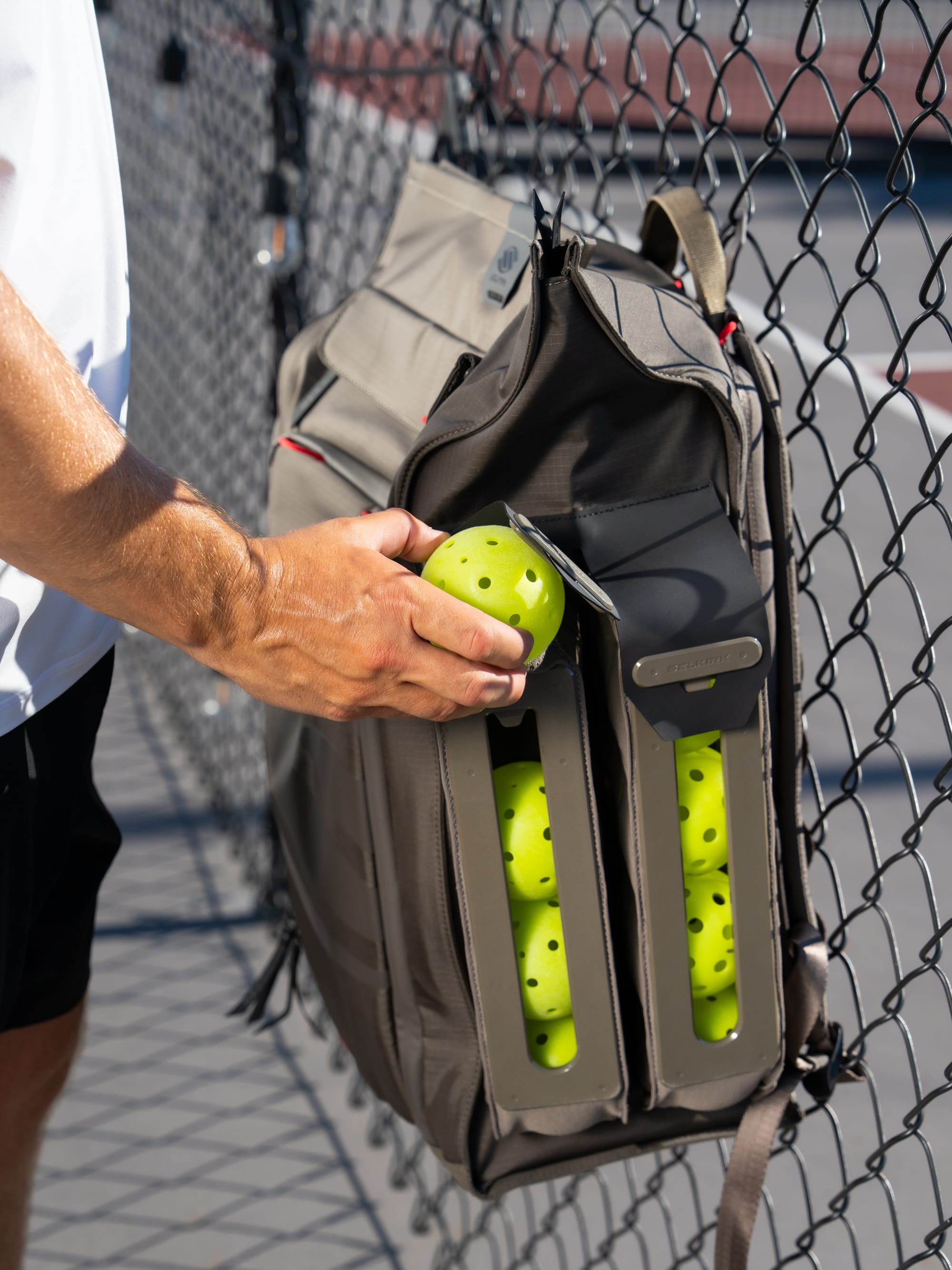
All three bags feature Selkirk’s CourtAccess system, which combines an auto-aligning magnetic opening with a conventional zipper. At the courts, the bag can essentially remain unzipped while the magnetic closure keeps the opening covered; zip it completely when it’s time to leave.
There are magnetic paddle sleeves, magnetic personal pockets and a clever MagSlide ball dispenser that automatically snaps shut.
 Alex E. Weaver
For Hooker, magnets weren’t a gimmick. They were a solution to one of the biggest themes that came out of his team's research: convenience and access.
Players are constantly going in and out of their bags between games. Paddles, balls, phones, keys and water bottles all need to be accessible without turning the main compartment into a giant junk drawer.
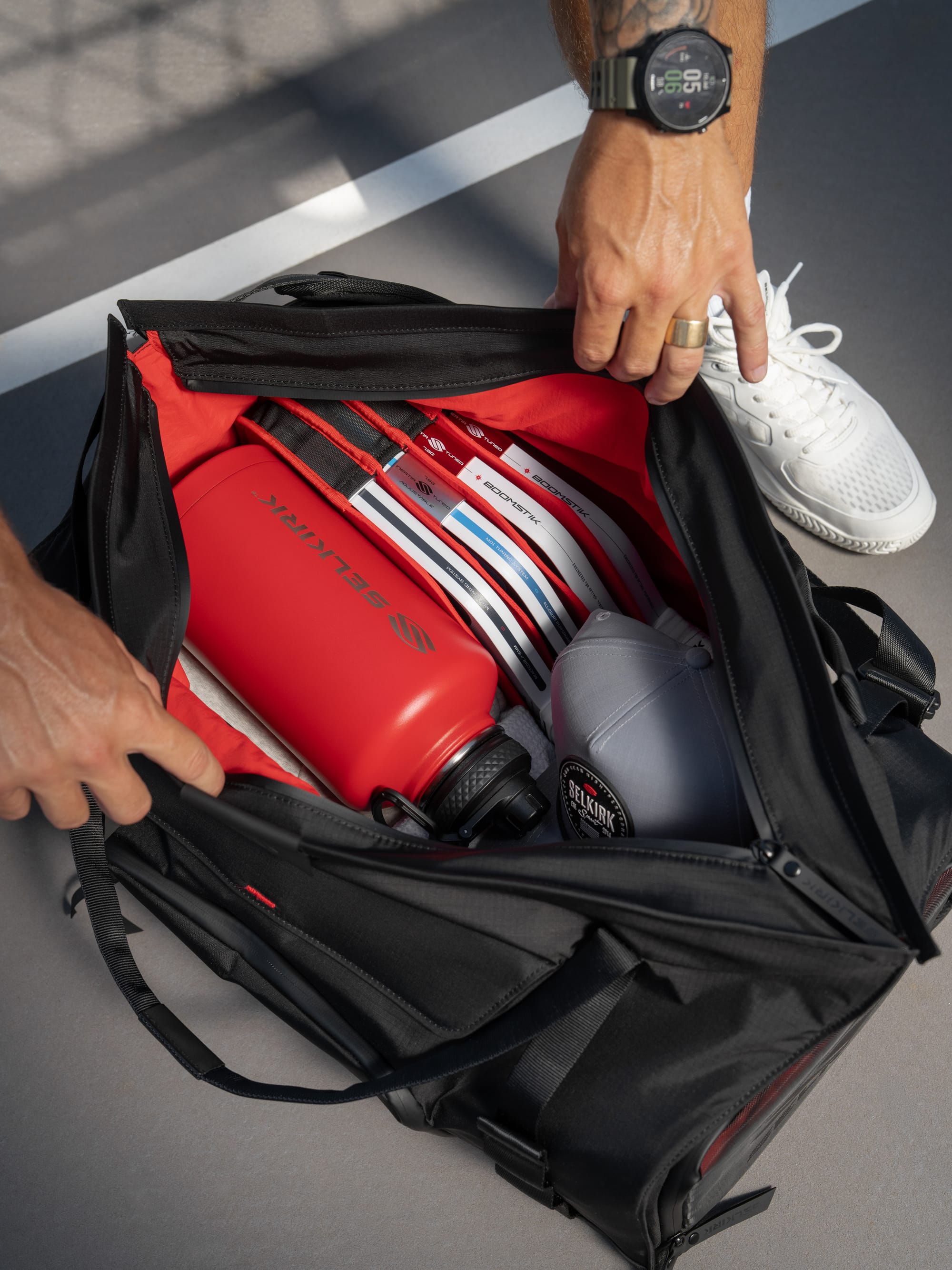
That thinking extends to the smaller details, too. A lighter interior makes gear easier to spot. Full-length side access means no digging through the top of the backpack. Separate paddle sleeves protect gritty, ball-dusted faces from rubbing against everything else.
Three bags, designed for every body
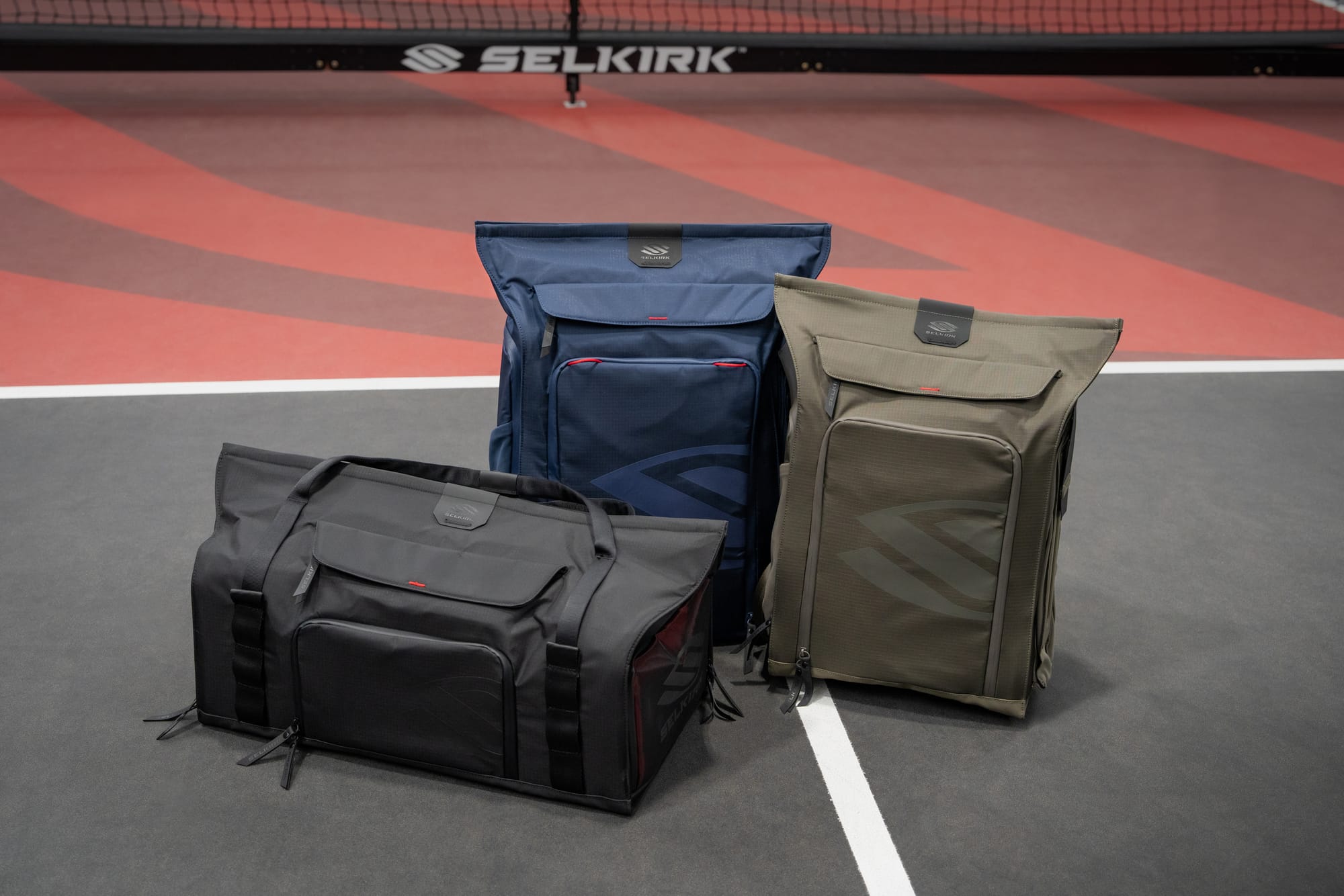
The 25L Team Backpack is the streamlined option for everyday court sessions. It carries two paddles in dedicated magnetic sleeves while retaining the ball dispenser, wide-mouth magnetic opening, front organizer, laptop storage and full-length side zipper found on the Tour. It retails for $248.
The 35L Tour Backpack is the full-send version: more capacity, four paddle sleeves and additional shoe storage for players carrying tournament-level amounts of gear. It retails for $298.
And the 45L Duffle is built more around tournament travel or all-day play. Instead of the traditional cavernous duffle compartment, Selkirk added four internal magnetic paddle sleeves, ventilated shoe storage and smaller organization pockets. It retails for $198.
Don't forget to use code "ADV-THEDINK" to score up to $40 back at checkout on the Pro Line 2.0 bag series.
All three are decidedly premium bags.
But the emphasis here isn’t simply expensive materials or aesthetics. It’s solving the little annoyances players encounter every time they head to the courts.
That includes how the backpacks actually sit on a human body.
Selkirk developed what it calls Swivel-Fit straps, which pivot to accommodate different shoulder widths and body types rather than locking the wearer into one fixed strap angle.
It sounds minor until you've carried a loaded bag for 20 minutes.
“Amazingly, people who are designing products for people often forget the step of actually putting it on a person.”
That line probably sums up the entire Pro Line 2.0 project.
Nearly two years in the making
Hooker joined Selkirk in 2024 with an industrial design background spanning everything from infant smart socks to recovery products and footwear. Bags quickly became his domain.
The initial designs began taking shape around December 2024. What followed was more than a year of prototypes, material decisions, supplier work, testing and small revisions — including changes that came directly from players using early samples.
The finished bags use lightweight, tear-resistant materials rather than simply adding heavier fabric in the name of durability. Each one deploys a 210D double-PU-coated ripstop nylon body with a tougher 600D TPU-coated base designed to handle concrete courts, moisture and other elements.
It's the kind of obsessive detail more commonly associated with high-end outdoor and travel bags than pickleball accessories.
And that's really the point.
Pickleball equipment has gotten extraordinarily sophisticated. Paddles are engineered down to the millimeter. Shoes are being designed specifically for the sport's movement patterns.
Selkirk is betting the bag deserves the same treatment.
Heads up: hundreds of thousands of pickleballers read our free newsletter. Subscribe here for cutting edge strategy, insider news, pro analysis, the latest product innovations and more.
 Alex E. Weaver

Love Pickleball? Join 100k+ readers for free weekly tips, news & gear deals.
Subscribe to The Dink