Master the Two-Handed Backhand Dink: A 10-Minute Lesson from a Pro
Topspin is taking over pickleball. If you're still relying solely on slice dinks, you're playing too much defense. And nobody wins tournaments by playing defense.
There's something almost unfair about watching Cam Luhring hit a two-handed backhand dink. The ball seems to defy physics, spinning, dipping, and landing exactly where his opponents can't handle it. It's the kind of shot that makes you stop mid-rally and think, "Wait, how did he do that?"
Kyle Koszuta from ThatPickleballGuy felt the same way.
So he did what any smart player would do: he asked Cam to teach him the shot.
Not just for himself, but for all of us trying to level up our kitchen game.
Why the Two-Handed Backhand Dink Matters Now
Here's the thing about modern pickleball: topspin is taking over. If you're still relying solely on slice dinks, you're essentially playing defense all the time. And nobody wins tournaments by playing defense.
"The way the game is going, topspin is everything right now at the kitchen line," Cam explains in the video.
It's a simple truth that's reshaping how pros approach the soft game. The two-handed backhand dink isn't just a flashy move. It's becoming essential for players who want to dictate points rather than react to them. As Sports Illustrated has noted in its coverage of the sport's elite Sports Illustrated, the two-handed backhand was foundational to Anna Leigh Waters' game the moment she transitioned to pickleball, and its influence has only grown across the entire pro field since.
 Alex E. Weaver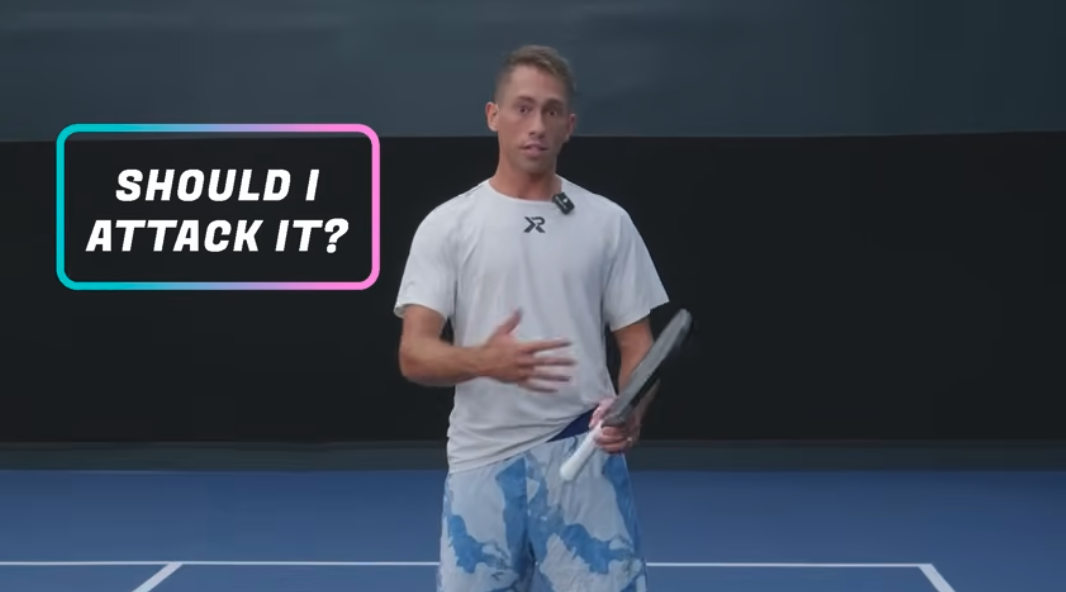
The Foundation: Start With Your Left Hand
Cam's teaching method is refreshingly straightforward. He doesn't overwhelm you with ten things to think about at once. Instead, he starts with the most counterintuitive instruction: forget about your dominant hand.
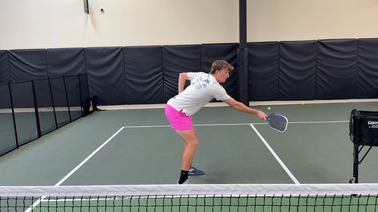
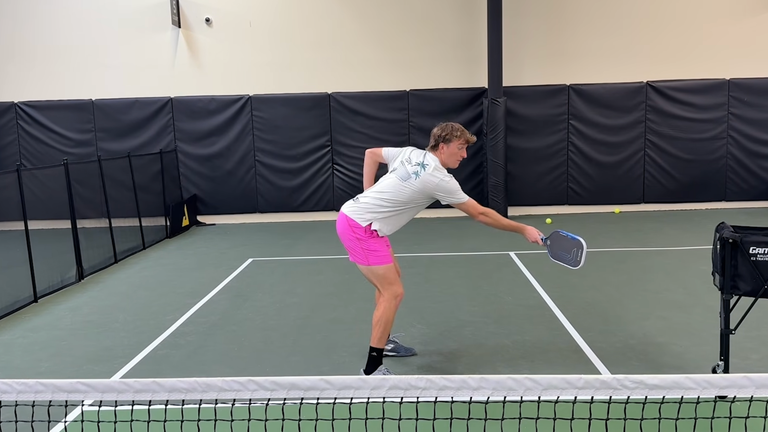
Now for the motion: think windshield wiper. Or like you're waving at someone. It's a simple wrist-driven movement that brushes up and over the ball.
No big swing.
No follow-through across your body.
Just a compact, controlled motion that generates surprising amounts of spin.
Kyle struggles with this at first. His shots fly everywhere. But that's the point. By isolating the off-hand, you're forcing it to do the work it'll need to do when both hands are on the paddle. For a righty, Cam estimates the left hand should be doing about 85% of the work even in the full two-handed version.
The grip matters too. Cam keeps his left hand high on the paddle with his index finger actually touching the paddle face. As for his grip strength? An eight or nine out of ten.
Keep It Compact: The Anti-Follow-Through for a Better Two-Handed Backhand Dink
Watch most recreational players hit a two-handed backhand, and you'll see them swing across their body like they're hitting a tennis groundstroke. Cam does the opposite.
"My swing is so short," he explains, demonstrating a motion that barely extends past his shoulder.
"It helps me hit less of the ball and still get quite a bit of power and spin on the ball."
This compact swing solves a problem that plagues many players: hitting through too much of the ball.
When you extend your follow-through at the kitchen line, you lose the ability to keep pace on the ball while keeping it in the kitchen. The shorter swing lets you generate speed and spin without sacrificing control.
Drop the Paddle Face: The Secret to Deception
Here's where things get interesting. As Kyle starts hitting more balls, Cam notices he's "slapping" at them, keeping his paddle face too horizontal instead of dropping it toward the ground.
"You want to make sure you drop the paddle face," Cam instructs. "That way when the ball meets your paddle, you're getting underneath the ball."
This dropped paddle position serves two purposes.
It puts you in position to generate topspin without having to add extra motion to your swing. You're already underneath the ball, so you can just wait for it to arrive and brush up.
It makes your shot nearly impossible to read. When your paddle face is horizontal, your opponent can tell where you're going. But when it's dropped? You can carve around the ball and go crosscourt even when it looks like you're setting up for a middle or sideline shot.
This simple adjustment of paddle positioning changes everything. If you want to dig deeper into avoiding the mistakes that kill your aggressive dinking, that breakdown is a perfect companion read.
 Alex E. Weaver
Wait for It: The Patience Problem in the Two-Handed Backhand Dink
Kyle's biggest struggle, and probably yours too, is timing. He's hitting the ball on the rise, rushing his contact point, starting his swing too early. It's a common problem that stems from anxiety about being late.
"Sometimes you're starting your swing too early and then that's when you're mishitting the ball," Cam observes.
"Think about letting the ball meet your paddle."
"Think about letting the ball meet your paddle."
This concept is deceptively simple but incredibly hard to execute. It requires you to trust that you don't need to go get the ball. Instead, you set up early, drop your paddle face, and wait longer than feels comfortable.
"That's the biggest reason why you want your paddle face dropped," Cam explains. "Because from here you're already underneath the ball. So you don't have to add any more swing to it. You can just literally wait for the ball to meet your paddle."
Proper footwork provides the foundation. Cam keeps his feet relatively square to the kitchen line, making sure the ball stays between his two feet. He's not turning his shoulders much unless he's pulled wide or forced onto his back foot. The key is beating the bounce, getting set before the ball arrives on your side so your paddle is already in position. Players who want to sharpen this element of their game should also study how proper body rotation generates effortless power without forcing the swing.
The Breakthrough Moments
After the session, Kyle identifies his key takeaways.
First, just spending 30 minutes with someone who knows what they're talking about is incredibly valuable. Sometimes we avoid working on new skills because we think it'll take forever. But focused practice with good instruction can create rapid improvement. Players who have hit a development wall may also want to review why stopping these five common pickleball mistakes can accelerate a breakthrough.
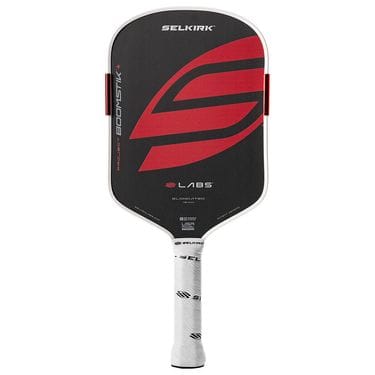
Second, the paddle matters. Kyle mentions using the Selkirk Labs Project Boomstik, which helped him generate the spin and control he needed. Equipment isn't everything, but the right paddle can make learning new techniques easier. If you're evaluating options, the Boomstik vs. Era comparison is a helpful starting point.
Third, the specific cues about paddle tip position and waiting for the ball were revelations. "That makes a lot of sense to me with the forehand," Kyle says, "but I never really considered it with the backhand."
Get 20% off a new Selkirk Boomstik with code THEDINK
Why This Matters for Your Game
The two-handed backhand dink isn't just for pros. It's a shot that can help players at every level create more offense from the kitchen line. Instead of just pushing balls back and hoping your opponent makes a mistake, you can hit shots that force errors or create attackable balls.
Cam's teaching approach, starting with the left hand alone, then adding the right hand for stability, gives you a clear progression to follow. You're not trying to master everything at once. You're progressively building the skill layer by layer. The 5 essential two-handed backhand shots breakdown with pro Connor Garnett is another outstanding resource to study alongside this lesson.
Once you develop the two-handed backhand dink, it opens up your entire backhand side.
- You're no longer running around balls to hit forehands.
- You're not limited to defensive slices.
- You have a weapon that lets you take control of points from anywhere on the court.
Love pickleball? Then you'll love our email newsletter. We send the latest news, tips, and highlights for free each week.
The modern game demands versatility. Players who can only hit one type of shot from each side are predictable. But add a two-handed backhand dink with topspin to your arsenal? Now you're someone opponents have to respect and prepare for. Understanding what separates good pickleball players from great ones comes down to exactly this kind of shot diversity. And if you want to see the topspin dink in full context at the professional level, CBS Sports has covered how the PPA Tour's top players bring this weapon to bear in high-stakes matches CBS Sports, giving recreational players a clear picture of what elite kitchen play actually looks like.
If you want more on the backhand side as a whole, our one-handed backhand deep-dive is worth bookmarking as a contrast, and the perfect pro-level backhand dink breakdown comparing slice vs. two-handed roll will sharpen your understanding of when to deploy each shot.
Frequently Asked Questions
What makes the two-handed backhand dink better than a slice at the kitchen line?
The two-handed backhand dink generates topspin, which creates a dipping ball that is far more difficult for opponents to attack than a flat or slice dink. A slice dink produces backspin that sits up and invites attack, while a topspin dink forces your opponent to deal with a ball that drops quickly and bounces aggressively, putting them on the defensive.
How important is the non-dominant hand in the two-handed backhand dink?
The non-dominant hand is the engine of the shot, responsible for roughly 85% of the work according to Cam Luhring. Practicing with only your off-hand on the paddle is one of the most effective drills for developing the muscle memory and brush motion that generates consistent topspin.
Why should I keep my swing short when hitting a two-handed backhand dink?
A compact swing gives you far more control at the kitchen line, allowing you to generate spin without losing placement. When you extend your follow-through the way you would on a groundstroke, you reduce your ability to keep the ball low and in the kitchen, which defeats the purpose of dinking at all.
How do I keep my two-handed backhand dink from being too predictable?
Dropping your paddle face is the key to disguising your shot direction. When your paddle face is dropped toward the ground before contact, you can redirect the ball crosscourt even when your body language suggests a middle or down-the-line shot, making your dink nearly impossible to read.
When is the right time to add the two-handed backhand dink to my game?
Once you are consistently comfortable at the kitchen line with basic dinking, the two-handed topspin dink is the natural next step to add offense to your soft game. Start by drilling the off-hand motion in isolation, then gradually layer in the dominant hand for stability until the full motion feels natural under match pressure.
Love Pickleball? Join 100k+ readers for free weekly tips, news & gear deals.
Subscribe to The DinkGet 15% off pickleball gear at Midwest Racquet Sports