
If you come from tennis, you know the definition of a groundstroke. If you're a pickleball player without a tennis background, then welcome to the guide to understanding groundstrokes.
We'll explain groundstrokes and how to hit better ones. You'll also learn a very important term almost all tennis players are taught: the kinetic chain.
What Is a Pickleball Groundstroke?
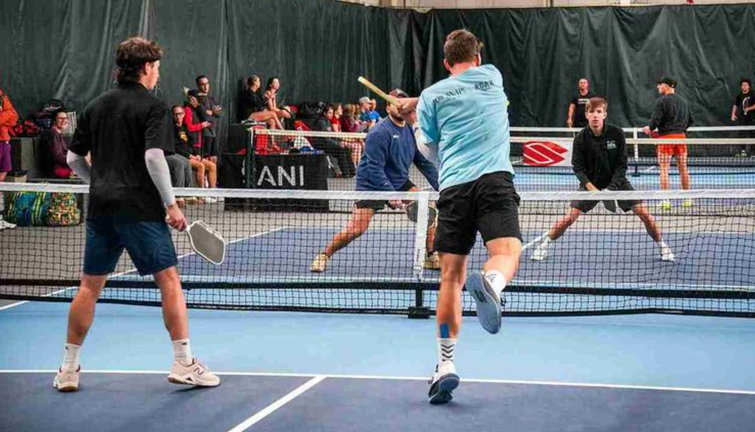
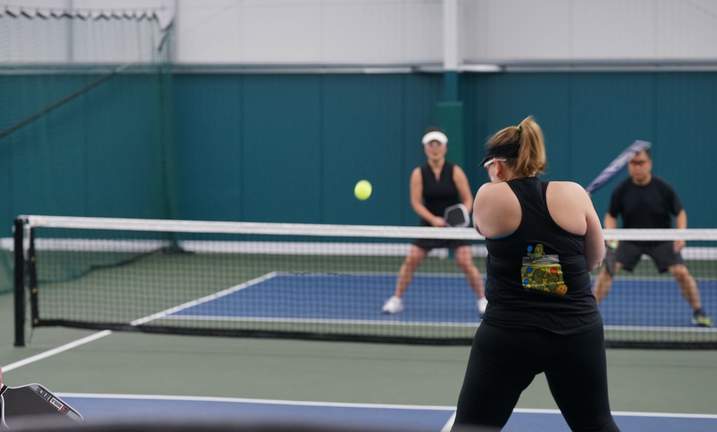
In any racquet or paddle sport, a pickleball groundstroke is any shot made after the ball has bounced. It can be executed from anywhere on the court but is most commonly performed near the baseline. Groundstrokes make up a decent portion of pickleball play and can be hit using either a forehand or backhand swing.
Mastering both is essential for a well-rounded game.
As we know, learning about something in pickleball and mastering it can be completely different beasts.
The Basics of the Pickleball Groundstroke
You won't use a lot of groundstrokes in pickleball since most of your play will happen between the transition and kitchen zone.
However, there are times when having great groundstroke mechanics can give you an advantage on the court. Specifically on the drive, the return, and drop shots.
This is often why tennis players can transition to pickleball so well.
When teaching the fundamentals of a groundstroke, coaches teach footwork first and the swing second.
Footwork First
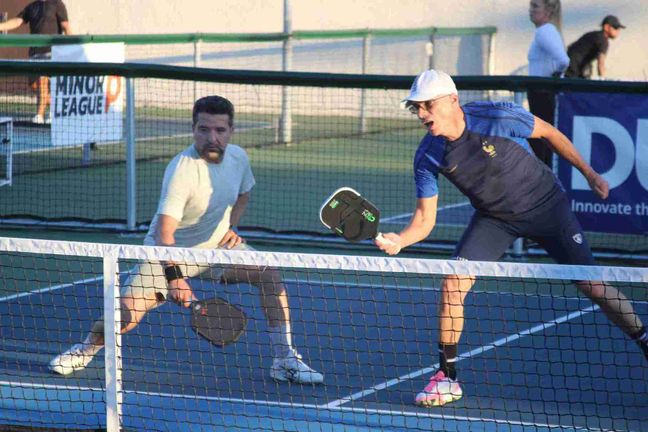
Your swing should not start with your arm. It begins with your feet. Many amateur pickleball players get this wrong.
To improve your footwork:
Start on the balls of your feet: This helps you move quickly to where the ball is headed.
Keep your paddle in front of you: Starting your swing while moving causes mishits and popups.
Get to your position quickly: It's better to be in position with your body and on balance before swinging at the ball.
 Jason Flamm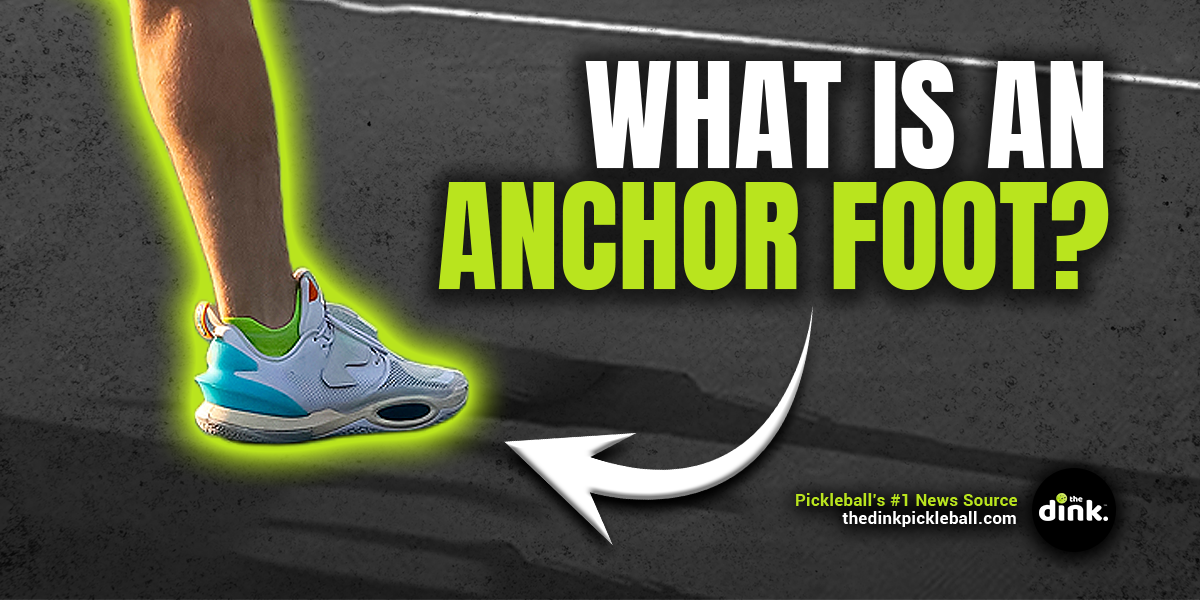
Swing Second
In tennis, you can (and should) have a big swing to help generate power and drive the ball across the bigger court. In pickleball, shorter swings are best. You don't need a lot of power.
Instead, you want your power generated by your body weight and lower half.
To improve your swing:
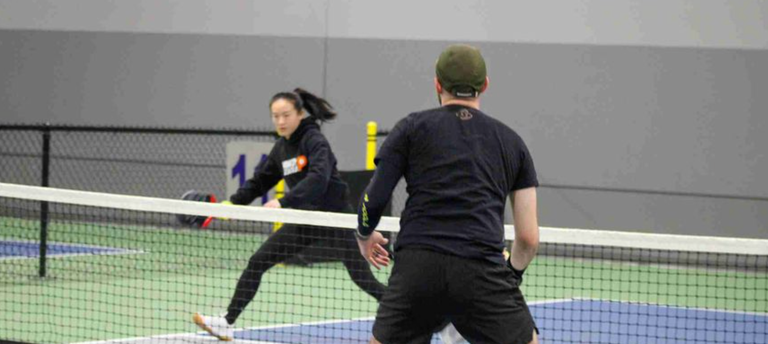
Transfer your weight back to front: By getting into position first, you should be able to transfer your weight from your back foot to your front foot for a good swing.
Meet the ball out in front: In pickleball, you want to keep the ball in front of your body and make contact out in front.
Keep the paddle in your peripheral vision: Even on groundstrokes, you want to try to keep the paddle within your view. If you take it behind your body, then you won't be able to see it, and this big swing can cause a lot of problems with your stroke.
These pickleball groundstroke fundamentals apply whether you hit a drive, return, or drop shot.
The Dink Media Team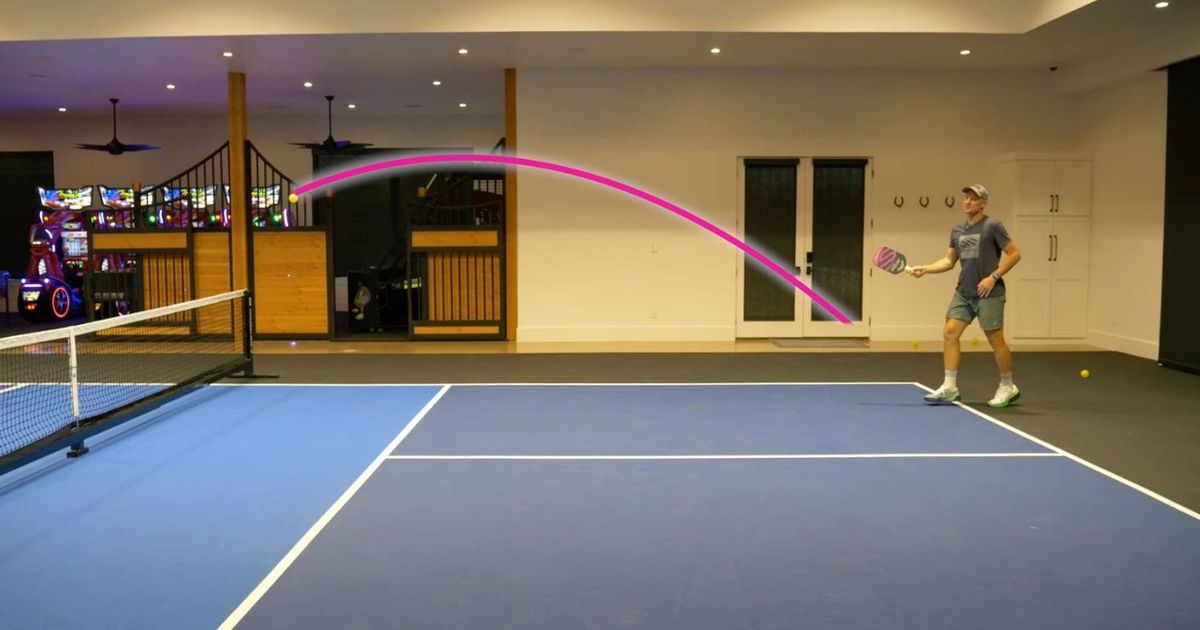
Advanced Techniques for a Better Pickleball Groundstroke
Once you've learned to move your feet first and focus on your swing second, you'll be ready to incorporate these other techniques to take your groundstrokes to the next level.
Jason Flamm
Rotate Your Body, Not Just Your Shoulder
When someone has a good groundstroke, it typically looks very smooth and fluid. When someone has a bad one, it looks jerky and a bit unnatural. Often, this difference is in the rotation of their body, mainly in their hips.
When you rotate your hips, you're helping your body transfer your weight from front to back and then back to front as you drive through the ball. Players who simply rotate their shoulder alone are losing that connection and aren't able to drive the ball as well because of it.
Use Your Off-Hand
A great way to improve your rotation is to use your off-hand. If you're a right-handed player making a forehand groundstroke, then you'll want to use your left hand to almost guide your paddle back and keep that connection with your body.
While it's not a necessary part of a good groundstroke, it can be helpful to some players.
You can see this in the YouTube video from pickleball pro Zane Navratil here:
Understand the Kinetic Chain
Body rotation and staying connected are both major players in developing an understanding of the kinetic chain. The kinetic chain is a system that describes how the body's interrelated parts work together to perform movement.
Tennis players are taught that each part of their body (even their toes) contributes to developing a fundamentally sound swing. Each "piece" of the chain builds off one another and must be performed in a specific order, or the swing doesn't work.
You can imagine this by visualizing an actual chain lying on a floor. If you grab the end of that chain and shake it, you will see that each link doesn't move until the one in front of it does.
Jason Flamm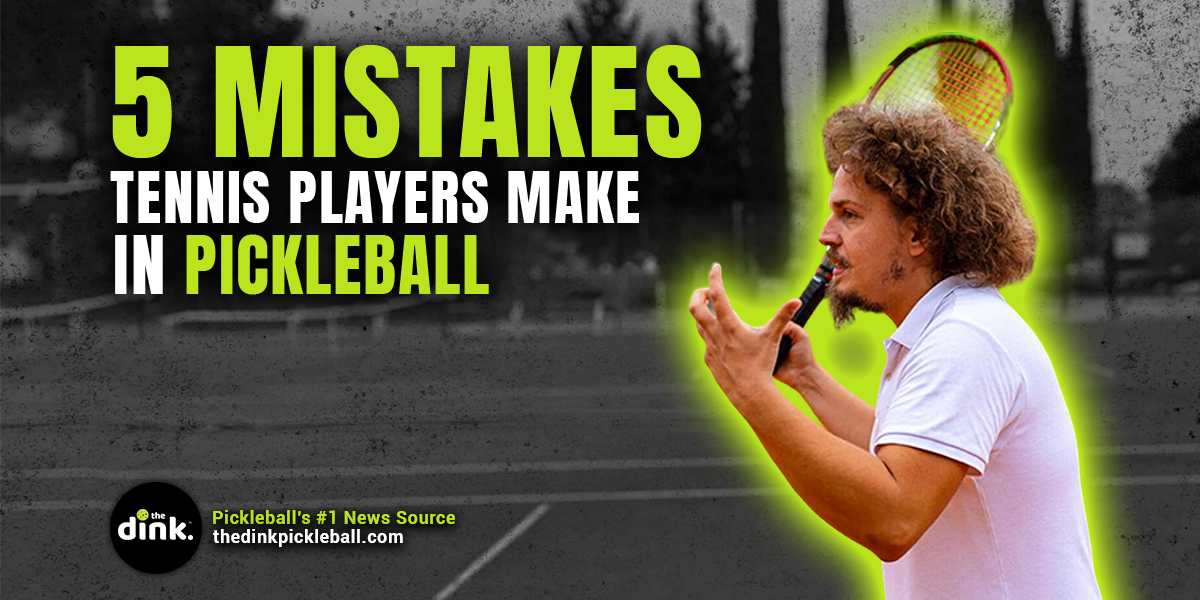
This matters in pickleball because where your feet are positioned, how your body is turned, how you bring the paddle through the ball, and how you finish your stroke all determine where and how far the ball will travel.
If you're struggling to understand this concept, check out this video on the kinetic chain and how it can break down during your swing.
Just pretend he's holding a pickleball paddle instead of a tennis racquet.
Drills to Help You Improve Your Pickleball Groundstroke
Unfortunately, there's no magic switch to help you hit better groundstrokes. You just have to practice them.
Fortunately, you can do this at home or using a ball machine.
At home, you can pretend there's a ball coming your way and just focus on getting into a position (with your feet), being on balance, then swinging your paddle using the techniques described above.
Will it feel silly? Yes. But it'll be pretty awesome when you're on the court and your groundstrokes begin to give your opponent fits.
With a ball machine, set up the machine to mimic a serve or return of serve. It doesn't need to be too fast, and you don't need to add any spin. Simply work on exactly what's presented above and hit as many as your body (and mind) will allow.
After a few sessions, you should see a huge improvement in your groundstroke technique, and maybe you'll even have people asking you, "Hey, did you play tennis?"
To which you can reply like a true pickleballer and say, "No. Tennis is stupid."
As ESPN detailed in their feature on top players transitioning from tennis to pickleball, the sport has a hard-core athletic side that demands genuine technique at any level of play ESPN, making a strong baseline game well worth developing.
Tips for Beginners Learning the Pickleball Groundstroke
If you're brand new to the game, a beginner's guide to pickleball fundamentals is an excellent starting point before diving into stroke mechanics.
Start slow and focus on one piece at a time. Begin with footwork, then layer in body rotation, then focus on paddle position.
Many players rush to the kitchen line before they understand how to generate a reliable baseline stroke. Understanding your court position helps you know exactly when a pickleball groundstroke is the right call.
Players who prioritize the fundamentals early tend to plateau less often and progress faster.
How the Pickleball Groundstroke Connects to the Rest of Your Game
A well-executed groundstroke opens up your transition game. Once you nail your drive or return from the baseline, you can move forward and begin working the transition zone.
The pickleball groundstroke is most impactful when used to set up the third shot, whether that's a drop or a drive. Understanding when to drive from deep versus when to drop is a key strategic decision that separates intermediate players from advanced ones.
It's not just about hitting hard. It's about hitting purposefully.
Catherine Parenteau, a former Division I tennis player, found that her tennis background gave her an early edge when she transitioned to pickleball ESPN, illustrating precisely how good groundstroke mechanics built in one paddle sport carry over to another. Her story, highlighted by ESPN, also shows how much adaptation is still required even with a strong foundation.
For players looking to build even more confidence on baseline swings, working on generating effortless power through proper body rotation is a natural next step after you've locked in your groundstroke basics.
Frequently Asked Questions
What Is a Groundstroke in Pickleball?
A pickleball groundstroke is any shot hit after the ball has bounced on your side of the court. It can be executed as a forehand or backhand and is most commonly used near the baseline during the return of serve or on deep drives.
How Is a Pickleball Groundstroke Different from a Tennis Groundstroke?
In pickleball, groundstrokes should use a shorter, more compact swing compared to tennis. Rather than relying on a big arm swing, you generate power through weight transfer and body rotation, keeping the paddle in front of you at all times.
Why Is Footwork So Important for a Pickleball Groundstroke?
Your footwork determines whether you can get into position and stay balanced before you swing. If you reach the ball off-balance or off-position, your pickleball groundstroke mechanics will break down no matter how good your swing is.
What Is the Kinetic Chain and Why Does It Matter?
The kinetic chain describes how every part of your body works in sequence to produce a powerful and accurate swing. In pickleball, if your feet, hips, torso, arm, and paddle don't fire in the right order, the stroke loses energy and consistency.
Can I Improve My Pickleball Groundstroke Without a Court?
Yes. Shadow swings at home are one of the most underrated ways to improve your groundstroke mechanics. Focus on your footwork, weight transfer, and paddle position during each rep, and you'll see real results the next time you step on the court.


Love Pickleball? Join 100k+ readers for free weekly tips, news & gear deals.
Subscribe to The Dink