Pickleball is unique in that every point begins with the same two shots: the serve and return.
Both shots are often overlooked, especially the return. While a good return in doubles can be helpful, hitting a bad return can really hurt you and lead to big scoring runs for the serving team.
Here are three ways to improve your pickleball return of serve.
1. Split Step as Your Opponent Is About to Strike the Ball
If you have played a sport before, odds are you executed some form of a split step at some point. The split step is a key piece of footwork designed to get you in a balanced position to move as needed to hit the next shot.
You should be split stepping multiple times in a single point, but especially before executing a pickleball return of serve.
Just like with your serve, try to establish a routine and execute it every time before returning. Start a few feet behind the baseline, and as your opponent is about to hit their serve, take a step forward (I like to do a mini jump) and split step your feet, ensuring they are shoulder width apart.
 Jason Flamm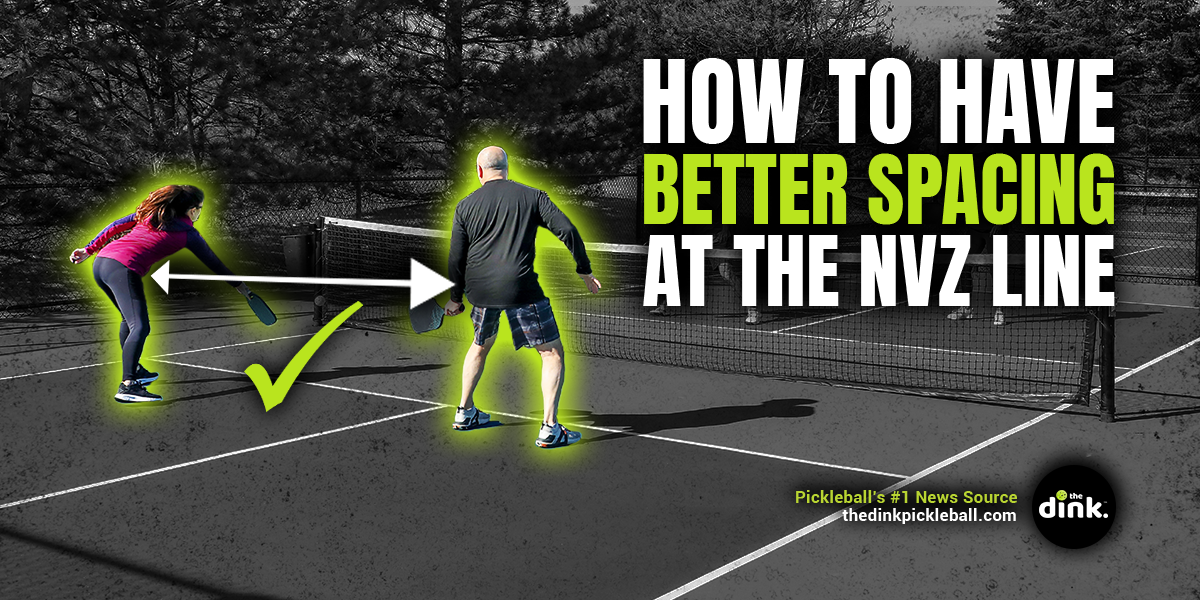
Your body should be low and your legs should be bent. This will help you handle more difficult serves that land deeper. Keep your paddle in the middle in the ready position, so you can hit either a forehand or a backhand return.
2. Keep Your Body Down and Your Swing Short on Every Return of Serve
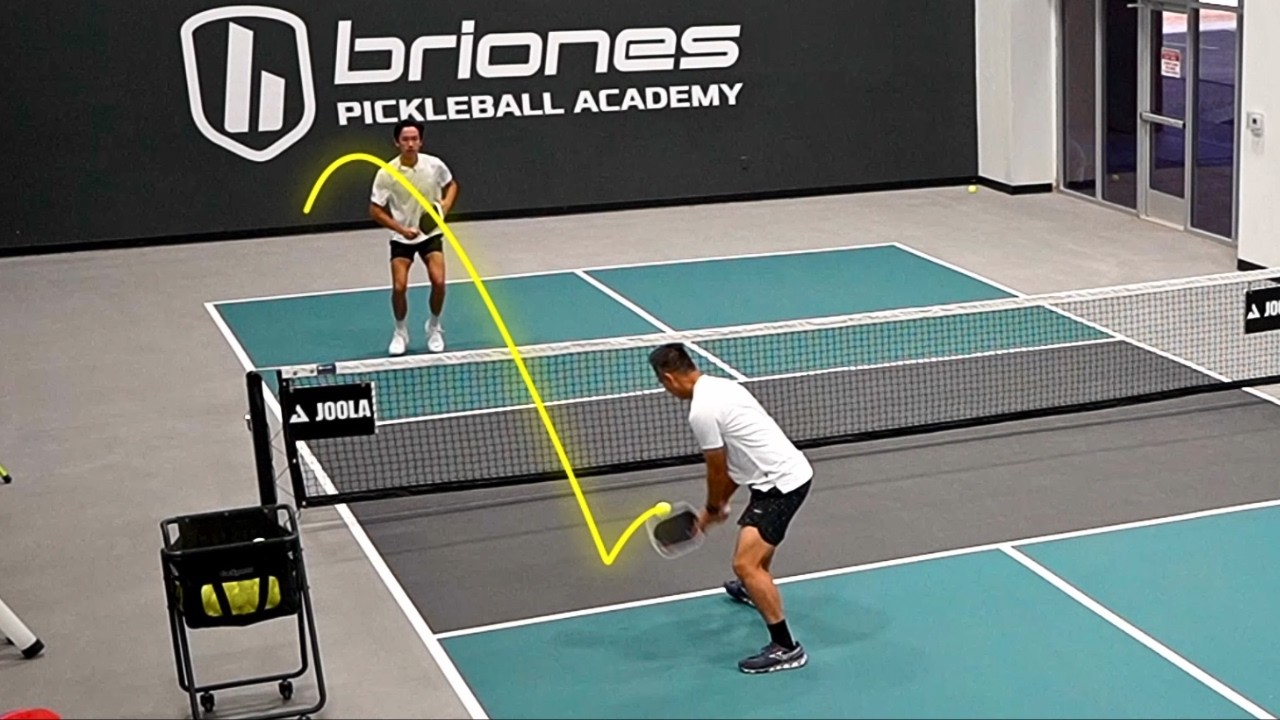
The biggest mistake amateurs make when missing returns is standing up when hitting them and taking too big of a swing. It is crucial to stay low on your return of serve and to keep your paddle down closer to the ground too.
If your opponent hits a penetrating and heavy serve, it means the ball is going to bounce closer to the baseline and therefore be more difficult to handle. You also have a greater chance of having the ball skid off the line with a weird bounce.
Both of these can be negated if you get low for the return.
Bend your legs and knees and keep your paddle closer to the ground. Not only will this help negate any funky bounces or deep serves, but it will help you swing flat through the ball and hit a deeper return.
Speaking of the swing, you want to keep your return of serve swing as short as possible. Your opponent is generating most of the pace with their serve (assuming it isn't a slow sitter), meaning you should be able to just take their pace and redirect the return into the court.
Imagine you are wearing a hula hoop around your waist. You should never pull the paddle beyond that hula hoop on your backswing. Keeping your swing short will help you avoid mistiming the ball and will help with your accuracy. Simple Wall Drills to Take Your Pickleball Skills to the Next Level
Why Staying Low Transforms Your Serve Return
Staying low is one of those small mechanical adjustments that creates massive improvement in your receiving game. When your knees are bent and your paddle stays close to the ground, you naturally achieve a compact, controlled swing that is far more consistent than standing upright and taking a full cut at the ball.
This is especially true against players who can hit a heavy topspin drive or a powerful serve to your feet. Getting low eliminates the bounce variable and gives you a stable contact point every time.
3. Aim for a Big Target and Don't Run Through the Ball
Another common error that amateurs make when hitting returns is they move through them to try to get to the kitchen faster. Yes, getting to the kitchen quickly is important.
Eric Roddy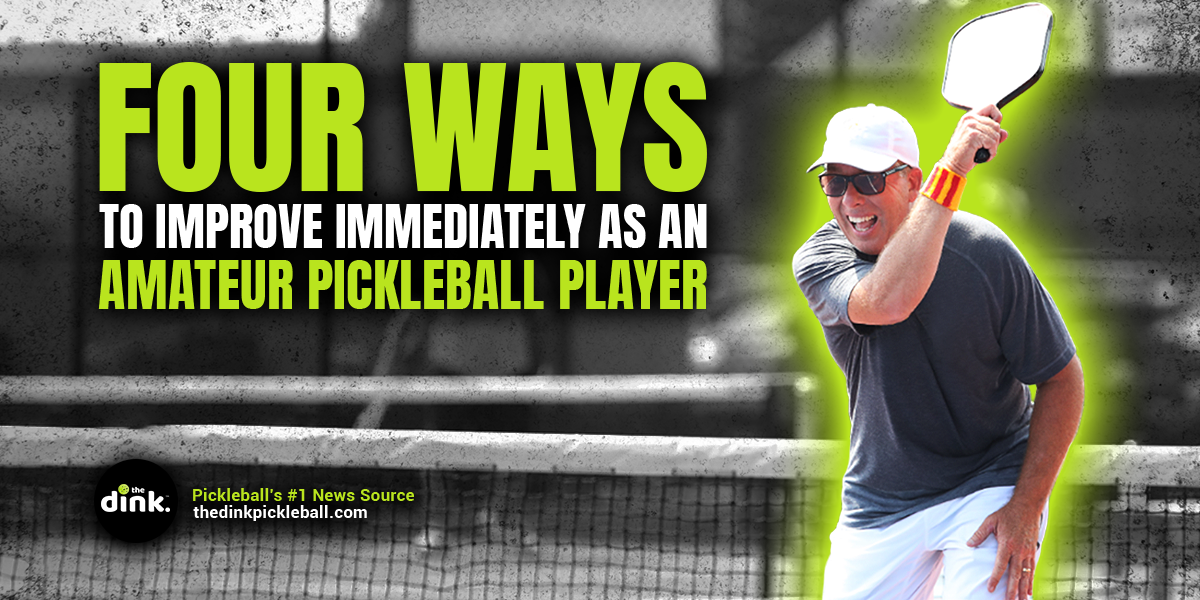
It is not, however, worth missing the return.
Take your time hitting the return. Make sure you follow your routine (including the tips mentioned above) and know that a good, deep return will actually give you more time to get to the kitchen.
Next, your target for the pickleball return of serve is crucial. In doubles, returning to a specific opponent is usually the strategy. I like to return to the player who struggles to hit consistent third shots. Sometimes I like to return to the opponent who is better at poaching.
Either way, decide a strategy for how you will return and stick to it.
Regardless of who you decide to return to, make sure you are visualizing a big target. That means not trying to hit the return perfectly on the line (either sideline or baseline), and aiming high enough above the net to clear it.
You can never go wrong with hitting a return deep to the middle. This will not only make your opponents talk about who should take it, but it will get rid of angles and give you time to make it safely to the kitchen line.
Targeting Strategy for a Better Pickleball Return of Serve
Understanding where to place your return of serve separates developing players from competitive ones. The 4 Essential Pickleball Return Targets to Play Like a Pro explores targeting in depth, and the principles align with what we are covering here.
The best returners always identify their target before the serve is even struck. By deciding ahead of time whether you are going to the middle, down the line, or at a specific opponent, you eliminate hesitation and free up your movement toward the kitchen. A return down the middle forces indecision between opponents and reduces their angles of attack on the third shot.
Mastering the Pickleball Transition Zone is also directly impacted by your serve return. A well-placed deep return gives you extra time to navigate the transition zone and arrive at the kitchen line in a strong, ready position.
Bonus Drill: Target Cone with Returns
Now that you have some tips in your arsenal for improving your pickleball return of serve, here is a great drill to help you execute these tips.
Get with your practice partner and take turns as the server and returner. Have the server set up a cone or target down the line about one foot from the baseline and two feet from the sideline. Starting on the right side, practice hitting your returns down the line to that target.
Hit returns until you successfully hit within a foot of the cone in any direction.
Then, move the cone to the middle of the court and repeat. Finally, move the cone to the other corner and practice hitting cross-court returns. Do this drill returning from both the right and left side of the court, then switch with the server.
This drill will help you practice accuracy and developing your pre-return routine.
For more ways to sharpen your game, check out The 12 Drills You Need to Play Your Best Pickleball in 2026, How to Be More Effective with Your Return of Serve, and 8 Doubles Strategies Nobody Talks About in Pickleball.
Enjoy the grind, and remember, you can't dink all day if you don't start in the morning.
Frequently Asked Questions
What is the most important thing to remember when hitting a pickleball return of serve?
The most important thing is to make the return. A consistent, deep pickleball return of serve is always more valuable than a risky, aggressive one that results in an unforced error and free points for the serving team.
Why should I split step before returning serve in pickleball?
The split step puts your body in a balanced, athletic position so you can move in any direction the moment you read where the serve is going. Without it, you will often get caught flat-footed and forced into an awkward, late swing on your return of serve.
How do I stop hitting returns into the net in pickleball?
The most common cause is standing up through contact and swinging too big. Stay low with bent knees, keep your paddle closer to the ground, and shorten your backswing. A compact, controlled swing generates more than enough pace when combined with your opponent's own serve speed.
Where should I aim my pickleball return of serve in doubles?
Aim deep to the middle of the court as your default target. This forces both opponents to communicate about who takes the ball, eliminates sharp angles on the third shot, and gives you maximum time to reach the kitchen line after your return of serve.
How can I use my return of serve to get to the kitchen line faster?
Hit a deep, high-arcing return rather than rushing the shot itself. A deep serve return naturally buys you more transition time because it keeps your opponents pinned at the baseline. Why Depth Is Key in a Pickleball Return breaks down exactly how this principle works in practice.

Eric Roddy
Eric is a PPA tour pro living in Charlotte, NC, sponsored by Paddletek. In addition to playing PPA events, he teaches pickleball 2-3 hours a week, enjoys golf, and listening to his favorite band Goose.
Love Pickleball? Join 100k+ readers for free weekly tips, news & gear deals.
Subscribe to The Dink