Sometimes, pickleball can feel hard. By fixing a couple elementary errors, suddenly it becomes a lot easier.
Spotting a beginner pickleball player takes about two minutes.
They're usually making the same five mistakes over and over, and those mistakes are exactly what's holding back their game. But once you recognize what those mistakes are, you can fix them. Fast. PlayPickleball.com breaks down these common errors and shows you how to turn them into strengths.
Love pickleball? Then you'll love our free newsletter. We send the latest news, tips, and highlights for free each week.
Your Serve and Return Need Real Intent
Most beginners treat the serve like a formality. They just want to get it in, which means they're leaving massive tactical advantages on the table.
Here's what separates beginners from advanced players: aim matters.
When you're serving, target your opponent's inside foot. If they're standing on the right side with their paddle on the outside, aiming inside creates confusion about whether they should run around it with a forehand or hit a backhand.
The same goes for depth and spin. You should be missing at least two to three serves deep per match. If you're not, you're probably playing it too safe.
Your return deserves the same energy. A good flat, deep return makes your opponent's drop or drive much harder to execute. Focus on forward momentum with your legs and a flat swing, not a low-to-high motion.
 The Dink Media Team
The Transition Zone Is Where Beginners Panic
Moving from the baseline to the kitchen is where most beginners fall apart. They either stay back out of fear or sprint through the transition zone because they're terrified of getting attacked.
Advanced players have a strategy here. They move up based on what their opponent is about to do, not just where the ball is. Watch your opponent's paddle position. If their paddle tip is down below the net, they can only hit the ball up, so you can move forward. If their paddle is up and high, they're about to hit down, so stay back.
This reads like a simple adjustment, but it changes everything about how you control the point.
Master the Split Step and Own the Middle
The transition zone has a name for a reason: you're transitioning. And the best tool for that transition is the split step.
After you hit the ball, split step and stop before your opponent makes contact. If you hit with a lot of pace, you won't gain as much ground, so split step sooner. If you hit a nice drop shot, you get more time because the ball has extra loft. PlayPickleball.com calls this the "LOFT" principle: lots of freaking time.
Once you're in the transition zone, prep based on where your opponent is. If they're up at the net, prep low because the ball's coming down. If they're swinging from below, prep higher to attack. It's the teeter-totter effect: they go up, you go down; they go down, you prep up.
 The Dink Media Team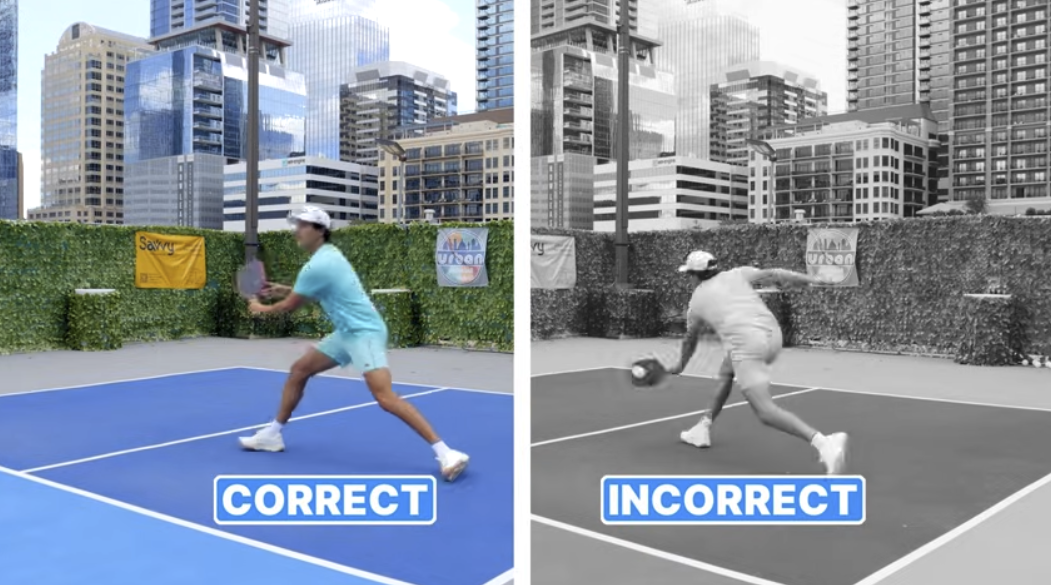
Dinking Isn't About Reacting, It's About Dictating
Beginners treat every dink the same way. They react to what comes at them instead of making strategic decisions.
When you get pulled off balance or wide, your instinct might be to speed up the ball. Don't. That's a panic response, and it leaves you vulnerable. Instead, hit a defensive reset to the middle, get back in position, and wait for a better ball to attack.
The difference between offensive and defensive dinks is huge:
- Offensive dinks: You're in control and the ball is sitting up for you to attack.
- Defensive dinks: You're off balance or pulled wide, so reset to the middle and reset your position.
 The Dink Media Team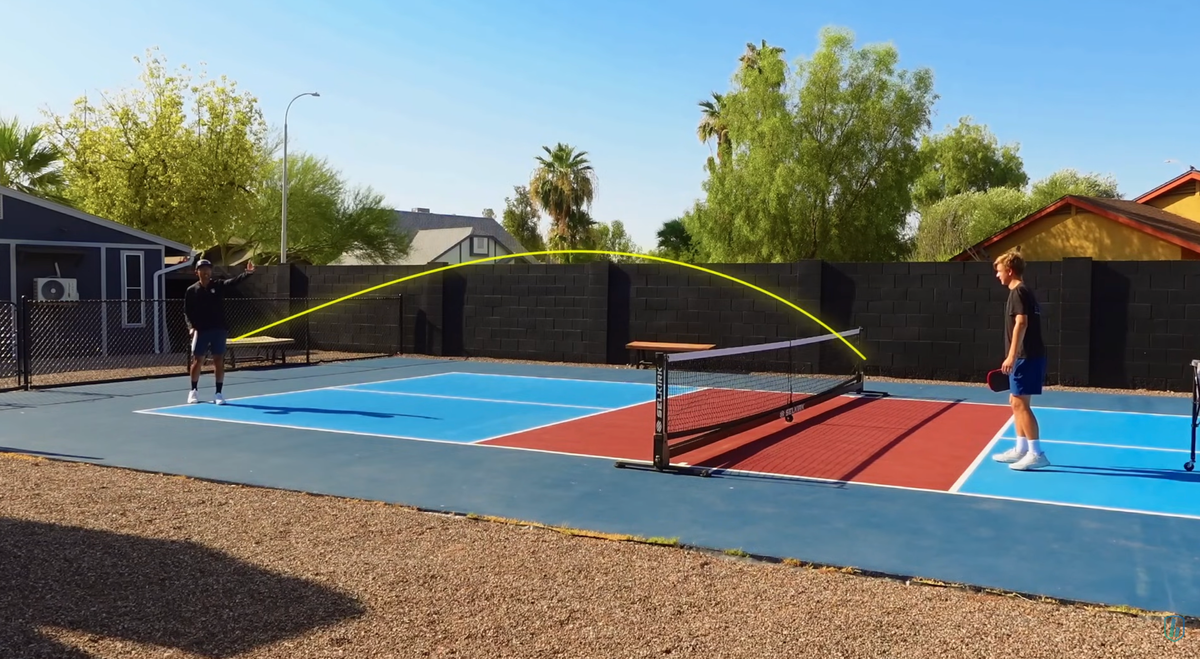
Never Give Up on a Popped-Up Ball
This last mistake might sound simple, but it's the most important one. Beginners give up too easily when they pop the ball up.
If you pop one up at the kitchen line, don't surrender. Shuffle back quickly, plant your feet, and get your paddle down low. The ball is probably coming down at your feet, so be ready to defend. If it doesn't come down at your feet, it'll go out anyway.
 The Dink Media Team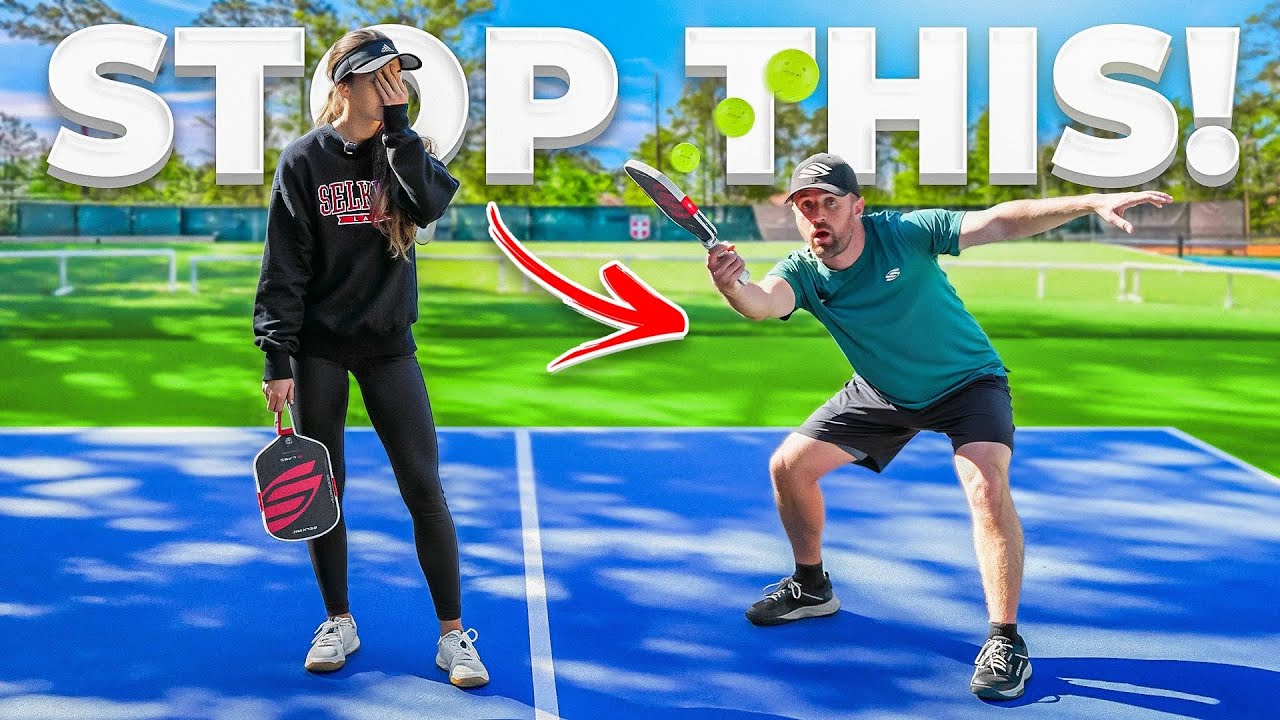
The same applies at the baseline. If you float a drop shot too high and you know they're about to crush it, get active with your feet and react. A lot of points are won simply by getting the next ball back.

Love Pickleball? Join 100k+ readers for free weekly tips, news & gear deals.
Subscribe to The DinkGet 15% off pickleball gear at Midwest Racquet Sports