Pickleball Partnership Etiquette: How Pro Players Find and Keep Their Perfect Match
PPA pros Ava Ignatowich and Camila Zilveti explore the messy, complicated, and surprisingly human side of locking down a doubles partner event after event
Finding a pickleball doubles partner in professional pickleball isn't exactly a formal process.
There's no official matchmaking system, no algorithm, no LinkedIn for the pro tour. Instead, it's Instagram DMs, text messages, and the occasional awkward conversation at a tournament.
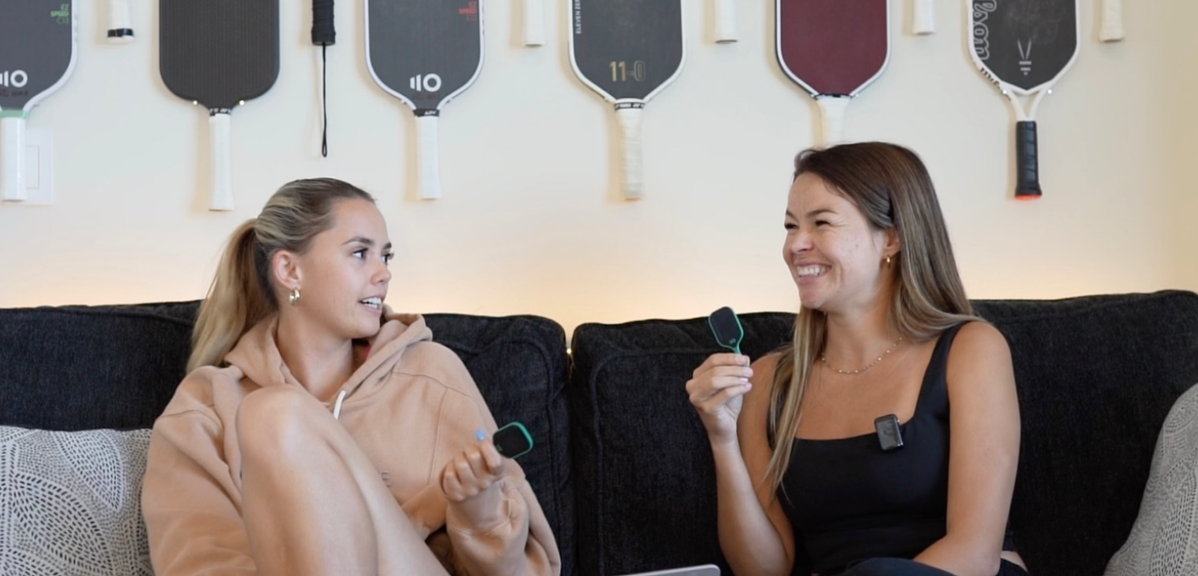
That's the reality Ava Ignatowich and Camila Zilveti unpacked in the latest episode of their new podcast, "Balls Deep," where they explored the messy, complicated, and surprisingly human side of how pro players coordinate partnerships.
"It's not really as intricate or professional as you would think," says Ava.
Love pickleball? Then you'll love our free newsletter. We send the latest news, tips, and highlights for free each week.
The Informal Reality of Finding a Pickleball Doubles Partner
Here's the thing: when Camila first joined the pro tour, she didn't know the unwritten rules. She was out here emailing potential partners like she was applying for a job.
Spoiler alert: nobody replied.
"I was like, 'Hello, I saw you were missing a partner. Would you like to play?'" she recalled.
"No one replied because who is emailing to get partners? No one."
The actual process is far more casual.
Players typically reach out through Instagram DMs or text, asking if someone wants to team up for a specific tournament. Sometimes they ask around for a player's number first. It's informal, it's spontaneous, and it works because everyone on the tour understands the system, even if nobody explicitly teaches it to newcomers.
The Professional Pickleball Association (PPA) has added some structure by maintaining a set player list, meaning you can only compete with other signed players.
Before that rule existed, you could theoretically partner with anyone. But even with this limitation, the process remains largely decentralized.
The Logistics Nightmare of Managing a Pro Pickleball Doubles Partner
Managing multiple partnerships across 20-plus tournaments a year is genuinely complicated.
Ignatowich plays both women's and mixed doubles, which means she needs to coordinate roughly 40 partnerships annually. All of these arrangements happen through different channels: Instagram DMs, text messages, Twitter, phone calls, and whatever else comes up.
It can be chaos.
She's even triple-booked before. Once, she thought she was committing to three different tournaments — Orange County, San Clemente, and LA — when they were actually all the same event.
She said yes to three different people for one tournament.
"That was really tough," she admitted. The lesson? When people ask months in advance, she now tells them to remind her a week before the event.
 The Dink Media Team
Zilveti, on the other hand, keeps a spreadsheet. She's got her system down.
When deciding whether to play a tournament, she waits until about a week before registration closes. Then she texts the player liaison asking who's available.
She prioritizes finding a women's doubles partner first because, as she explained, "there's infinite mixed partners, so that's not never an issue." Once she has a women's partner locked in, she moves on to finding a mixed doubles partner.
If you want to understand the full structure of how to play pickleball doubles, including court positioning and scoring rules, it helps to know what pros are working with before they even step on the court.
The Etiquette of Dropping Your Pickleball Doubles Partner
Dropping partners happens constantly on the pro tour, and the etiquette around it is complicated. The general consensus? Give people ample notice.
Don't drop someone two days before a tournament. That's just rude.
But what if you get a better offer? Most players would text their current partner first and explain the situation.
"This is our career," says Ava.
"You do want to play with the best partner possible."
That said, not everyone on tour is easygoing about it. Some players will get upset if you drop them.
Dropping happens way more at the higher levels of competition than at lower levels. Top-10 players are constantly switching partners, while recreational players tend to stick with the same person. As CBS Sports coverage of the PPA Tour has shown, even the top doubles seeds feature different pairings from event to event.
The end of the partnership between Anna Leigh Waters and Catherine Parenteau is one of the most high-profile examples of what a dissolution between elite doubles partners can look like publicly.
 Erik Tice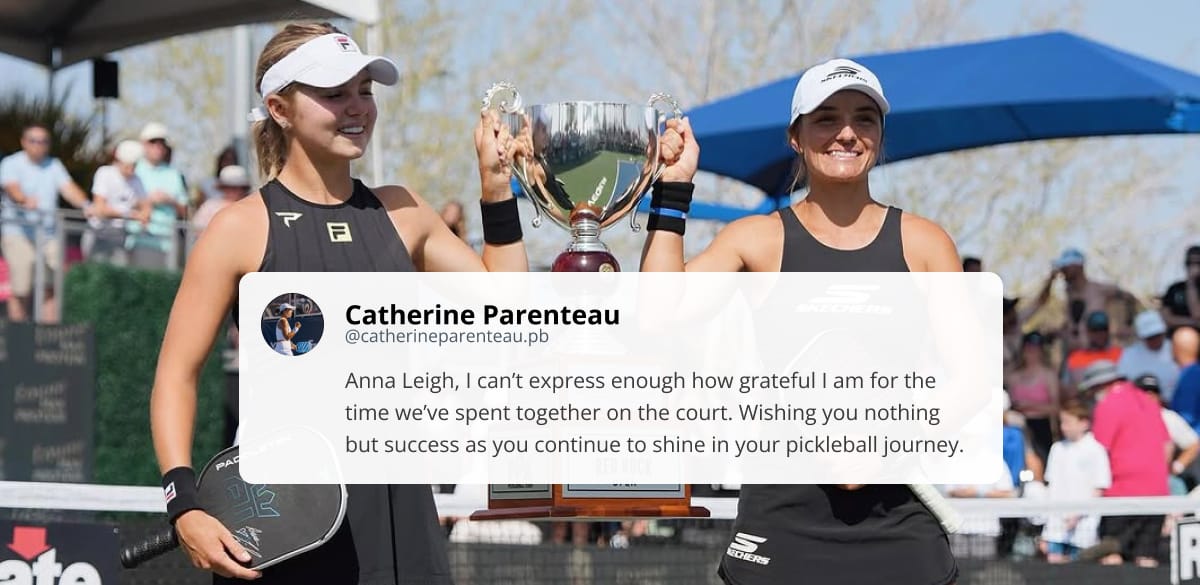
There's also the matter of reputation. If you develop a reputation as someone who drops partners constantly, people become hesitant to commit to you.
It's a delicate balance between pursuing the best opportunities and maintaining relationships in a relatively small community.
The Bigger Picture: Why the Pickleball Doubles Partner System Works
What's fascinating about all this is how human it remains despite being a professional sport.
There's no app, no centralized system, no algorithm matching players based on compatibility scores. It's just people texting each other, sometimes forgetting commitments, occasionally getting upset when they're dropped, and generally trying to figure out what works best for their career.
The pro pickleball world is still relatively small and tight-knit. Everyone knows everyone, which means your reputation matters. Drop too many people, and word gets around.
Be reliable and easy to work with, and you'll have no trouble finding a pickleball doubles partner.
Conduct on and off the court affects how peers perceive you, and egregious behavior on tour has led to suspensions that reinforce just how seriously the community takes player accountability.
 Alex E. Weaver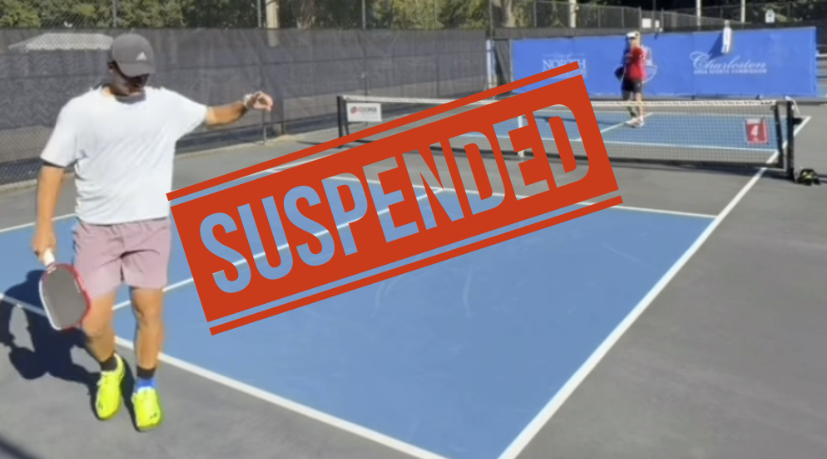
Zilveti and Ignatowich even joked about what a Tinder-style system for pickleball doubles partner selection would look like. Everyone gets access to all the players, you swipe right on who you'd be willing to partner with, and if both people swipe right, it's a match.
Then you decide which tournament to play together. It's a funny idea, but honestly, it might solve a lot of problems.
Knowing the strategic side of the court also matters. Understanding concepts like doubles stacking can make or break a newly formed doubles partnership in competition.
For now, though, the system works because the community makes it work. Players are responsive, generally respectful of each other's time, and understanding about the realities of professional sports.
Sure, there's drama. Sure, people get dropped.
But at the end of the day, everyone needs a pickleball doubles partner, and everyone knows that finding one is just part of the game.
There's a reason player movement is tracked so closely, from the MLP trade tracker to announced keeper decisions like those covered in the MLP keepers and roster moves story. Partnerships matter, and the whole community is watching. ESPN's coverage of player signings and tour moves shows just how much outside attention professional pickleball partnerships now attract.
For players serious about developing their own game, 8 doubles strategies nobody talks about is a strong place to start building chemistry with any new partner.
Frequently Asked Questions
How do professional pickleball players find a doubles partner?
Most pro pickleball players find a doubles partner through informal channels like Instagram DMs, text messages, or word-of-mouth referrals. There is no official matchmaking system or centralized platform on the pro tour, so players reach out directly or ask around for contact information.
Is it normal to switch your pickleball doubles partner between tournaments?
Yes, switching a pickleball doubles partner between events is extremely common, especially at the highest levels of competition. Top-10 players regularly change partners from tournament to tournament depending on availability, strategy, and who offers the best chance of winning.
What is the etiquette for dropping a doubles partner in professional pickleball?
The general rule is to give your pickleball doubles partner as much advance notice as possible before dropping them. Most players agree that waiting until two days before a tournament to inform a partner is considered poor form and can damage your reputation in the tight-knit pro community.
How many partnerships does a top pro pickleball player manage in a season?
A player competing in both women's doubles and mixed doubles across a full PPA Tour season may manage roughly 40 or more separate pickleball doubles partner arrangements per year. Coordinating that many partnerships across 20-plus events requires strong communication and, for some players like Camila Zilveti, an actual spreadsheet.
Does the PPA Tour have rules about who you can partner with in doubles?
Yes, the PPA Tour maintains a signed player list, meaning you can only compete as a pickleball doubles partner with other contracted players on the roster. This rule was not always in place, but it has since been implemented to add structure to the otherwise informal process of partner selection.
Love Pickleball? Join 100k+ readers for free weekly tips, news & gear deals.
Subscribe to The DinkGet 15% off pickleball gear at Midwest Racquet Sports