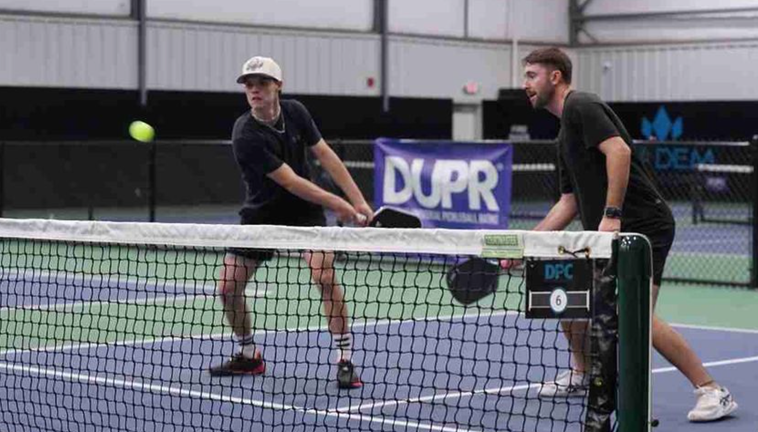

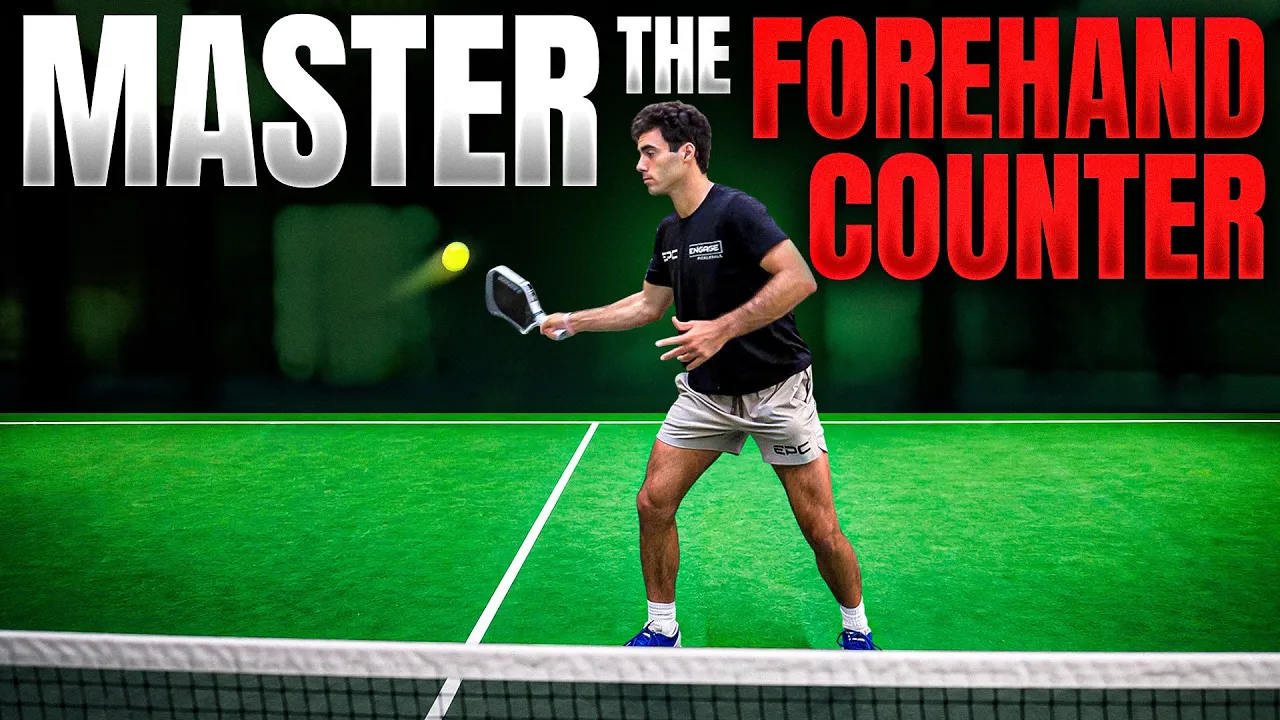
The forehand counter is one of the most challenging shots in pickleball, especially for continental grip players. Master this essential technique with the proven methods used by top pros.
The forehand counter is one of the most misunderstood shots in pickleball, and it's costing you points at the net.
Most players struggle with it because they swing too big, panic under pressure, or don't understand the fundamental mechanics that separate pros from everyone else.
If you're playing with a continental grip (which you should be at net), the traditional forehand counter approach simply doesn't work.
Love pickleball? Then you'll love our free newsletter. We send the latest news, tips, and highlights for free each week.
Why the Continental Grip Changes Your Forehand Counter
Here's the thing: if you're hitting with an eastern or semi-western grip, the forehand counter feels natural.
Your paddle face is already tilted in a way that lets you swing through the ball with control. You can even snap your wrist and still land it in the court.
Players with these grips love the forehand counter because it's forgiving.
But if you're using a continental grip at net (which modern pickleball demands), everything changes.
When you take your paddle back with a continental grip, your paddle face is nearly vertical.
If you try the traditional slappy wrist-based counter, you lose control immediately.
The ball flies long, wide, or into the net. This is why so many continental grip players feel stuck with the forehand counter.
APP pro Richard Livornese has spent years solving this exact problem.
His solution? Stop thinking like a tennis player and start thinking like a ping pong player.
This mindset shift alone changes everything about how you approach net play.
The Ping Pong Forehand Model for a Stronger Forehand Counter
The breakthrough for the forehand counter isn't a new grip or a wrist trick. It's a completely different movement pattern.
Instead of relying on wrist snap, you need to model your counter off the ping pong forehand, which uses your arm and shoulder to generate power and control.
Here's how it works: take your paddle back with a compact motion, then accelerate through the ball using your arm and shoulder, not your wrist.
This creates a unit turn where your shoulders rotate slightly, your arm comes back, and everything loads together before you accelerate through the shot.
The wrist stays locked throughout.
This approach works on balls at any height: high, middle, or low.
It's consistent because you're not timing up a wrist snap with a continental grip, which is nearly impossible to do repeatedly under pressure.
Instead, you're using a simple, repeatable arm motion that feels solid every time you hit it.
If you're working on developing faster hands in pickleball, this arm-based motion is the foundation you need to build on first.
Learning to use your arm instead of your wrist is what unlocks real consistency in hands battles.
Setting Your Wrist Before You Execute the Forehand Counter
The most critical detail for the forehand counter is understanding when to set your wrist.
Most players set their wrist as they swing, which creates inconsistency.
The pros do it differently: they preset their wrist the moment they take the paddle back.
Here's the sequence: set, move, hit. Not set-and-move-at-the-same-time. Not move-and-set-as-you-hit.
It's set first, then move, then hit.
When you take your paddle back, don't use an open palm. Instead, take it back with a slightly closed palm.
This preset position is what allows you to stay compact, consistent, and able to generate power and spin.
It's the foundation of every good forehand counter you see at the pro level.
Players who've studied kitchen line hands battles know that the player who presets wins the exchange.
The player who's still figuring out their wrist mid-swing is always a half-step behind.
This is also why stopping the habit of popping the ball up starts with presetting your wrist before you ever move.
 The Dink Media Team
The Advanced Move: The Pointer Technique for the Forehand Counter
Once you've mastered the basic forehand counter with a locked wrist and arm motion, there's one more layer that separates good players from great ones.
It's what Richard calls the "pointer" technique, and it's about how you set your wrist angle.
Instead of setting your wrist straight up, set it with a slightly closed face.
Think of it like pointing your finger down and out, as if you're pointing at someone.
This drops the paddle head slightly and closes the face, which provides more whip through the ball.
Why does this matter? Because it allows you to handle different ball heights with the same swing path.
When the ball is high, your paddle tip is high. When it's middle, your tip is middle. When it's low, your tip is low.
This consistency is huge. Without the pointer technique, if your paddle starts high, your tip is always high, which makes low balls nearly impossible to attack.
The pointer technique isn't extreme. You're not dramatically dropping your wrist.
It's just a subtle adjustment, even a tiny bit of closed face, that really allows you to snap through the ball with confidence.
Top players who've mastered the pro speed-up strategy at the kitchen line use this exact wrist preset to make every counter look effortless.
The Dink Media Team
Drilling the Forehand Counter the Right Way
The best way to build the forehand counter into your game is through targeted drilling.
Richard recommends a simple setup: one player feeds balls at varying heights while the other focuses on keeping the paddle tip matched to the ball height.
Start with balls at different heights: high, middle, and low. Watch your paddle tip.
It should move with the ball, not stay locked in one position.
This drill trains your body to use the pointer technique naturally, without overthinking it.
As you get comfortable, add speed. Have your partner hit faster balls.
The beauty of the arm-based forehand counter is that it's easy to time up because you're not relying on wrist snap.
Even when the ball comes fast, your locked wrist and unit turn make it simple to stay on time.
Pair this drill with the 12 drills you need to play your best pickleball in 2026 and you'll start seeing real improvement in your net play consistency within weeks.
You can also add simple wall drills to your solo practice routine to reinforce the compact arm motion between sessions.
The Dink Media Team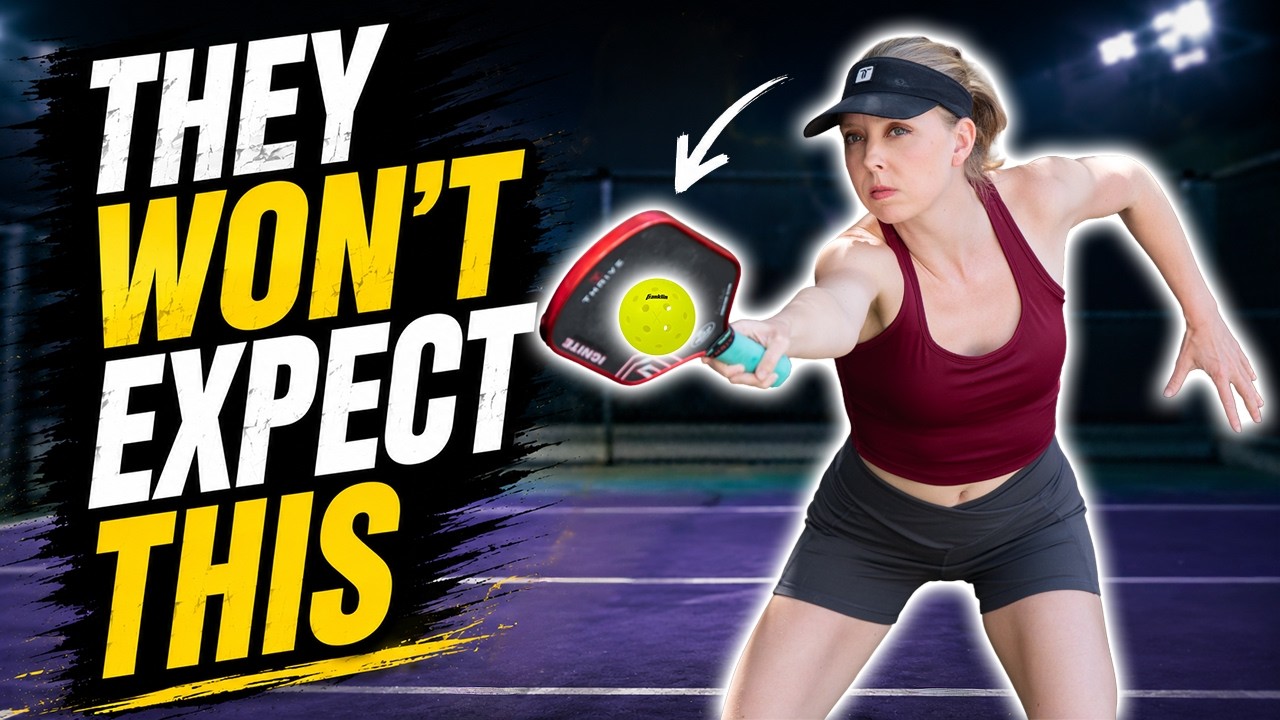
From the Kitchen Line to Deeper in the Court: Where Forehand Counters Dominate
One of the biggest advantages of the forehand counter technique Richard teaches is that it works from anywhere on the court.
Most wrist-based counters fall apart as you move back from the net. The timing gets sporadic. The control disappears.
But with the arm-based approach, you can counter from deep in the court. You can even counter a dead ball that your opponent just dropped.
This versatility is what separates players who can only counter at the net from players who can counter anywhere.
Understanding when to play safe vs. when to attack in the transition zone is part of the same skillset that makes your forehand counter so dangerous.
This is how the pros do it.
When you watch Ben Johns or other top players counter from different court positions, they're using this same locked-wrist, arm-driven motion.
It's not flashy. It's not complicated. It's just fundamentally sound.
Pro players who also excel at attacking drives and beating bangers rely on the same arm-based mechanics to stay consistent under pressure.
The pickleball forehand counter isn't just a defensive reaction shot. It's an offensive weapon when you've got the right mechanics dialed in.
The Dink Media Team
The Mental Side of the Forehand Counter
Here's something that doesn't get talked about enough: the forehand counter is as much mental as it is physical.
When you're using a wrist-based counter, it feels loose and unpredictable. You're almost getting lucky when you hit a good one.
This creates doubt.
When you switch to the arm-based approach, everything changes. It feels stiff and controlled.
You know exactly what's going to happen when you swing. That confidence translates directly into better execution under pressure.
In a firefight at the net, confidence is everything.
Players who've built smart shot decision-making habits will tell you the same thing: the shots you trust are the shots you hit well.
And breaking through the pickleball plateau often starts with replacing shaky wrist-based mechanics with a locked-arm motion you can actually rely on.
The forehand counter doesn't have to be the shot that holds you back.
By shifting from a wrist-based approach to an arm-driven, ping pong-style motion, you'll find consistency, control, and the ability to dominate hands battles at the net.
The key is understanding that your wrist needs to be preset, your arm does the work, and your shoulders provide the power.
Practice these fundamentals, and you'll be countering like a pro in no time.
Frequently Asked Questions
What is a forehand counter in pickleball?
A forehand counter is a reaction shot hit at the kitchen line when your opponent attacks your forehand side. It relies on compact mechanics, a preset wrist, and an arm-driven motion to redirect the ball with control and consistency.
What's the difference between a forehand counter and a forehand drive?
A forehand counter is a reaction shot hit at the net when your opponent attacks you. A forehand drive is an offensive shot you initiate from deeper in the court. The counter requires compact mechanics and quick timing, while the drive allows for a longer swing path.
Can I use a forehand counter with an eastern grip?
Yes, but it's easier with an eastern grip because the paddle face is naturally tilted. With a continental grip, you need the arm-based technique described here to maintain control and consistency in your forehand counter.
How long does it take to master the forehand counter?
Most players see improvement within a few weeks of focused drilling. Full mastery, where you can execute a consistent forehand counter from any court position under pressure, typically takes several months of consistent practice.
Why do my forehand counters go long or wide?
This usually means your wrist is opening during the swing. Make sure you're presetting your wrist before you move, keeping it locked throughout the motion, and using your arm to accelerate, not your wrist. That one fix resolves the majority of forehand counter errors.
Should I use the pointer technique right away?
No. Master the basic arm-based forehand counter first with a neutral wrist position. Once that feels natural, add the pointer technique to handle different ball heights more effectively.
The forehand counter doesn't have to be the shot that holds you back. By shifting from a wrist-based approach to an arm-driven, ping pong-style motion, you'll find consistency, control, and the ability to dominate hands battles at the net. The key is understanding that your wrist needs to be preset, your arm does the work, and your shoulders provide the power. Practice these fundamentals, and you'll be countering like a pro in no time.

Love Pickleball? Join 100k+ readers for free weekly tips, news & gear deals.
Subscribe to The Dink