
Playing a better team in pickleball exposes every gap in your game, but only if you stop chasing the scoreboard and start chasing execution. Here are the three shots, the targeting order, and the mental reset that keep underdogs competitive.
Playing a better team in pickleball is the fastest free lesson you'll ever get, and most players waste it. You know the feeling.
Warmups end, you watch their third shots land soft and deep, and something in your stomach drops before the first serve.
Then you spend the next twenty minutes hitting shots you'd never hit against your normal open play group.
Here's the thing: you didn't suddenly get worse. You just started playing their match instead of yours.
This guide fixes that with pickleball strategy you can use tonight.
Love pickleball? Then you'll love our free newsletter. We send the latest news, tips, and highlights for free each week.
What Does Playing a Better Team in Pickleball Actually Mean?
Playing a better team in pickleball means facing opponents whose worst shot is still better than your average one.
That's the real definition, and it matters more than the rating gap on paper.
Skill gap is the polite term.
What it looks like on court is simpler: they make fewer mistakes, they recover faster after defense, and they're comfortable in spots where you're guessing.
A 4.5 pair doesn't beat a 3.5 pair with highlight winners.
They beat them by refusing to hand over free points in the pressure zone, which is exactly the habit amateur players should avoid breaking under pressure.
So stop measuring the match by the scoreboard. Start measuring it by how many points you gave away versus how many they took.
What's the First Thing to Fix When Playing a Better Team in Pickleball?
Change what you're chasing.
When you're playing a better team in pickleball, pick one execution goal instead of a scoreline before the first serve, because a goal you control keeps your decision-making clean when the score gets ugly.
Make it specific. "Get to the kitchen line on 80% of my returns." "Zero drives off a ball below net height." "Every return lands past the service line."
That's it. One goal.
A match built around your actual strengths beats a match built around panic every time, and it's the mindset shift that separates players who level up from players who just get beat repeatedly.
Honestly, this is the whole article in one paragraph. The rest is pickleball strategy.
The Three Shots That Survive Playing a Better Team in Pickleball
Three shots keep you in points when you're playing a better team in pickleball: the deep return, the reset, and the patient dink.
Nothing flashy. All three buy time, and time is the thing better teams take from you first.
The deep return comes first.
A short return against a good team is a gift, because it lets their third shot happen from inside the baseline where drops are easy.
Push them back. Where you return serve does more to flatten a skill gap than any other single shot in your bag.
The reset is second, and it's the one most players skip when the mid court gets messy.
When a ball comes at you hard in the transition zone, the instinct is to swing back. Don't.
Soften your grip, absorb, and drop it into the kitchen.
Getting better at the reset turns a lost point into a neutral one, and neutral points are how underdogs stay alive.
The patient dink is third. Better teams expect you to break.
They'll dink four, five, six balls waiting for you to lift one, then punish it with a clean power shot. Just keep it low and keep it crosscourt.
How Do You Stay Calm While Playing a Better Team in Pickleball?
Shorten your memory. Give yourself one breath between points, reset your grip, and start the next rally from zero instead of carrying the last one into it.
There's real science behind why this works in a team format.
A 2025 study of 285 team-sport athletes found that collective efficacy, the shared belief that your team can get the job done, strongly predicted resilient behavior and reduced the breakdowns that show up under pressure.
Translation for your doubles mental game: the pair that keeps talking is the pair that keeps competing.
A few honest words between points do more for your scoreline than any grip change.
Confidence isn't a fixed trait, either.
Sports psychology research consistently links self-belief to performance, and it responds to training the same way a backhand does.
Your mental game is a skill you train, not a personality type, and a champion mindset gets built rep by rep.
 The Dink Media Team
Where Should You Actually Hit the Ball?
Hit to the weaker player, to the feet, and to the middle. In that order of priority, on repeat, until they prove you wrong.
Better teams usually have a gap between their two players, even if it's small.
Find it in the first three points and then live there, the way a 3.0 climbing to 3.5 learns to do.
It feels rude. Do it anyway. This is percentage pickleball, not a popularity contest.
Then there's the middle. Two strong players still have to decide who takes the ball down the seam, and hesitation is a mistake you didn't have to earn.
The same logic applies to T and sideline placement when they're crowding the middle to protect it.
And feet. Always feet. A ball at the shoelaces forces a defensive pop-up from anyone, at any rating.
 The Dink Media Team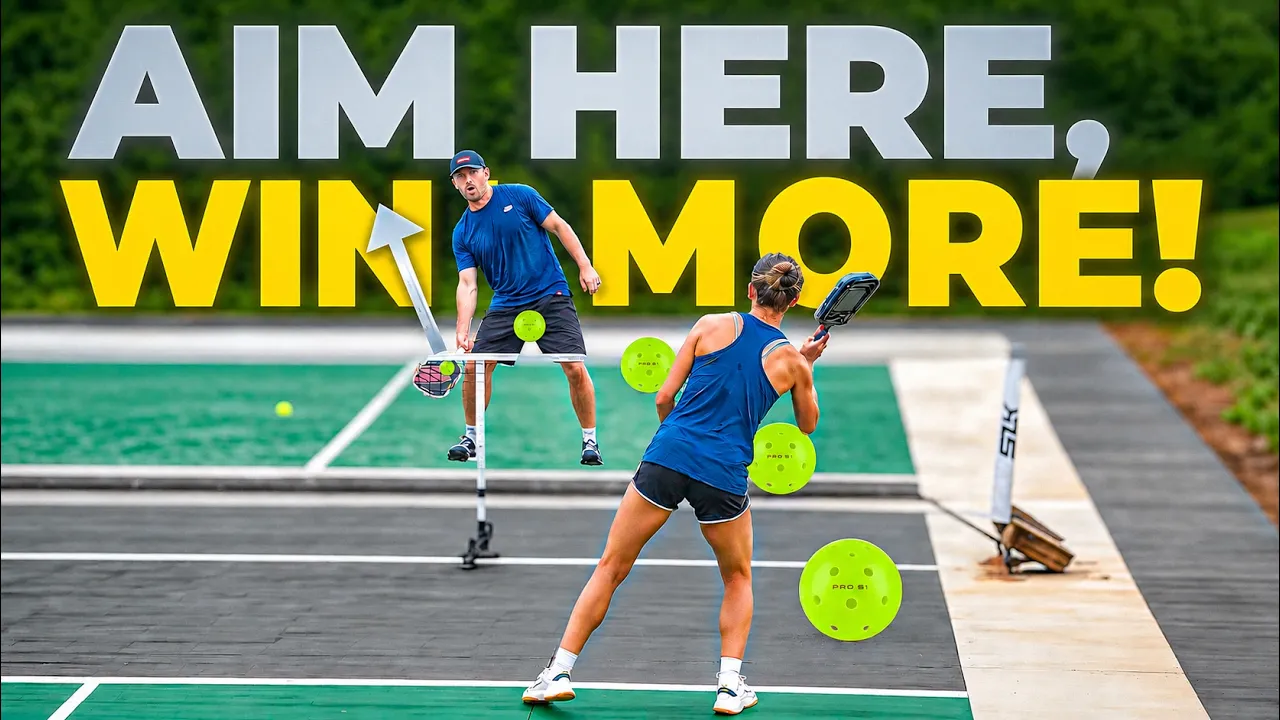
Why Does Slowing the Match Down Work So Well?
Slowing the match down works when playing a better team in pickleball because stronger pairs generate their advantage through speed, and a slow ball removes their best weapon.
Think of it this way. A stronger pair wants fast hands battles, quick counters, and scrambles, because that's where their extra reps pay off.
Give them a floating, arcing, unhurried dink and suddenly they have to manufacture the pace themselves, which quietly wrecks their fourth shot coverage.
That's when they miss.
Use your time between points, too. Tie a shoe. Towel off. Talk to your partner about what's working.
None of it is stalling; all of it interrupts a run. Even from the transition zone, the slower option is usually the smarter one.
One caveat: slow does not mean soft and high.
A floating ball that sits above net height is an invitation, and better teams are almost unattackable when you give them one. Low and slow. That's the recipe.
 The Dink Media Team
Can You Still Win Points With Offense?
Yes, but pick your spots. Against a better team, offense works when it's disguised or unexpected, not when it's your default answer to a hard ball.
The two highest-value surprise plays:
- A speed-up off a dead dink. Not off a low ball. Off a ball that sits up around waist height, when they're expecting number seven in the sequence.
- A firm, low third shot drive at the weaker player's right hip. Mix it in maybe one time in five so your third shot stays unpredictable.
Both work because they break a pattern.
A little deception goes further against strong players than raw power does, since they read power early and reset it without blinking.
And when your drive does get countered, knowing when to block versus smash keeps you in the rally instead of behind it.
 The Dink Media Team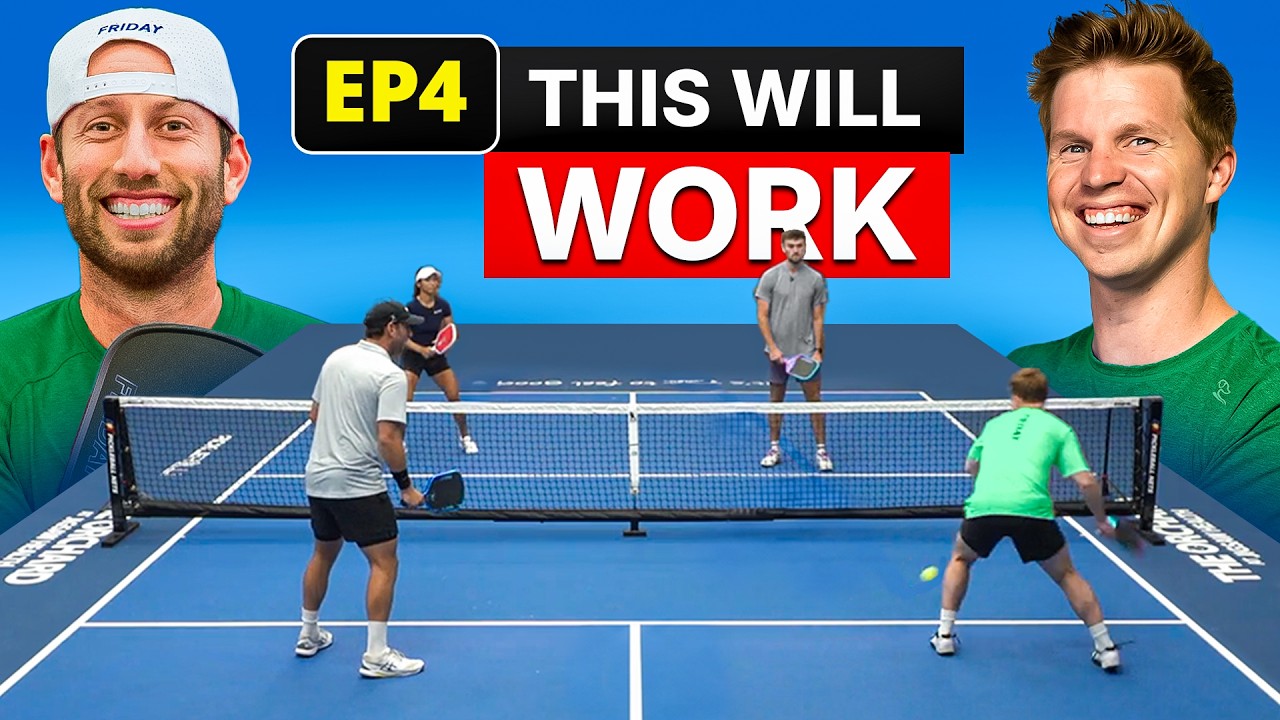
What Should You Take Away From the Match?
Take notes, not bruises.
The point of playing a better team in pickleball is data collection, and the players who get better at pickleball fastest are the ones who leave with three specific observations instead of one vague feeling.
Ask yourself: which of my shots did they attack every single time?
Where did my partner and I get pulled apart? What did they do on the third shot that I've never tried?
Turn the answer into sharper shot selection and then into drill work instead of a story you tell at the bar.
Play up often, but not exclusively. A steady diet of getting rolled builds bad habits and worse confidence.
Mix in matches at your level where you can practice executing rather than surviving, and treat playing up as a skill investment with a specific return in mind.
 The Dink Media Team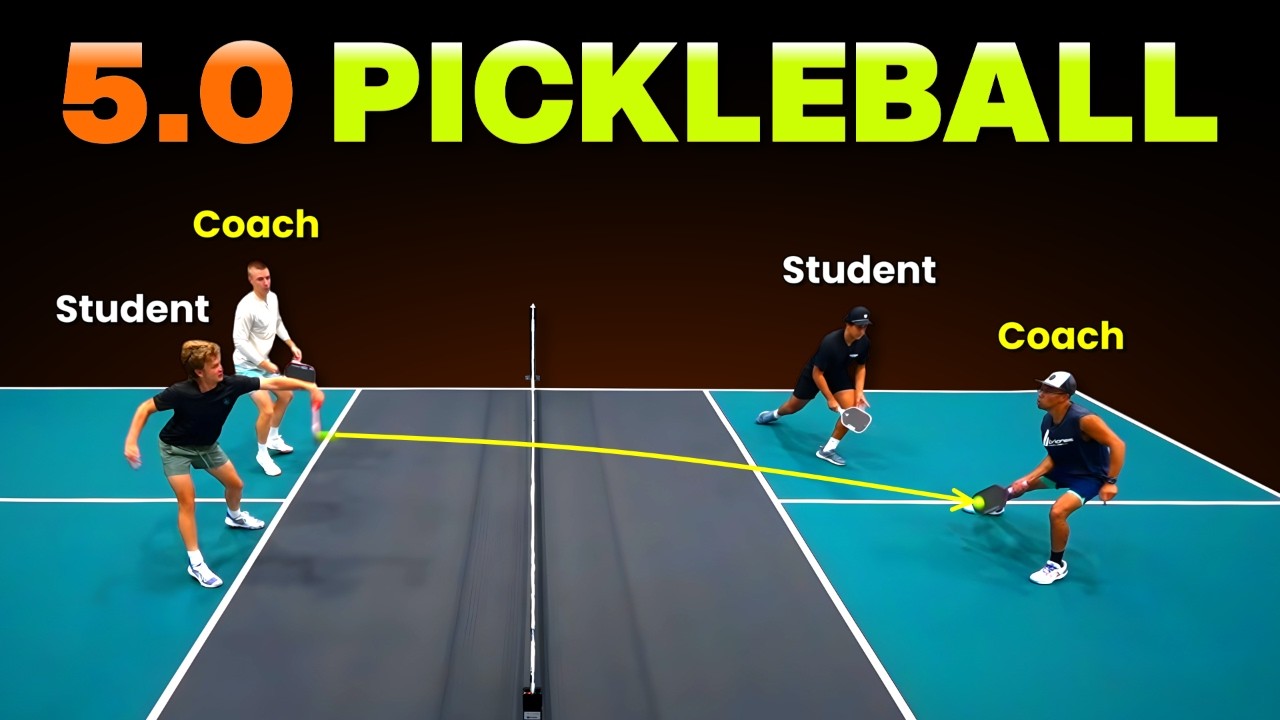
Key Takeaways
- Playing a better team in pickleball is a measurement problem first: judge the match by execution goals you control, not the final score.
- Deep returns, clean resets, and patient dinking are the three shots that keep underdogs in points.
- Target the weaker player, the feet, and the middle seam before anything else.
- Slowing the ball down removes the speed advantage a stronger pair relies on.
- Use disguise and pattern breaks for offense, not brute power, because better players read power early.
- Leave every match with three specific observations and turn them into drills.
Frequently Asked Questions
Does playing up actually make you improve?
Yes, as long as it's not your only diet. It's one of the fastest ways to get better at pickleball. Playing a better team in pickleball exposes gaps you can't find at your own level, but improvement comes from the work afterward. Balance it with matches at your rating and structured drilling where you can execute under less pressure.
How big should the skill gap be to still be useful?
About half a rating point to a full point is the sweet spot. At that distance you'll lose most points but still win rallies, which teaches you something. A three-point gap usually just teaches you that you can't reach their drops.
Should I change my equipment or strategy against stronger opponents?
Strategy, not equipment. Swapping paddles mid-season adds a variable you don't need. Focus instead on pickleball strategy: shot selection, court positioning, and who you target. That moves the needle far more than gear.
What if my partner falls apart when we play up?
Give them one job and keep talking. Assign a single, simple goal like covering the middle or getting every return deep. Short, positive check-ins between points work better than tactical lectures, and they keep both of you in the match.
How do I practice for this on my own?
Work on the shots that hold up under pressure: resets, deep returns, and low dinks. A wall or a ball machine covers most of it, and solo drills build the muscle memory you'll need when the pace picks up.
Love Pickleball? Join 100k+ readers for free weekly tips, news & gear deals.
Subscribe to The Dink