

How to Protect Yourself Against High-Speed Body Shots in Pickleball
The key is to let the ball do some of the work for you. Rather than generating your own power, you're redirecting the incoming pace back toward your opponent.
Learning how to protect yourself against a high-speed body shot is becoming essential in modern pickleball.
What was once a rare aggressive tactic has evolved into a standard part of competitive play, especially at higher levels where players constantly look for ways to gain the upper hand.
The question isn't whether you'll face these shots anymore; it's how you'll handle them when they come.
Love pickleball? Then you'll love our free newsletter. We send the latest news, tips, and highlights for free each week.
The Rise of Aggressive Transition Zone Play
Pickleball strategy has shifted dramatically over the past few years. What used to be a sport defined by soft hands and dinking exchanges has increasingly become a game where players hunt for opportunities to speed things up and take control.
The transition zone, that critical area between the baseline and the kitchen line, has become ground zero for this tactical evolution.
According to Selkirk TV, a leading pickleball education channel, players like Jack Sock have been analyzing exactly why this shift is happening. The basic math is simple:
- If you can speed up the ball from mid-court and catch your opponent off-guard, you gain a significant advantage.
But there's a catch, literally and figuratively.
The risk-reward calculation has changed the way competitive players approach the game. Speeding the ball up from mid-court is risky because it gives your opponent more time to react and potentially puts you in a vulnerable position. Yet the potential payoff, forcing an error or winning the point outright, makes it worth attempting, especially when you read that your opponent is out of position or caught flat-footed.
Understanding the High-Speed Body Shot
A high-speed body shot is exactly what it sounds like: an aggressive, fast-paced ball directed at your torso rather than your feet or over your head.
It's designed to give you minimal reaction time and force you into a defensive or uncomfortable position. The body shot is particularly effective because it eliminates your options; you can't easily step back, you can't easily move forward, and you can't easily move side to side.
These shots typically originate from the transition zone, where a player has moved forward from the baseline but hasn't yet reached the kitchen line. From this position, they have the angle and momentum to generate significant pace while still maintaining court position. The ball comes at you fast, and if you're not prepared, it can catch you off-guard or even cause injury.
What makes the high-speed body shot so effective is that it exploits a fundamental vulnerability in pickleball positioning. Most players are taught to move toward the kitchen line and get their paddles up, but when the ball comes at your body with serious pace, that textbook positioning suddenly feels inadequate. You're forced to react rather than execute, and that's exactly what the aggressive player wants.
 Eric Roddy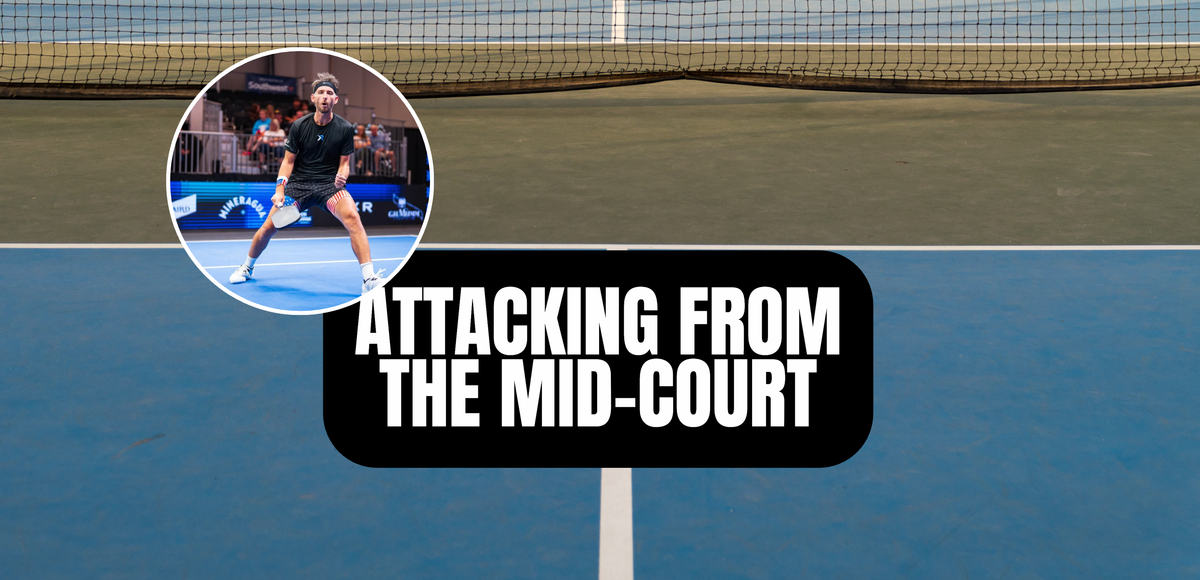
Defensive Positioning and Footwork
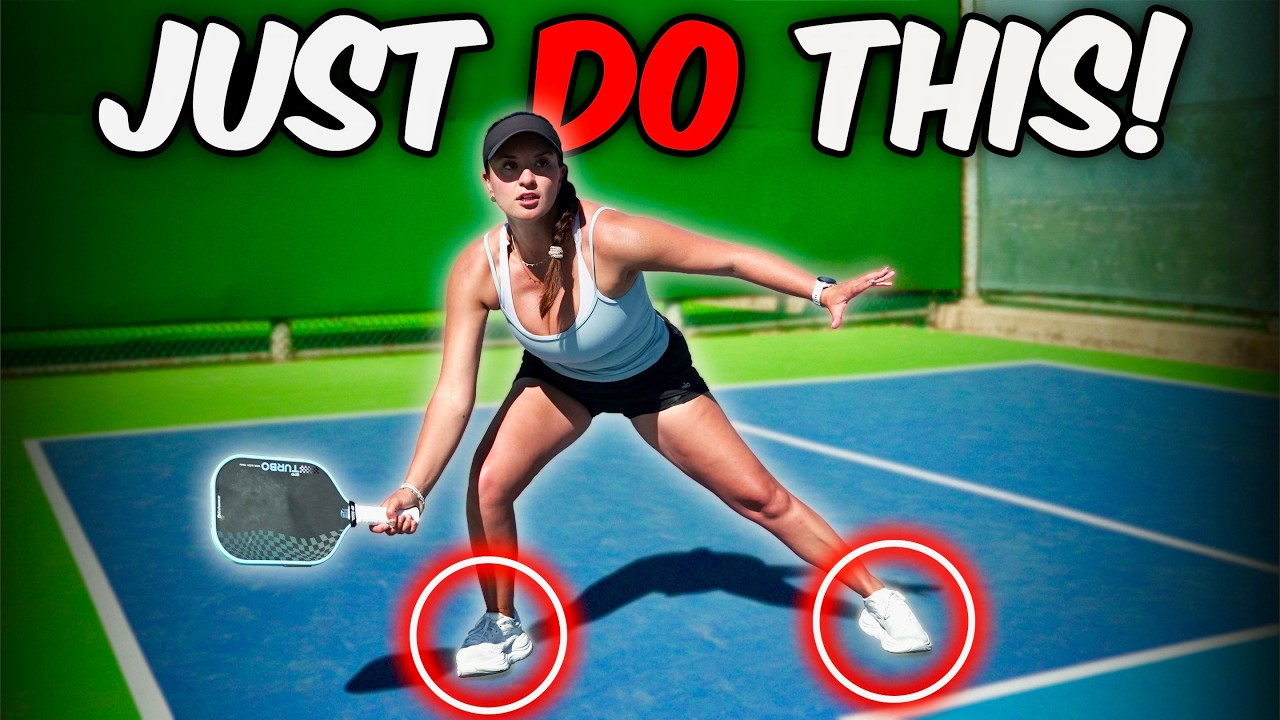
The foundation of protecting yourself against high-speed body shots starts with how you stand at the kitchen line.
- Your feet should be shoulder-width apart, with your weight balanced on the balls of your feet rather than your heels. This positioning allows you to move quickly in any direction without being caught flat-footed.
- Your paddle should be held in front of your body at roughly chest height, with your elbows bent at approximately 90 degrees. This isn't just about looking ready; it's about actually being ready. When the ball comes at you with pace, you need to be able to react immediately, and that starts with proper paddle positioning.
Reading the court and anticipating your opponent's intent is where experience comes in. Watch your opponent's positioning, their paddle angle, and their footwork as they approach the transition zone. Are they loading up for a speed-up? Are they moving forward aggressively? These visual cues give you precious milliseconds to prepare for what's coming.
Movement patterns matter more than you might think. Rather than standing completely still, many advanced players use small, quick adjustment steps to stay balanced and ready. This keeps your muscles engaged and your nervous system primed to react. It's the difference between being a statue and being a coiled spring.
 The Dink Media Team
Paddle and Body Mechanics
When a high-speed body shot comes at you, your first instinct might be to swing hard and hit it back. Resist that urge. Instead, focus on absorbing the pace and controlling the ball. This means using a shorter, more compact stroke with a firm wrist and a stable paddle face.
The key is to let the ball do some of the work for you.
Rather than generating your own power, you're redirecting the incoming pace back toward your opponent.
Think of it like catching a ball; you don't meet it with a rigid arm, you give slightly to absorb the impact. The same principle applies to your paddle.
Your body positioning during these exchanges is critical.
- Keep your shoulders square to the net and avoid rotating your torso excessively.
- A common mistake is turning your shoulders too much, which opens up your body and makes you more vulnerable.
- Instead, let your arms and paddle do the work while your core stays relatively stable.
Grip pressure is another often-overlooked detail. Many players grip too tightly when they're nervous about incoming pace, which actually reduces their ability to absorb and control the ball. A slightly looser grip, not limp but relaxed, allows your hand and wrist to work as natural shock absorbers.
Heads up: hundreds of thousands of pickleballers read our free newsletter. Subscribe here for cutting edge strategy, insider news, pro analysis, the latest product innovations and more.
Mental Game and Court Awareness
Staying mentally sharp during transition zone exchanges is just as important as your physical positioning. High-speed body shots are designed to rattle you, to make you feel rushed and uncomfortable. The mental battle is half the fight.
Build your confidence by practicing these scenarios repeatedly. The more you've faced aggressive pace in practice, the less surprising it feels in a match. Familiarity breeds confidence, and confidence breeds better decision-making under pressure.
Court awareness extends beyond just watching the ball. Pay attention to where both your opponents are positioned. Are they both at the kitchen line, or is one still retreating? Are they balanced and ready, or are they slightly off-balance? These details inform whether a speed-up is likely and how you should position yourself.
One often-overlooked aspect of handling high-speed body shots is breathing. When you're tense and anticipating aggressive play, you tend to hold your breath, which tightens your muscles and slows your reaction time. Conscious, steady breathing keeps you relaxed and responsive.
 The Dink Media Team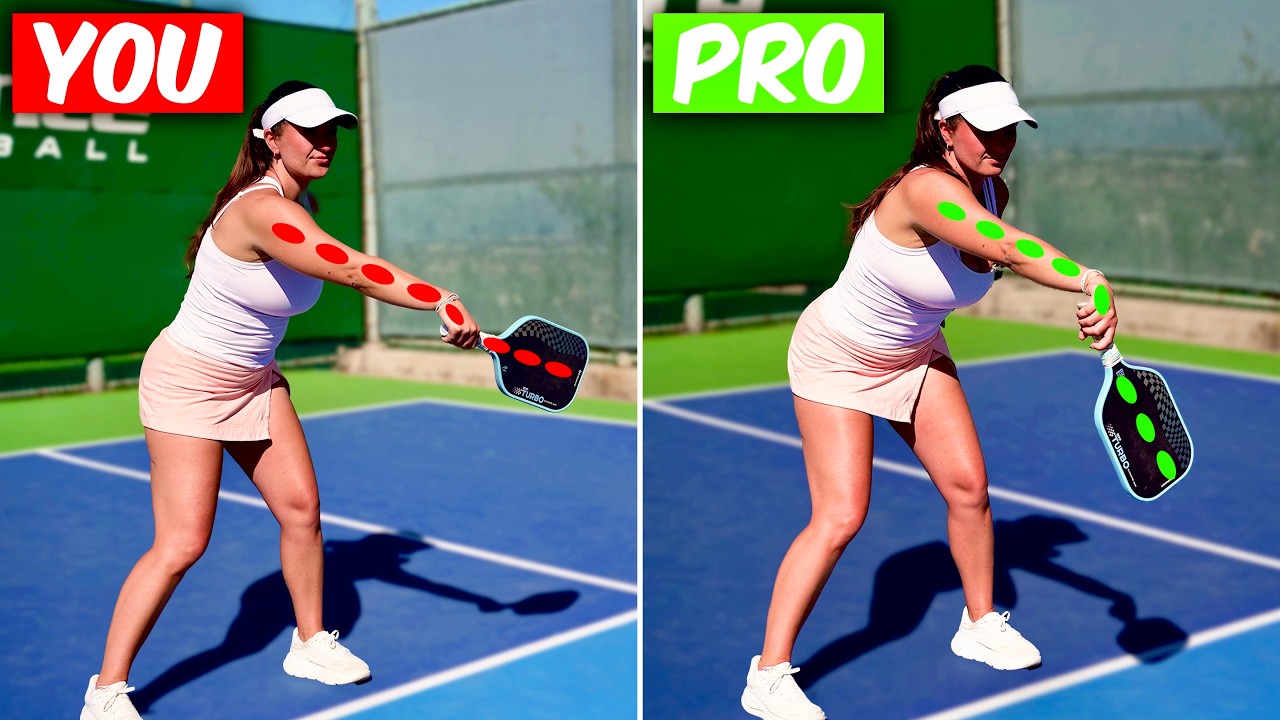
The Bigger Picture: How This Fits Into Modern Pickleball
The evolution toward more aggressive transition zone play reflects the overall maturation of pickleball as a sport. As players get better, they're constantly searching for new ways to gain competitive advantages. The high-speed body shot is just one example of this tactical innovation.
Understanding how to defend against these shots isn't just about personal safety, though that matters. It's also about staying competitive in a sport that's rapidly evolving. Players who can't handle pace are increasingly at a disadvantage, especially in competitive settings.
The good news is that these skills are learnable. You don't need to be a professional player like Jack Sock to develop solid defensive mechanics against high-speed body shots. What you need is awareness, practice, and a willingness to embrace the modern game rather than resist it.
 The Dink Media Team
Frequently Asked Questions
What's the difference between a high-speed body shot and a regular speed-up?
A regular speed-up is any shot where a player accelerates the ball to gain control or win the point. A high-speed body shot is specifically a speed-up directed at your torso rather than your feet or over your head. The body target makes it more dangerous and harder to defend because it limits your movement options.
Can I get seriously injured from a high-speed body shot?
Yes, it's possible, though serious injuries are relatively rare. Most commonly, players experience minor bruising or discomfort. The risk increases if you're not prepared or if you tense up when the ball comes at you. Proper positioning and relaxed muscles actually reduce injury risk.
Should I be more aggressive back when someone speeds up at me?
Not necessarily. Your first priority should be to neutralize the aggressive shot and regain control of the point. Once you've done that, you can look for opportunities to be aggressive yourself. Trying to out-speed an opponent who's already moving forward and generating pace is usually a losing strategy.
How much practice do I need to feel comfortable against high-speed body shots?
Most players see significant improvement after 10-15 focused practice sessions specifically working on these scenarios. The key is deliberate practice; having a partner or coach feed you pace at your body while you work on your defensive mechanics.
Is this something I need to worry about at recreational levels?
At purely recreational levels, high-speed body shots are less common because most players haven't developed the skill or confidence to attempt them consistently. However, as you move up in competitive levels, they become increasingly prevalent. It's worth developing these defensive skills proactively rather than waiting until you're forced to learn them in a match.

Love Pickleball? Join 100k+ readers for free weekly tips, news & gear deals.
Subscribe to The DinkGet 15% off pickleball gear at Midwest Racquet Sports