
It takes just 30 seconds and a bit of pressure to avoid playing with a potentially illegal paddle
If you've been playing pickleball for a while, you've probably heard the term "core crushing" thrown around.
But a lot of players still don't know what it actually is, why it matters, or how to check if their paddle has it.
According to Chris Olson from Pickleball Studio, this is a real problem that's been going on for years, and he should know – he's played with literally hundreds, if not thousands, of different paddles.
Love pickleball? Then you'll love our free newsletter. We send the latest news, tips, and highlights for free each week.
What Is Core Crushing, Anyway?
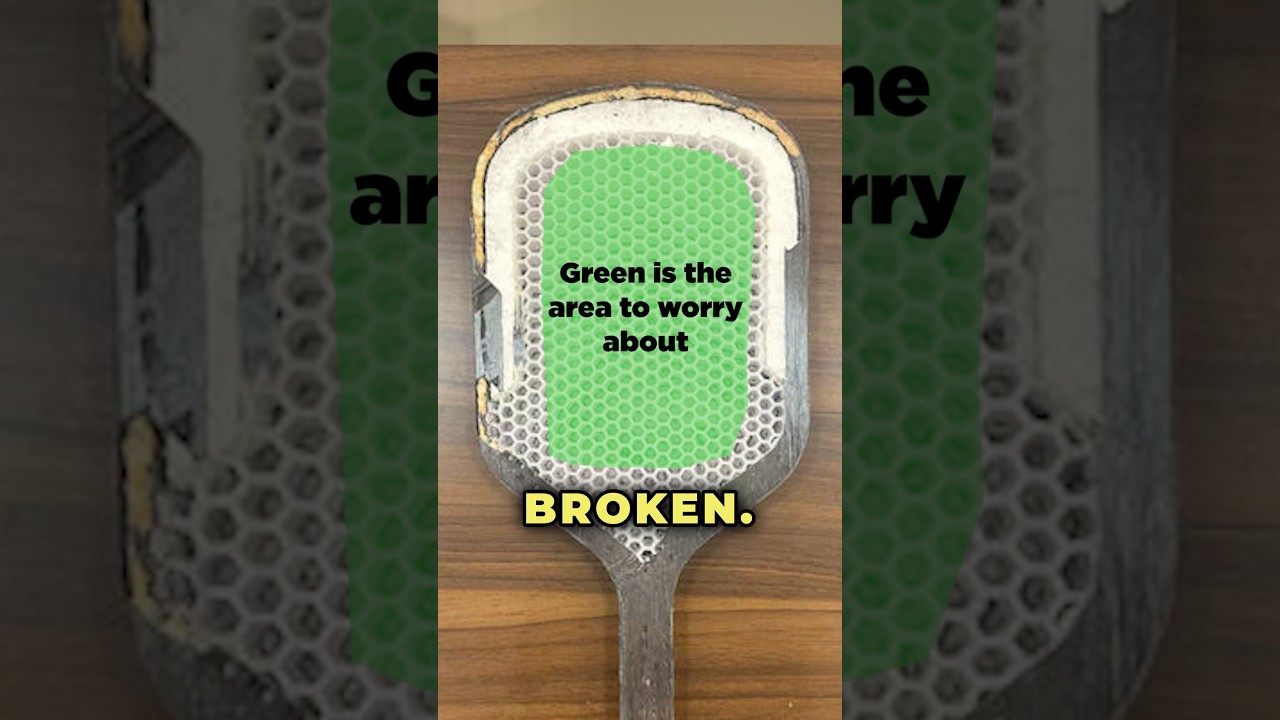
Core crushing happens when the polymer honeycomb core of your paddle breaks down over time. As you play more and more, the material deteriorates, and your paddle starts hitting harder and harder. Basically, as it loosens up, or crushes, the greater "trampoline effect" it's likely to exhibit.
Eventually, it can reach a point where it wouldn't pass an official certification test.
The problem is more common with Gen 2 and Gen 3 thermoformed paddles, including models like the JOOLA Pro IV, Franklin C45, Luzz Cannon, and RPM Friction Pro, and many more, says Olson.
This by no means these paddles will all inevitably core-crush; it's just more prevalent in the types of core construction they all utilize. (If you're curious, check the website – pretty much all paddles with say whether they're thermoformed or not.)
The scary part? A lot of players don't realize their paddle has this issue, so they keep using it in tournaments without knowing they're breaking the rules.
 Alex E. Weaver
How to Check Your Paddle Right Now
The good news is that checking for core crushing is simple. Here's what you need to do:
- Take your paddle and press firmly with your thumbs in the very center, or slightly above center
- Listen carefully for a crackling or crunching noise
- If you hear that sound, your paddle is core crushed and needs to be retired
One important note: don't press near the edge guard. There's often a layer of foam around the edges that will make a crunching sound naturally, but that's not what you're looking for. You're checking the polymer honeycomb in the middle of the paddle.
Why This Matters for Your Game
Core crushing isn't just a technical issue. It's about fairness and integrity on the court. A crushed paddle performs differently than it should, giving players an unfair advantage.
Olson points out that in recent tournaments, it feels like almost every few matches involves someone playing with a core crushed paddle. And most of the time, those players don't even know it.
The solution is simple: check your paddle every 2 to 3 weeks. If you hear that telltale crackling noise, it's time to get a replacement (don't forget to take advantage of that warranty). A broken paddle shouldn't serve as an excuse to keep playing with illegal equipment.
A little awareness goes a long way in keeping the game fair for everyone.
Love Pickleball? Join 100k+ readers for free weekly tips, news & gear deals.
Subscribe to The DinkGet 15% off pickleball gear at Midwest Racquet Sports