
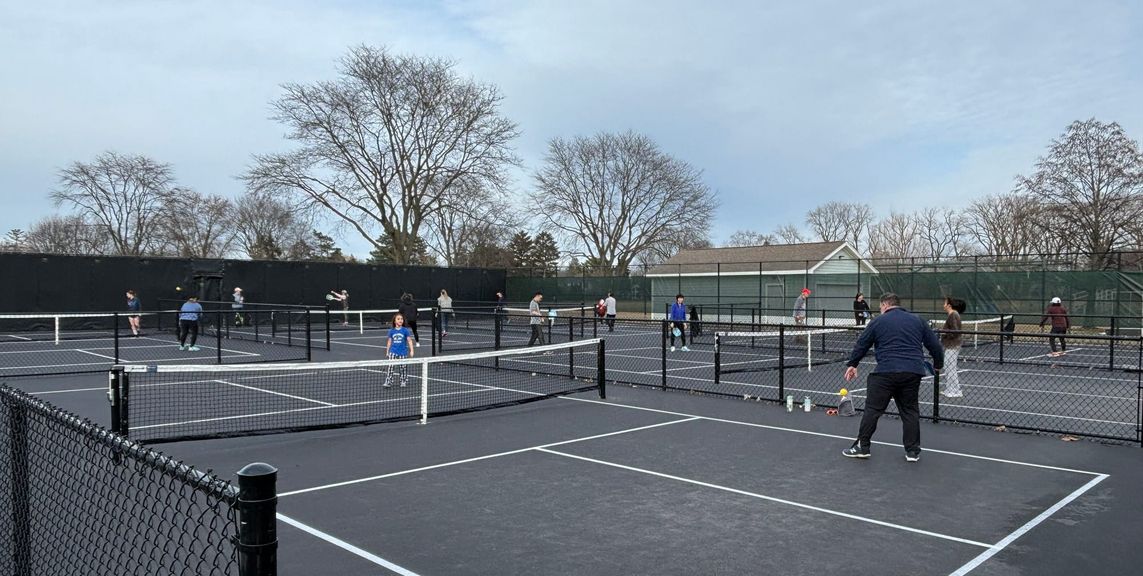
How One Illinois Town Found Common Ground in Building Permanent Pickleball Courts
Note: This was submitted to The Dink by Joel Epstein with Cheryl Balaban, Co-Founders & Co-Presidents, Wilmette (Ill.) Pickleball Association
Stories of local communities rejecting the installation of pickleball courts fill the daily news cycle. Contrary to the usual complaints and resistance from local communities to new courts, a group of neighbors in my hometown of Wilmette, Illinois, embraced the construction of pickleball courts in a nearby sports park.
A year earlier, the Wilmette Park District Board plan to build a pickleball complex at a different location ended after the contentious uproar of neighbors fearing noise and light pollution moved the Zoning Board of Appeals to vote against the plans.
Working with the Wilmette Park District
Wilmette is a bedroom community north of Chicago with a population of 27,000. The residents support an active sports community with both private/public country clubs and park district facilities for tennis, paddleball, golf, skating/hockey, and sailing.
But not a single pickleball court.
Ultimately, after much prodding and our organizing a grassroots campaign, the Recreation and Park District crafted a proposal to build eight lit courts.
The chosen site already had baseball diamonds, a community garden, children's playground, and a paddle ball complex with eight courts, a comfortable warming hut, and lights — with the stated goal to fit pickleball into the Paddle Club model.
The plan required a membership fee for outdoor play, which seemed like a crazy notion as I play in every adjacent town for free. I questioned the very aggressive approach to building eight lit courts, and when asked by the Board, I suggested that six courts without lights was enough. Who was I to argue with the park district experts as they were confident their plan would be backed by the community?
The Board Meeting that sealed our fate
The next monthly WPD board meeting included the pickleball plan and allotted time for community members to speak. The neighbors were organized and vocal. Parents brought their children carrying homemade signs who tearfully testified, asking for their playground to stay. The gardeners worried that the distinctive sound of a paddle striking a ball would affect the bees. Other residents asked if the noise would carry into their yards and the light into their bedrooms.
It was quite a scene and the WPD was clearly caught off guard.
At the next meeting of the building department Zoning Board of Appeals, the WPD brought in various experts to discuss the impact of installing 50-foot light poles, moving the beloved playground, and accommodating additional parking. An improbably named acoustic expert Dr. Tom Thunder explained the potential sound issues for the adjoining homes and yards. One board member voiced her opinion that the sport was not popular and courts were unnecessary. The vote was unanimously a 'no.' We would not have eight lit pickleball courts in our village.
Back to the drawing board.
Frustration set in as no movement or new ideas surfaced. I emailed the Village President and other Trustees. The President responded the same day and asked me to meet with the Village Manager. We quickly arranged an appointment. The Village Manager is a fellow player and he reassured us that the Village wanted and needed pickleball courts.
My interest and persistence in this cause began when I returned to my hometown. I left the Chicago area in 1980 but moved back in 2017 to be with my love who also grew up in Wilmette. We co-founded the Wilmette Pickleball Association (WPA) group on Facebook – now with more than 775 members – to develop, legitimize and organize our local pickleball community. As the co-president of the Wilmette Women’s Tennis Association, she was enormously helpful at board meetings, bringing credibility and support from a well-established group.
Perseverance pays off
I continued to search for possible locations in a town with very little available open land and made suggestions, including buying part of a Chicago Transit Authority parking lot for the local elevated train depot that has seen a significant decrease in ridership since the pandemic. I surmised that the courts would be bordered on the east by the clickity clack of the trains and the rest of the large parking lot on the north. Also, it could be converted to indoor courts by putting a bubble over it during the winter months, thus solving both our indoor and outdoor court needs in one fell swoop.
In the meantime, the Park District conducted a survey of residents about which facilities and programming the community desired, and specifically, at which existing park locations. As a response to the survey, the Recreation Department and the WPD modified two existing underused tennis courts at the Community Recreation Center. It was the beginning of pickleball in Wilmette.
 Jason Flamm
Unfortunately, the two double-lined courts used tennis net height and without barriers between courts, it made play less than desirable. But it was a start.
Once the calendar turned to spring, a group of regulars began playing on courts in Glencoe, a suburb to our north. Each one of their existing tennis courts was divided into two pickleball courts using the full length from the backcourt to the tennis net as our north and south borders. The Park District provided roll-on nets at the proper height for our sport. This was a genius solution, and I forwarded pictures of the set-up and the roll-on net manufacturer to the powers that be in the WPD and Recreation department. They embraced this solution and quickly painted the courts for a second time and purchased the roll-in temporary nets.
We heard that there would be four new courts but when we arrived after the paint dried, we were thrilled to find six new courts that used the full width of the original two tennis courts. The only issue is that there are three different sets of colored lines, which can be confusing. New court resurfacing this year should rectify the situation.
With an online scheduling app in place, the tennis players and pickleballers are peacefully co-existing. However, our goal all along was dedicated pickleball courts. The Parks and Rec department stayed focused on making permanent courts a reality.
Tennis is a vibrant sport in Wilmette and the tennis officials understand the potential for our growing sport and helped facilitate the new courts. The tennis program currently offers some morning pickleball time at the eight indoor courts. Leaders looked at another site that holds six of Wilmette's 20 outdoor courts. The Community Playfields is a large park encircled by a new running/walking track, with baseball diamonds, soccer fields, basketball hoops, and a recently finished outdoor bathroom and shaded structure. The park lies between a junior high school and an elementary school and is surrounded by million dollar homes.
Permanent courts become a reality
The Rec Dept floated the idea of converting three of six tennis courts to dedicated pickleball courts. I'm thinking, wow, that's a bold move. Fearing a battle with another set of neighbors after getting trounced by the Park District Board's first choice, I was incredulous. Frankly, I'd never dipped my toe into government or community politics, and I was sure getting a lesson in civics. But seasoned board members carry a confidence and positive attitude that helps our community progress and thrive.
I received a call from a woman whose house borders the park. She wanted to talk to me about the proposed pickleball court installation.
I was terribly gun shy. The last thing I wanted to do was to hear from an irate villager quashing my dream of being able to play the sport I love in my hometown. Despite my hesitation, I contacted her, as I felt compelled to engage with any and all combatants in order to prepare a defense to their objections. The monthly board meeting was soon to occur.
To my surprise, I was assured that the neighbors closest to the planned courts welcomed pickleball. She provided me with a map and explained that her neighbors held a meeting to discuss having pickleball behind their backyards. All but one of the dozen who were in attendance signed off on converting half of the tennis courts to pickleball. She presented the bird's-eye view map of the residents who wanted permanent pickleball courts at the Park District board meeting. The Rec. Dept. guaranteed that sound proofing would be installed. The timing neatly coincided with the planned resurfacing over the summer.
Jason Flamm
By October, nets were installed, lines were painted, fences built, and we were finally on dedicated pickleball courts. The Rec. Dept. allowed us on the courts which were not completely finished but had lines. They even left the nets up all winter because we'll play outdoors no matter what the temperature if it is dry. They're waiting for the right weather conditions this spring to complete the job.
Meanwhile, the WPD is considering the best use for the dual-purpose courts at the original Rec Center. Our suggestion is to continue serving both sports. I walked by the permanent courts recently on a cloudy 55-degree day and both the tennis and pickleball courts were full.
All's well that ends well
The Village has embraced the sport after a long three-year process of education, communication and cooperation. We attended monthly WPD meetings, conducted research, made long phone calls, located like-minded pickleball lovers and rallied our group.
When it was all said and done, what pushed the process over the line was the acceptance of the neighbors around the park where the pickleball courts were to be installed, clinching the deal. The Park District Board and the Recreation Department know we'll need more pickleball courts in the future — as pickleball continues to grow among Americans at a record pace — and they're just the group to make it happen.
According to CBS Sports, pickleball's explosive growth is creating court shortages in communities across the country, making stories like Wilmette's a template other towns desperately need.
And for those wondering how to make a pickleball court work in a shared or makeshift space, communities looking to get started can learn how to make a pickleball court with minimal resources — because sometimes starting small is the only way to get started at all.
It's also worth noting that the noise concerns raised by Wilmette neighbors aren't unique. Sports Illustrated has documented similar battles playing out in neighborhoods nationwide, with acoustic experts and zoning boards increasingly becoming fixtures in the sport's grassroots expansion.
For anyone who has been fighting the same uphill battle in their own hometown, the churches nationwide embracing pickleball to build community movement shows there's more than one path to getting a game going — and more than one kind of institution willing to open its doors.
Frequently Asked Questions
How long does it typically take to get a pickleball court approved by a local park district?
The timeline varies widely depending on community size, zoning requirements, and neighborhood pushback. In Wilmette's case, the process took nearly three years from first proposal to permanent court installation. Many communities move faster when they have organized advocacy groups, supportive park district staff, and neighbors who have been engaged early in the process.
What are the most common reasons communities reject pickleball court proposals?
Noise and light pollution are the two biggest objections raised by neighbors near proposed pickleball court sites. The distinctive pop of a paddle hitting a ball carries differently than other sport sounds, and lit evening courts can concern adjacent homeowners. Zoning boards often require acoustic studies, lighting impact assessments, and community meetings before approving new court construction.
How can pickleball advocates improve their chances of getting courts approved?
Organized grassroots campaigning makes the biggest difference. Building a local pickleball association, attending park district board meetings consistently, engaging directly with skeptical neighbors before they become opponents, and proposing scaled-back starter solutions — like converting existing tennis courts — are all proven strategies. Aligning with established community groups like tennis associations also adds credibility with decision-makers.
Is it possible to convert tennis courts to pickleball courts without community conflict?
Yes, and it's often the most practical path forward for communities with limited open space. The key is engaging tennis stakeholders early and framing the conversion as a shared-use opportunity rather than a takeover. In Wilmette, the tennis community was a genuine ally, and the co-use scheduling model has allowed both sports to thrive on the same footprint. Roll-in nets and dual-lined courts are low-cost ways to test the concept before committing to full conversion.
Why is neighbor buy-in so critical to getting a pickleball court built in a residential area?
Zoning boards and park district boards are acutely sensitive to organized neighborhood opposition — a vocal group of residents can derail even a well-supported proposal, as Wilmette's first attempt demonstrated. Getting the immediate neighbors on board, or at minimum neutral, removes the most powerful obstacle a project faces. When the homeowners whose backyards border the courts become advocates instead of adversaries, the approval process moves dramatically faster.
|

Love Pickleball? Join 100k+ readers for free weekly tips, news & gear deals.
Subscribe to The Dink