Starting January 1, 2026, USA Pickleball is rolling out a slew of new or modified rules that range from clarifications to legitimate game-changers. Understanding each pickleball rule change now will keep you competitive all year long.
If you're serious about staying competitive, whether you're grinding in rec leagues or eyeing tournament play, you should check out USAP's official 2026 rulebook to understand what's changing and why.
According to a breakdown from Enhance Pickleball, most of these aren't massive overhauls. But they're important enough that ignoring each pickleball rule change could cost you points, especially in tournament settings where referees will know exactly what to look for.
Love pickleball? Then you'll love our email newsletter. We send the latest news, tips, and highlights for free each week.
1. The Volley Serve Gets 'Clearer'
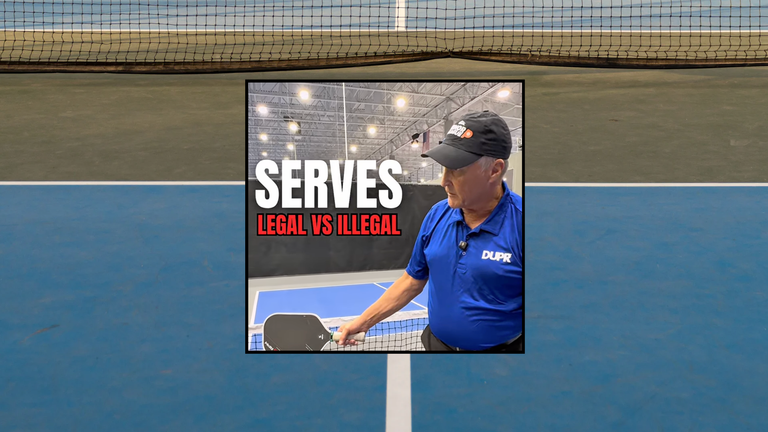
The actual mechanics of the volley serve haven't changed:
- You must make contact below your waist
- The highest point of the paddle must remain below your wrist
- The swing motion must go from low to high
What's new is the addition of one word: "clearly."
That single word changes everything, or at least that's the hope. Previously, it was all a bit subjective and difficult to enforce.
Now? If it's not clearly legal, it could be called a fault. This pickleball rule change matters because plenty of players are already skirting the rules with sidearm serves or paddle positions that are tough to call.
In rec play, enforcement will probably remain loose. But in tournaments, expect refs to crack down on serves that don't obviously meet all three requirements.
 The Dink Media Team
2. Spin on the Serve: Clarification, Not a Ban
What This Pickleball Rule Change Means for Your Serve
This 2026 pickleball rule change has been confusing players for years. The rule says you can't add extra spin to your serve with your hand or paddle before you hit it. But a lot of people interpreted that as "you can't spin the ball at all when serving," which isn't true.
Here's the distinction: you can absolutely spin the ball on contact with your paddle. What you can't do is manipulate the ball before you make contact.
So you can't spin it in your hand and then hit it. The new USA Pickleball rulebook just makes this clearer, which should help eliminate confusion at the recreational level.
3. Double Hits, Triple Hits, and Beyond
Last year, the USAP legalized double hits as long as they happen in one continuous, unidirectional motion.
This year, they're extending that pickleball rule change to triple hits and beyond.
If you somehow hit the ball three times (or more) in a single continuous motion without stopping, it's legal. This is one of those rules that sounds wild but will almost never come up in actual play. It's an accidental thing, not something you're going to do on purpose.
The key restriction remains: the motion has to be continuous and unidirectional. If you stop and restart, it's a fault.
If you care about the evolution of the sport (and we can tell you do), take a few minutes to nominate the people impacting it the most.
SUBMIT YOUR PICKS >>
4. The Visible Ball Rule
If you're carrying a second ball during a point and it's visible to your opponents, that's now a fault.
This includes balls peeking out of your pocket.
The reasoning is straightforward: it's distracting.
Imagine trying to track the ball while your opponent has another one visible nearby. It's genuinely hard to tell which ball is which.
In rec play, this probably won't get enforced all that much, and for good reason. But in tournaments, you need to keep that extra ball completely hidden or just leave it off the court. It's a simple fix that makes the game fairer for everyone.
 Thomas Shields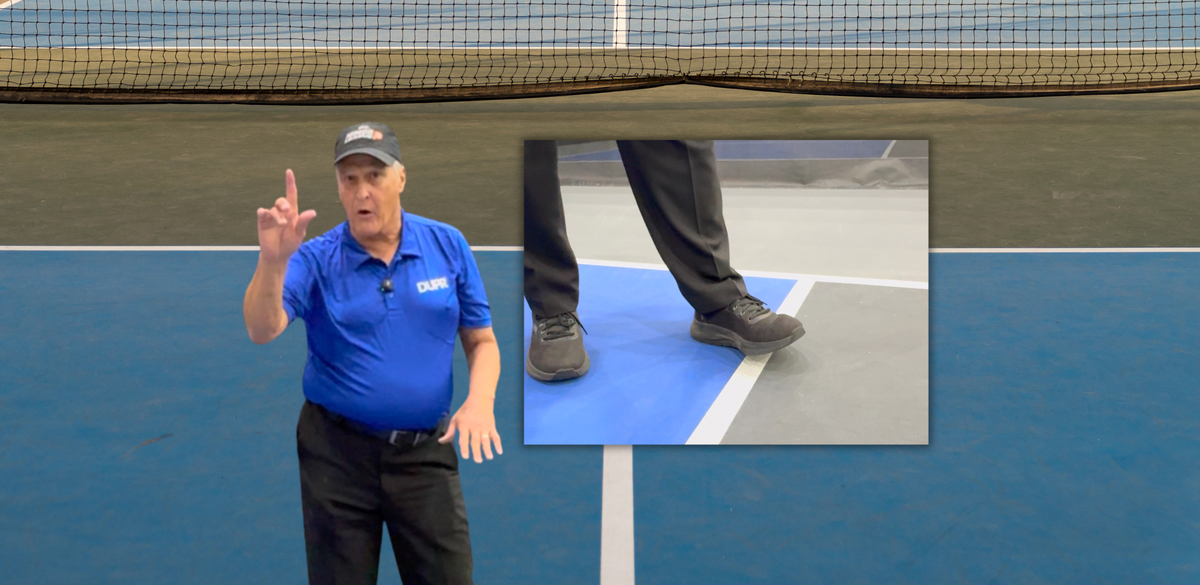
5. Consulting Spectators on Out Calls
The old rule said you "should not" consult spectators about out calls. The new rule says you "must not." That's a meaningful pickleball rule change from suggestion to mandate.
If you're in a tournament and you look at someone on the sideline to ask if the ball was out, you can get penalized. You and your partner need to make that call yourselves.
In rec play, nobody's probably going to care. But understand the rule so you can enforce it if someone's trying to get help from the crowd.
6. Permanent Objects: The Bounce Rule
Here's where things get interesting. If you hit a permanent object (net post, chair, ceiling) on the fly, your opponent wins the point. That hasn't changed. But now, if the ball bounces on your opponent's side first and then hits a permanent object, you win the point.
This is a clarification that probably should have been in the USA Pickleball rulebook all along. If your shot lands in and then bounces into the net post, that's your point. Before, there was ambiguity about this scenario.
Heads up: hundreds of thousands of pickleballers read our free newsletter. Subscribe here for cutting-edge strategy, insider news, pro analysis, the latest product innovations and more.
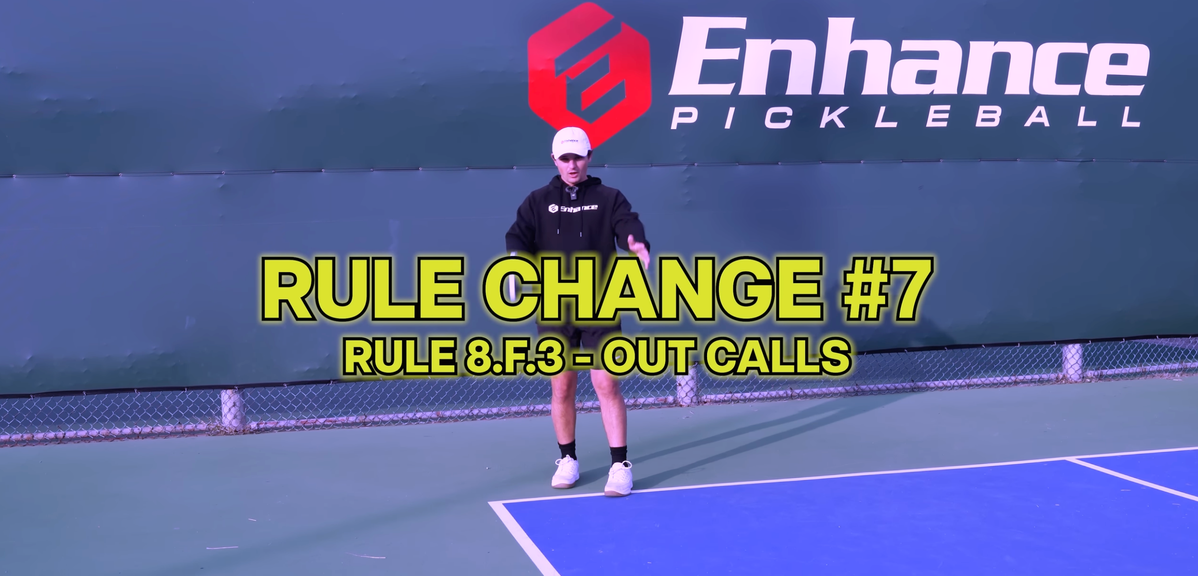
7. Calling Out Balls: The Promptness Rule
The Out-Call Pickleball Rule Change Explained
The timing for calling out balls under this pickleball rule change has gotten stricter. If your opponent hits an out ball and it becomes a "dead ball" (bounces twice, hits you, or you catch it), you now have to call it promptly rather than waiting indefinitely.
Previously, you could theoretically wait until the next serve to call a ball out, which made no sense and confused referees. Now you need to call it quickly after it becomes dead. And this extends to other scenarios as well.
Here's the new USAP rule in full:
Out Call Timing. If a player returns the ball, their “out” call must be made before the ball is hit by the opponent or before the ball becomes dead; otherwise, play continues. If a player does not return the ball, an “out" call made promptly will be recognized, even if the ball becomes dead before the “out” call is made.
It's a common-sense rule that should reduce disputes and keep the game moving.
 Alina Leontarakis
Why Every Pickleball Rule Change in 2026 Matters
These rule tweaks reveal something important about how pickleball is evolving. The sport is trying to balance accessibility with competitive integrity.
You don't need to panic about these changes. Most 2026 USAP rules in this list are clarifications or common-sense additions rather than revolutionary shifts. But if you play in tournaments or take the game seriously, spend some time understanding each pickleball rule change before January 1st rolls around.
Want to master your technique while learning the new rules? Check out our guide to the pickleball serve basics to ensure your serve stays legal under 2026 rules.
Frequently Asked Questions
What is the most significant pickleball rule change for 2026?
The most discussed pickleball rule change for 2026 is the addition of the word "clearly" to all three volley serve requirements. Under the updated 2026 USAP rules, your serve must clearly contact the ball below the waist, clearly keep the paddle head below the wrist, and clearly use an upward arc. If a serve looks borderline in any way, referees now have direct authority to call it a fault rather than giving the server the benefit of the doubt.
Does a 2026 pickleball rule change affect casual rec players?
Most of the 2026 USAP rules will not noticeably impact your average rec play session. Enforcement on courts without referees tends to stay informal, and changes like the visible ball rule or the spin clarification are primarily relevant in competitive settings. That said, understanding each pickleball rule change helps you call disputes correctly and play with more confidence at every level.
Can I still spin the ball when serving in 2026?
Yes, you can absolutely still generate spin on your serve under the new 2026 rules. The USA Pickleball rulebook has always allowed spin created through paddle contact with the ball on release. What remains illegal is manipulating or spinning the ball with your hand before making contact. This clarification simply makes the distinction more explicit so players and referees can interpret it consistently.
What happens if my extra ball is visible during a rally under the new rules?
Under the 2026 USA Pickleball rulebook, having a visible second ball during a live rally is now an official fault. This applies even if the ball is only slightly peeking out of your pocket during a point. The reasoning behind this pickleball rule change is to eliminate distractions that could cause opponents to mistrack the actual ball in play.
When do I have to make an out call under the 2026 USAP rules?
The 2026 USAP rules require out calls to be made promptly once the ball becomes dead. If you wait too long after a ball bounces twice, hits you, or is caught before calling it out, the call will not be recognized. This pickleball rule change closes the old loophole of delaying an out call until after the next serve, keeping the game moving at the pace it should.
Love Pickleball? Join 100k+ readers for free weekly tips, news & gear deals.
Subscribe to The DinkGet 15% off pickleball gear at Midwest Racquet Sports