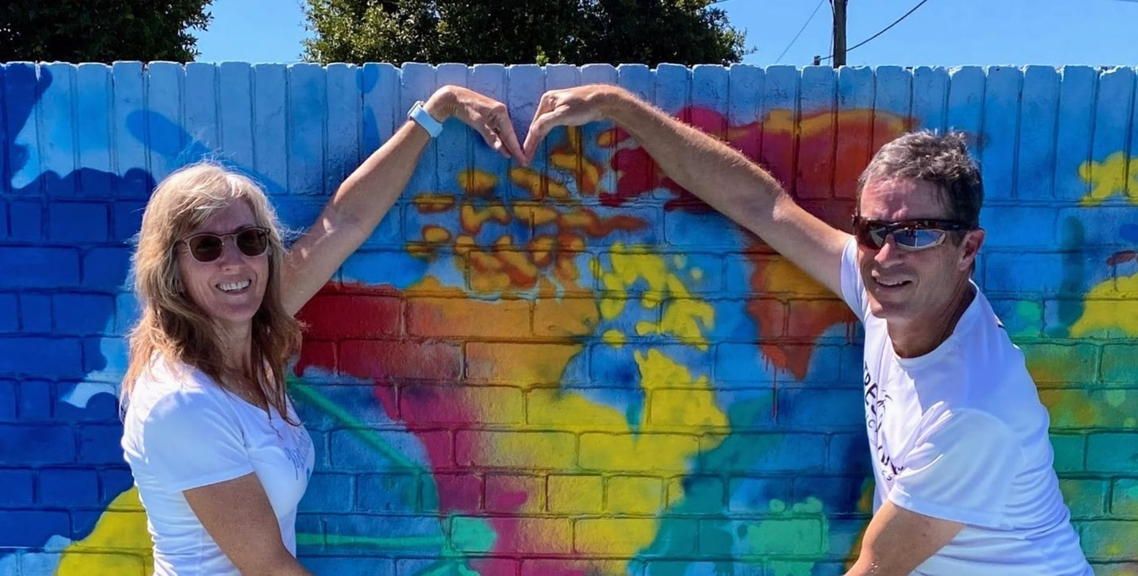
550 Courts & Counting: How Pickleball Became Our Passport to the World
As full-time travelers, we discovered that pickleball offered something rare: an instant sense of community almost anywhere in the world.
When my husband, Ky, and I retired early and became full-time travelers in June 2015, we never imagined pickleball would become such a defining part of our lives. Looking back, though, there were clues long before we ever picked up a paddle.
One of the most surprising goes all the way back to 1991–1993, when we owned a home in Issaquah, Washington, that had a full pickleball sport court in the backyard. It came with original wooden paddles and a few Wiffle balls, but no instructions. So we did what anyone would do—we hit the ball around and made up our own version of the game.
At the time, we had no idea we were standing on something that would later become such a big part of our story.
The house was a fixer-upper that we eventually renovated and flipped, but after discovering pickleball years later, we often found ourselves saying we probably should have kept that house.
We were still early in our nomadic lifestyle when we officially learned to play on January 25, 2017, in San Miguel de Allende, Mexico. A small advertisement in a local English-language newspaper invited people to come play. The moment we saw it, we remembered our old court in Washington, and decided to give it a try.
Our Pickleball Journey Begins
Like so many people, we were hooked almost immediately. What began as a fun way to stay active quickly became something much larger. As full-time travelers, we discovered that pickleball offered something rare: an instant sense of community almost anywhere in the world.
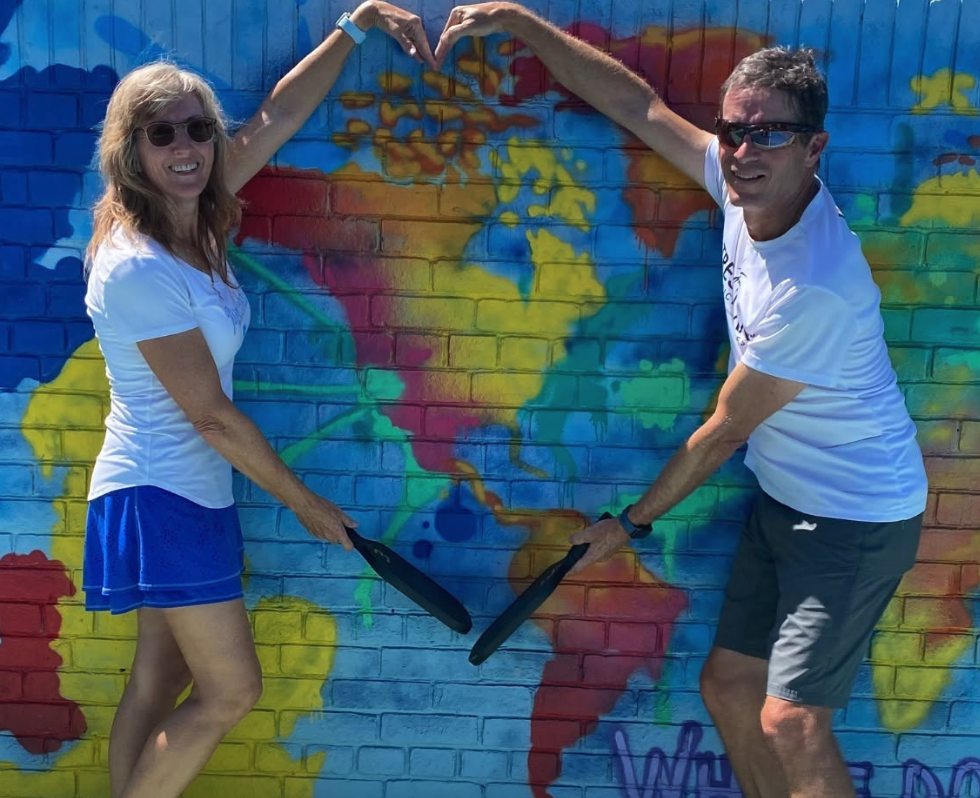
You can arrive in a new city where you know no one, walk onto a court with paddles in hand, and within hours feel connected. Over time, we’ve been invited to meals, shown around cities, introduced to local customs, and formed lasting friendships—all because of this sport.
Today, we’ve played on more than 550 unique pickleball courts across 30 countries, and every one of them has added something to the story.
It’s hard to believe we’re now approaching 10 years in the sport, and our enthusiasm has only grown.
We never set out with a goal of reaching a certain number of courts. I simply began tracking them because I’m a numbers person and thought it would be interesting to document where we played. Over time, that list grew from dozens into hundreds. Hitting 500 felt like a meaningful milestone, but even then it never felt like a finish line—just another checkpoint along the way.
What makes it especially meaningful is that nearly all of those courts have been shared with my husband, Ky. We feel incredibly fortunate to have found a sport we genuinely enjoy together.
Travel and sport both have a way of revealing character, and when you combine them with constant movement, unfamiliar cultures, language barriers, and jet lag, you learn a lot about each other.
Through all of it, pickleball has remained something we share with real joy.
Pickleball Is Home, All Around the World
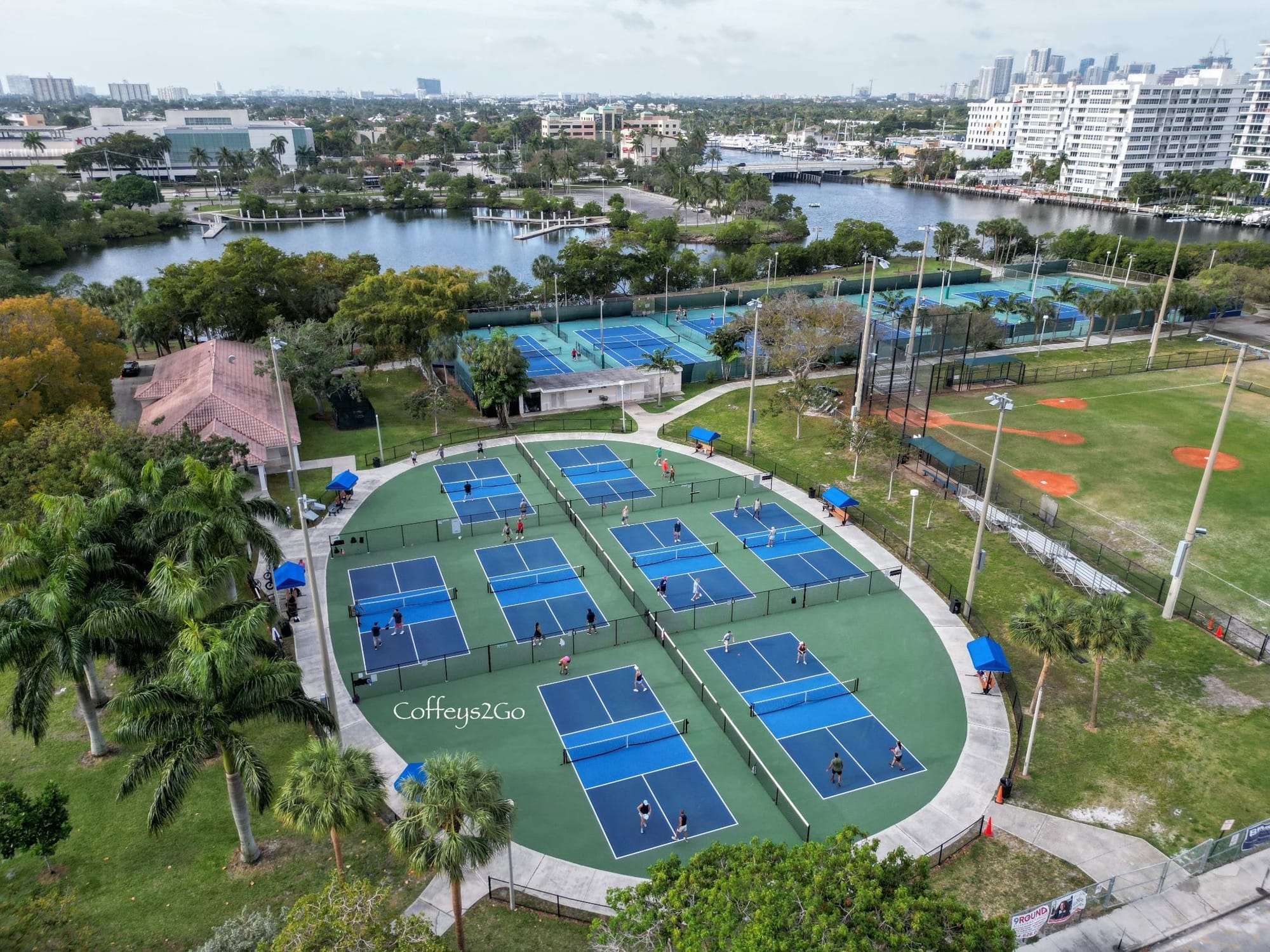
Over the years, we’ve played on every type of court imaginable—temporary taped lines in gymnasiums, converted tennis courts, dedicated pickleball complexes, resort courts, cruise ship courts, and outdoor settings framed by mountains, beaches, and city skylines. We’ve even hacked through jungle growth in Loreto, Mexico, to find the abandoned courts at the derelict John McEnroe Tennis Center.
Of course, we played pickleball there too.
No matter where we are, stepping onto a court together still feels familiar—almost like home.
One of the most rewarding parts of this journey has been watching the global growth of pickleball. In the early years, most of our play was in the United States, but as we began seeking out courts internationally, everything changed. We discovered vibrant and rapidly growing communities in places many people still don’t associate with the sport.
During a two-and-a-half-month trip through Asia, we played in Taiwan, Hong Kong, Thailand, Vietnam, and South Korea, and everywhere we went we found players deeply committed to growing the game.
Alongside playing, pickleball also became something I wanted to help build off the court.
- I started the Facebook group Pickleball Women, which now has nearly 40,000 members, creating a space for women to connect, share experiences, and support each other in the sport.
- I also founded International Pickleball Friends, which has grown to more than 4,500 members worldwide.
Both communities reflect what we see in person on the courts: pickleball as a powerful connector across borders, backgrounds, and playing levels.
Another question we’re often asked is about paddles. Between the two of us, we’ve gone through dozens over the years. Paddle technology has evolved dramatically since 2017, and what’s available today is almost unrecognizable compared to early-generation equipment.
Some of Our Favorite Courts
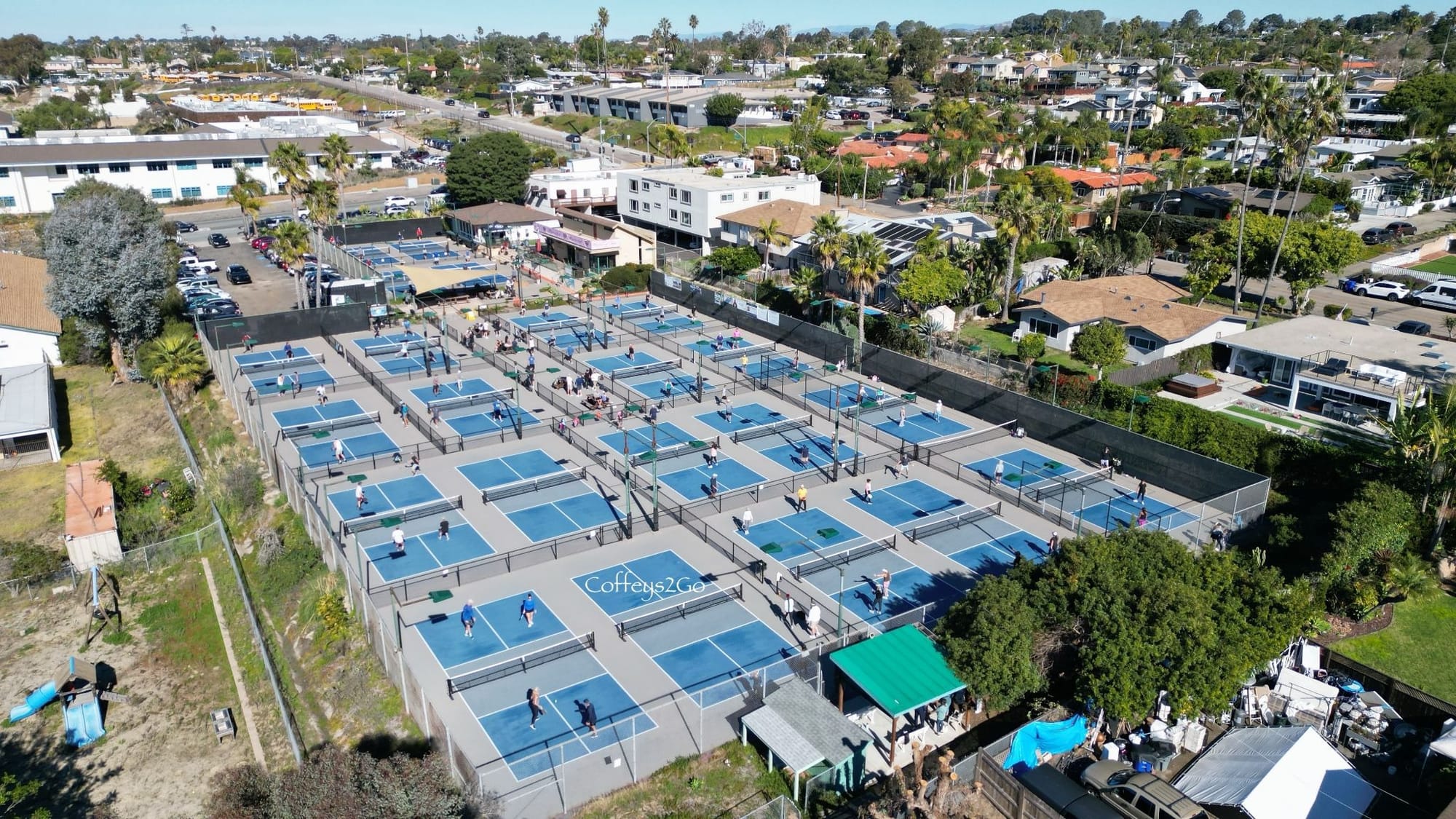
When people ask about favorite courts, it’s always a difficult question because each one carries its own memories. A few stand out in particular.
- Papaya Pickleball in Bangkok, Thailand, may be the most elegant facility we’ve ever visited. Beautiful courts, an incredible atmosphere, great food and drinks on site, and even a hot tub and cold plunge made it unforgettable.
- Tumbleweed Park in Chandler, Arizona, has 18 new public courts built with an investment of around $10 million, and what stands out most is not just the facility itself, but how it came to be. The city took a thoughtful, proactive approach—listening, researching, and building something that truly serves the pickleball community. I wish more communities approached it that way.
- Grand Junction, Colorado, is another example of what happens when communities collaborate instead of compete. There, the pickleball and tennis communities worked together to restructure facilities so both sports could thrive—converting one site to all pickleball while adding new tennis courts elsewhere. It’s a reminder that growth doesn’t have to create conflict when people are willing to listen and problem-solve.
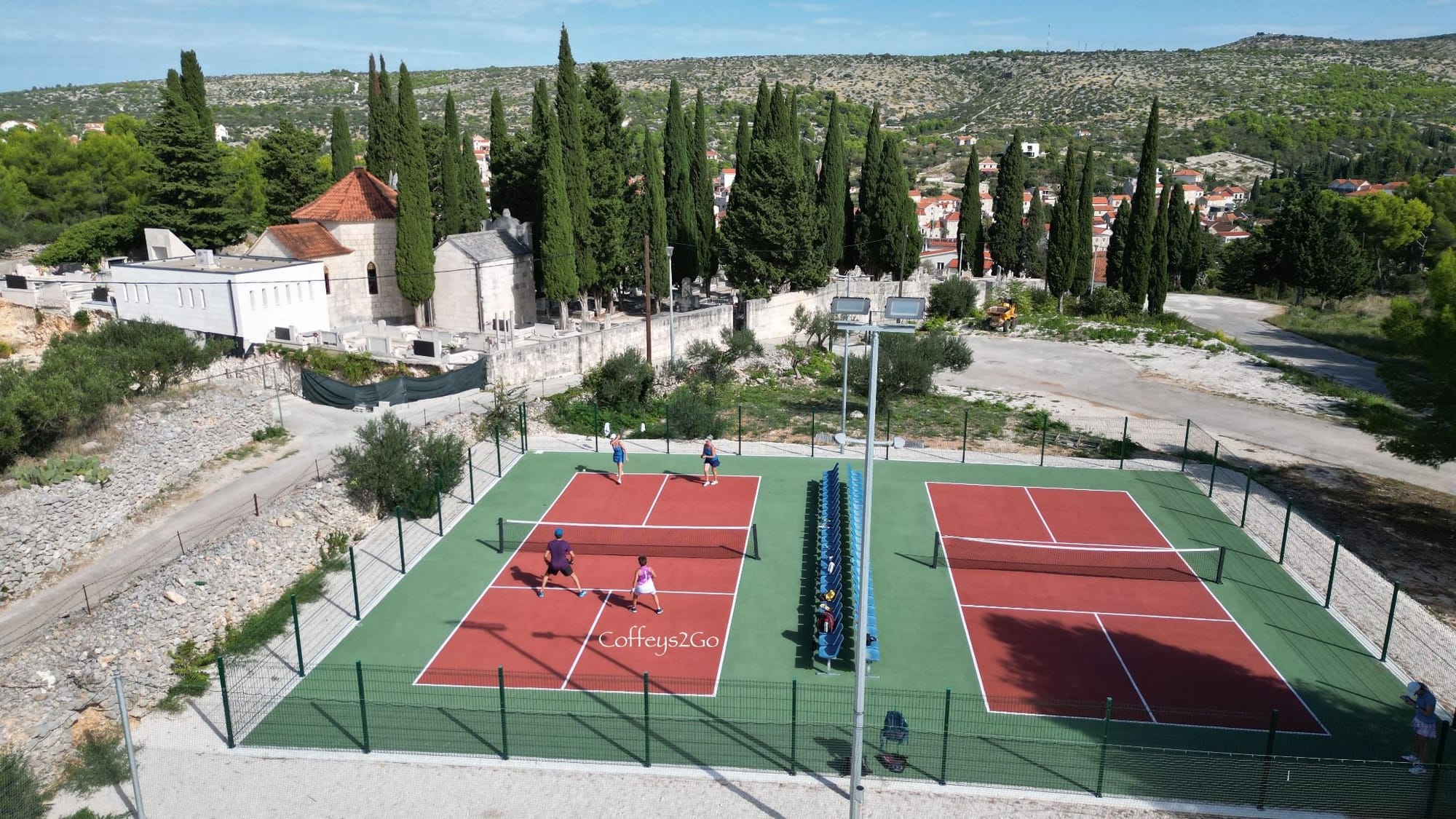
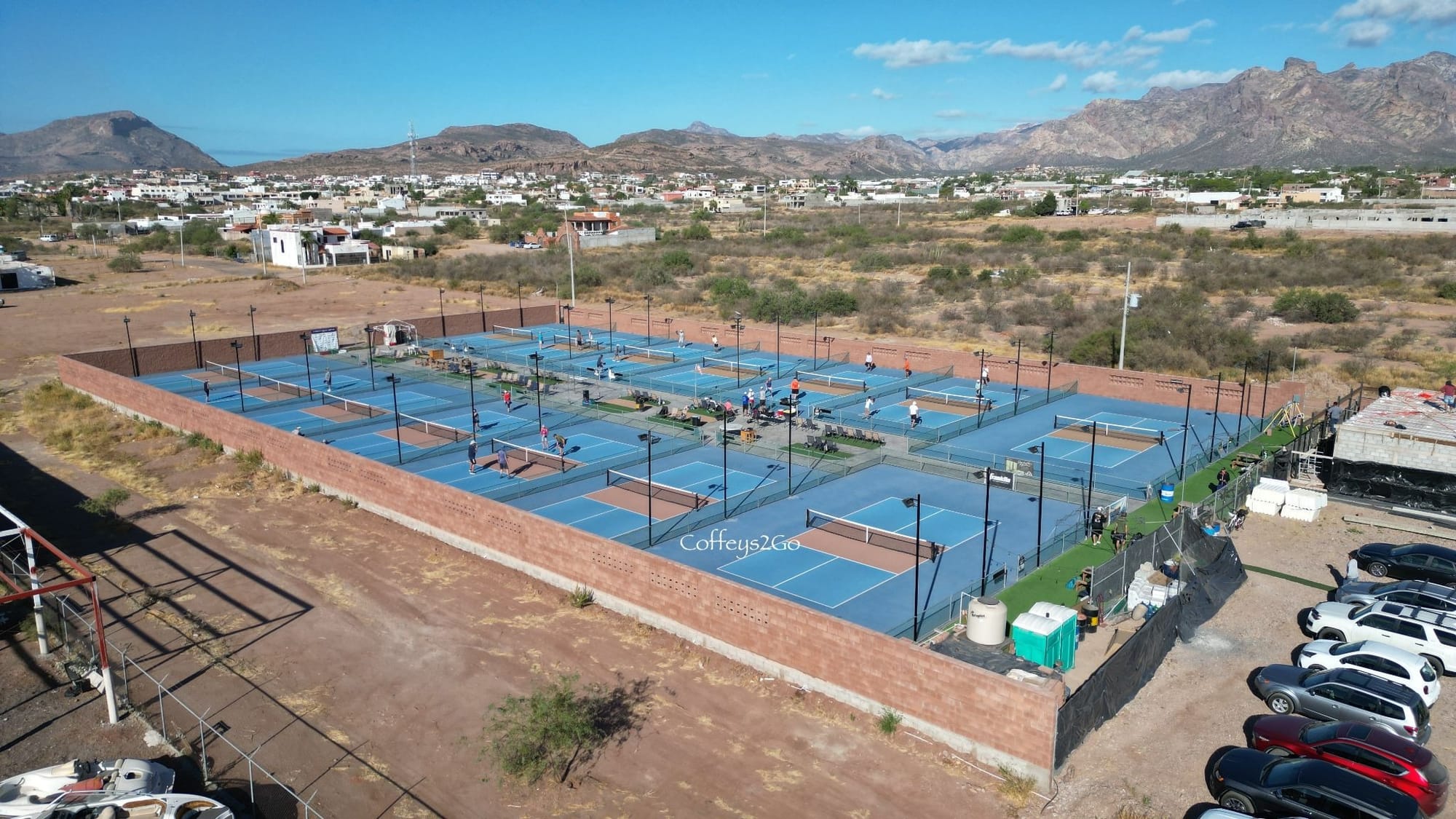
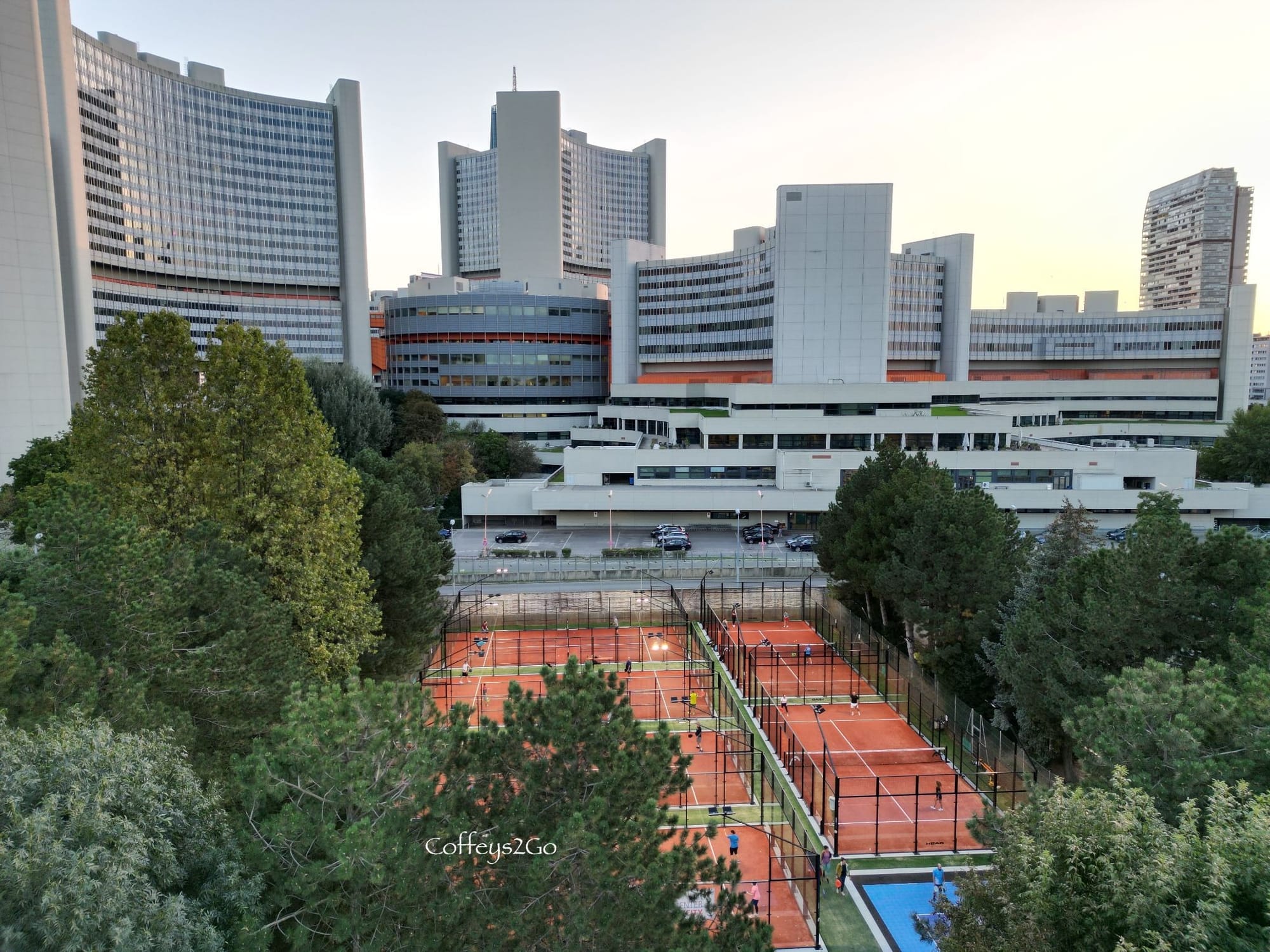
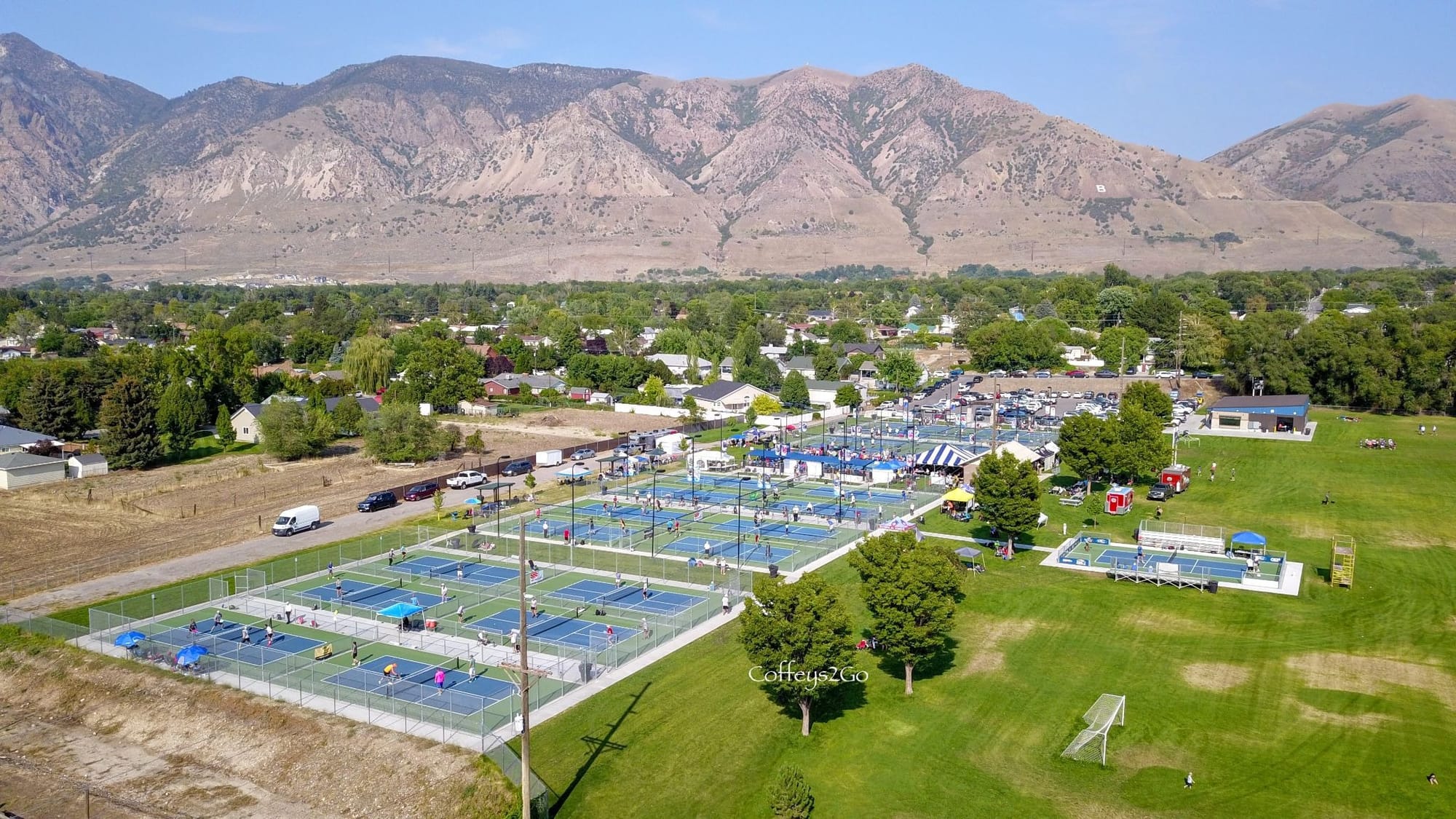
In addition to playing, I’ve spent years documenting courts through drone photography and video. Through my Pond5 collection (under creator name HoverHigher), people can explore many of the places we’ve played from an entirely different perspective. From the air, you see the scale of each facility, the surrounding landscape, and how pickleball fits into each community. It has become another way of telling the story of the sport’s rapid global expansion.
I also share much of our journey through my Facebook page, Coffeys2Go Pickleball. I write about the courts we visit, the people we meet, and the communities helping grow the game. I’ve taken a bit of a writing break since returning from Asia, but I’m looking forward to getting back to sharing those stories again soon.
When people hear “550 courts,” the number tends to stand out. But for me, the real story has never been about the number.
It has always been about connection.
Pickleball has introduced us to thousands of people we never would have met otherwise.
It has made unfamiliar places feel welcoming and turned strangers into friends.
More than anything, it has reinforced something we’ve experienced again and again around the world: pickleball creates community faster than almost anything else.
And the best part is that we’re nowhere near finished. Court number 550 wasn’t a finish line—it was simply another stop on a journey we’re incredibly grateful to still be on.
Love Pickleball? Join 100k+ readers for free weekly tips, news & gear deals.
Subscribe to The Dink