How to Hit the Perfect Pickleball Lob and When It's Simply Not Cool
Few topics are more divisive for pickleballers than the pickleball lob shot.
It lies somewhere between making protective eyewear mandatory and male partners taking up too much court in mixed doubles.
Whether it's your go-to shot or it makes your blood boil, lobbing can be an effective strategy if done well. This piece is all about the pickleball lob. We'll discuss what makes a good lob and when you should (and shouldn't) use it.
What Makes a Good Pickleball Lob?
Some might say the best lob is no lob at all. However, having a good pickleball lob shot in your pickleball toolbelt can set you apart and help you win more pickleball matches.
How High Is Too High for a Pickleball Lob?
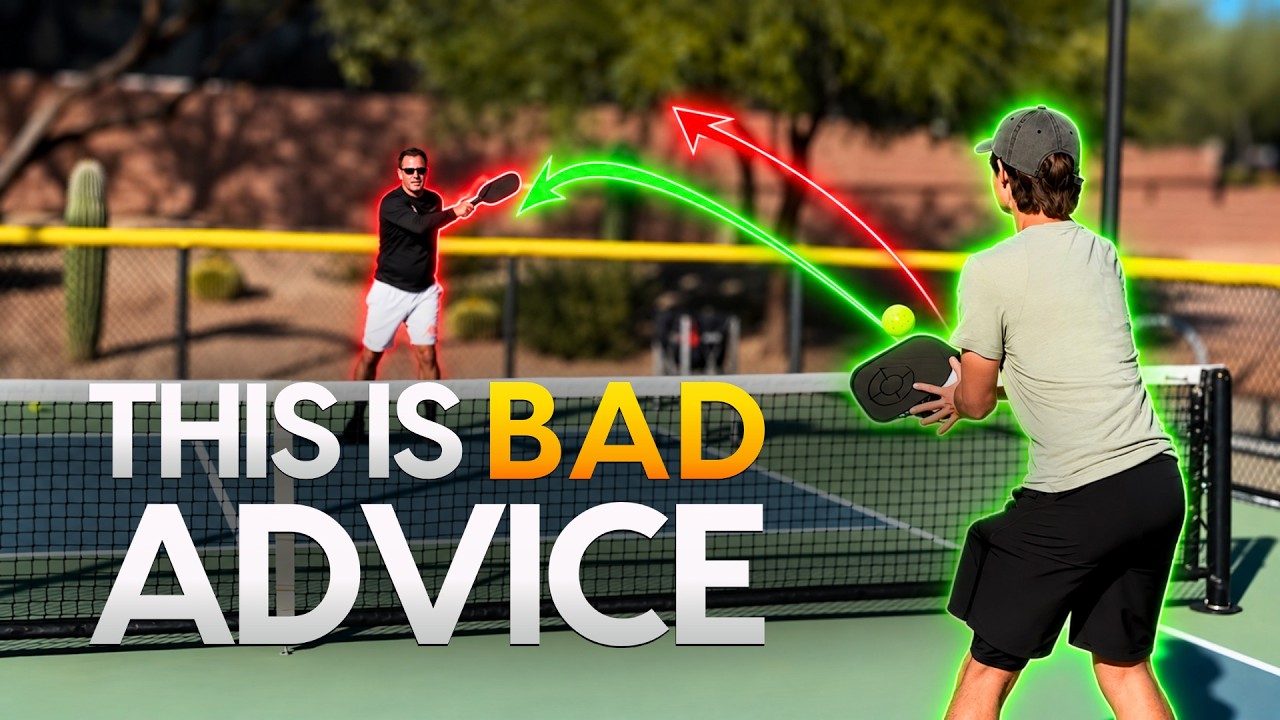
A high-arcing lob is usually ideal. How high? It depends on whether you're playing inside or outside and how tall or mobile your opponents are.
If you are inside, you have limits on how far you can take the height of the ball. If your opponents are short or can't jump very well, you may not have to hit it very high at all.
Essentially, you want to hit a pickleball lob only as high as you have to in order to get the ball over your opponent's reach and still keep it inside the baseline.
In fact, the perfect pickleball lob should be just a few inches higher than your opponent's paddle can go. This gives them less time to get back and provides a better chance that your lob ends up a winner.
Keep It Deep
You want the ball to land as close to the line as possible. You want your opponent to fully commit to getting back behind the ball and attempting as awkward a shot as possible. If you've done it well, you'll even cause some indecision among your opponents regarding who is responsible for getting the ball.
Causing indecisiveness amongst your opponents is always a good strategy.
Against the Wind
If you're playing in windy conditions, you almost never want to try to lob with the wind. Getting a ball to stay inside the line is difficult when the wind pushes it away from the court. Hitting a lob too softly can backfire and give your opponents a great putaway shot.
On the flip side, if you can hit lobs against the wind, this can confuse your opponents. As the ball flies over their heads, it will seem obvious that it should be out, but then the wind pushes it back onto the court. It can cause them to swing wildly or frustratingly give up on a ball.
When It's Not Expected
We've all played someone who lobs every single shot. Third shot? Lob. Fifth shot? Lob. Serve or return? Lob and lob. It can be infuriating, especially if they are really bad at it. When you're playing with or against these people, try to find something else to focus on, your taxes, maybe. Then, simply wait for a new rotation so you don't have to play with them again.
The best time to lob is when it's least expected. If someone knows a lob is coming, it's much easier to defend. They can simply hang out in the transition zone and take a few steps back when they see you scoop the ball.
But if it's just a small part of your game, you can look for specific opportunities to throw up a lob.
 Luke Burton
Here are some times when the lob works best:
- When your opponents are both at the kitchen line
- When you're in the middle of a dink rally, and your opponents are expecting a dink
- If your opponents are running or leaning forward
- If you need to buy yourself some time to get into a better position on the court
You know you've picked an excellent time if you can see fear and panic on your opponents' faces after hitting a lob. Just pray it stays in the court.
Offensive vs. Defensive Pickleball Lob
It's important to note that, like other shots in pickleball, you should not expect to win a point on a lob. Yes, of course, you will sometimes. But, for the most part, what you're trying to accomplish by lobbing the ball depends on your current situation.
Offensive
An offensive lob is typically when all players are in a neutral position, meaning everyone is at the kitchen line. Perhaps a few dinks have gone back and forth, and no one seems to be gaining any ground. This is the time to try an offensive lob.
Ideally, you want to place it in the opposite corner of your position.
The Dink Media Team
For example, if you are on the left side of your kitchen, try placing the lob in the far (right side) corner behind your opponent. If they prove that they can throw their forehand up there and make you pay for your attempt, you may want to move it toward the center of the court next time.
An offensive lob aims to give your team an advantage in the rally by forcing your opponents off the kitchen line. If they can get it back, they'll likely be in a defensive position, giving you opportunities to put a ball away.
Defensive
A defensive lob comes from a place of weakness. This doesn't mean you're weak for using it. Instead, you or your partner are in a compromised or weak position on the court.
For example, let's say that your opponent hit a ball down the line, catching you or your partner out of position. This is an excellent time to hit a lob toward the back center of the baseline. The extra time this lob gives you should be enough for you and your partner to get into better offensive positions.
As Yahoo Sports details in their breakdown on overheads and lobs, the defensive lob is one of the most underused tools in a recreational player's arsenal, and knowing when to deploy it separates developing players from smart ones.
The Panic Pickleball Lob
If you've ever been in a dinking rally or found yourself stuck in the transition zone wanting to lob the ball, then you've just hit what I like to call a panic lob. A panic lob is a shot that we take when either a) we don't know what else to do or b) we just want to get out of the current situation we're in. These are not good pickleball lobs.
Mechanically, they are challenging to pull off, because you are typically just "throwing" it up and hoping for the best, and mentally, they are simply a result of our anxiety getting the best of us.
If you find yourself asking, "Why the heck did I just lob there?" That's a panic lob. Stop doing that.
Instead, force yourself to stay in the dinking rally longer or hit a reset shot to the center of the kitchen.
Why People Hate Lobs and Lobbers
The hate for the pickleball lob shot is kind of wild. But, truthfully, most people hate lobs because they can be a pain in the rear. They can be even more annoying if you're not very mobile or just don't feel like running for a ball after three hours of pickleball.
People tend to hate things that expose their own weaknesses. As Sports Illustrated notes, refusing to incorporate certain shots entirely is one of the top strategic mistakes players make, and the lob is a prime example.
If you're playing to win, why remove an entire shot from your arsenal because your opponents are terrible at defending them? If anything, you should find ways to do it more often. For a deeper look, The Dink has put together the ultimate guide to lobbing in pickleball with everything you need to refine this shot.
Is Lobbing Okay in Rec Play?
I'm about to contradict myself. I know I just said that if your opponent can't handle pickleball lobs, you should lob them more. However, there is a caveat.
When you are playing with friends or in recreational (aka open) play, or more specifically, playing in games where wins and losses don't really matter, try not to lob very much. Being mindful of pickleball etiquette in casual games matters more than most players realize.
If Francine, who wears double knee braces, and Frank, who just had hip replacement surgery, are standing opposite of you, it would be pretty crappy for you to lob them incessantly so that you can feed your ego with rec play victories. Not only is this mean, it can be dangerous for your fellow pickleballer.
In times like this, err on the side of "work on something else" or play against different opponents. To put it plainly, don't be that person. After all, pickleball is supposed to be fun, and if you're purposely not making it fun for someone else, then maybe you should take up another sport.
There's probably a tennis court wide open for you.
Frequently Asked Questions
What is the best time to use a pickleball lob in a match?
The most effective pickleball lob lands when your opponents least expect it. Ideal moments include when all four players are at the kitchen line or during a dink rally when your opponents are leaning forward and not watching for height.
How high should a pickleball lob be?
The perfect pickleball lob clears your opponent's paddle reach by just a few inches, no higher than necessary. Aim to land it as deep in the court as possible, targeting the area near the baseline to force your opponent as far back as you can.
What is the difference between an offensive and defensive pickleball lob?
An offensive lob is hit from a position of strength, typically to disrupt opponents who are settled at the kitchen line. A defensive lob buys time when you or your partner are caught out of position, giving you the seconds needed to reset and recover your court presence.
Should you avoid the pickleball lob in recreational play?
Using the lob excessively against players with limited mobility in recreational settings is generally poor sportsmanship. If your opponents are physically limited, focus on developing other areas of your game rather than lobbing repeatedly just to win casual rec matches.
Why do so many pickleball players hate the lob?
Most players dislike the lob because it forces them to expose weaknesses like limited mobility or poor footwork. That said, refusing to include the lob in your own game means giving up a legitimate strategic weapon that can shift the momentum of any rally in your favor.
Jason Flamm
Love Pickleball? Join 100k+ readers for free weekly tips, news & gear deals.
Subscribe to The Dink