
The Return Plus One: Mastering the Transition from Baseline to Kitchen Line
The return and fourth shots aren't glamorous; they're the shots that determine whether you're winning matches or wondering why you keep losing to players you think you should beat.
You know what separates the players who climb the rankings from those stuck in neutral? It's not always the flashiest shots or the most aggressive play.
Sometimes it's the fundamentals that nobody gets excited about: like the return of serve and what happens next.
Love pickleball? Then you'll love our free newsletter. We send the latest news, tips, and highlights for free each Monday, Wednesday, and Friday.
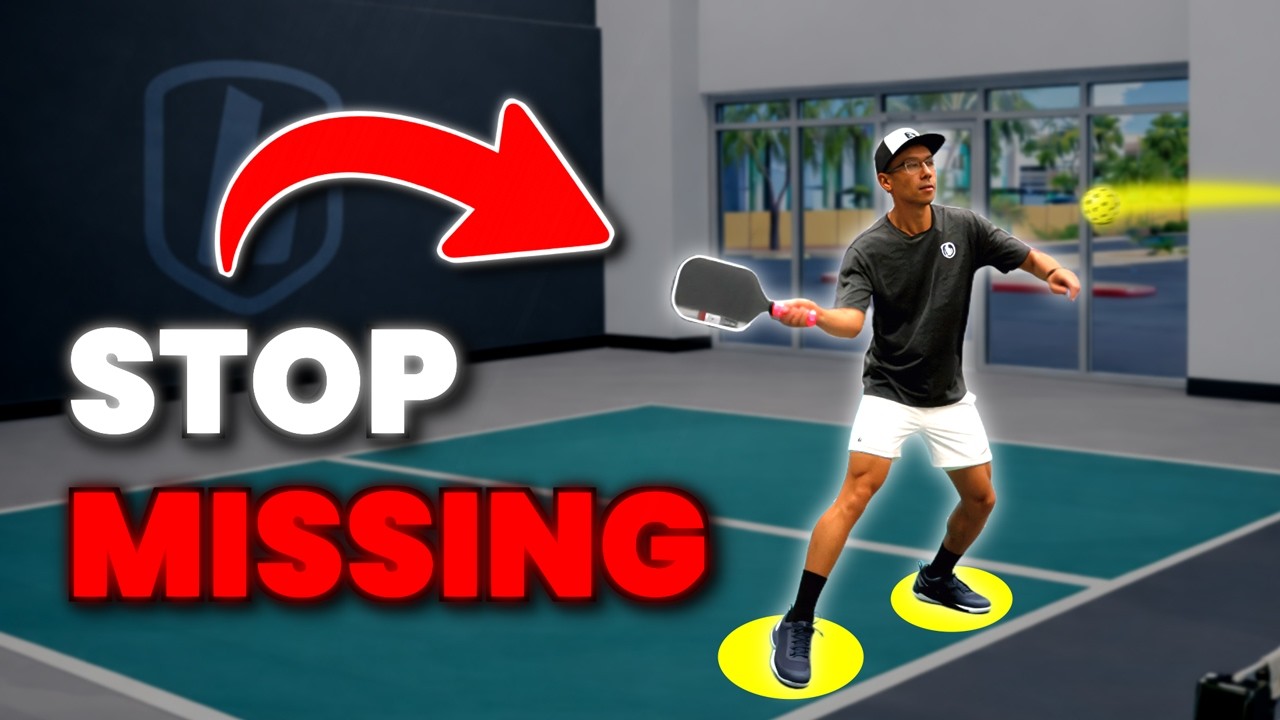
Pro Ryan Fu just dropped a short but info-packed video on exactly this, and honestly, if you're struggling to with your service game, this one's worth your time.
The core message? Your return isn't just about getting the ball back in play. It's about positioning yourself to win the point before your opponent even hits their third shot.
1. Get Low and Stay Low Through Contact
Here's the thing about returns that most players get wrong: they're thinking vertically when they should be thinking horizontally. The serve comes from a low point and ends at a low point, which means your entire return motion needs to respect that geometry.
Fu emphasizes getting as low as possible in your stance before the serve even arrives.
If you're standing upright, you're forced to use your wrist to compensate for the height difference, and that's when the ball pops up.
Nobody wants a floaty return that your opponent can attack.
The key is staying low throughout the entire shot, then popping up after contact.
Not during. After.
This distinction matters more than you'd think, especially against serves that come in at your feet or with heavy spin.
2. Split Step and Run Through the Ball
This is where positioning meets athleticism. Fu demonstrates splitting right when his opponent makes contact with the serve, then immediately running through the ball as he swings. The goal? Get to the kitchen line before the ball even touches your opponent's paddle on the third shot.
It sounds aggressive, and it is, but it's also smart.
If you're hesitating or stopping mid-swing, you're losing ground. The players who dominate at the kitchen line are the ones who treat the return like the first step of a sprint, not a defensive stand.
 The Dink Media Team
3. Keep Your Body Open and Lead With Your Outside Foot
Wide serves are designed to pull you out of position. The natural instinct is to cross your legs over to reach the ball, but that's exactly what your opponent wants. It costs you an extra step to recover to the kitchen line.
Fu's solution is simple: always lead with your outside foot on every return.
If the serve pulls you wide to your right, your right foot moves first, then your left foot follows through the court.
This keeps your body open and your momentum moving forward toward the net, not sideways.
 The Dink Media Team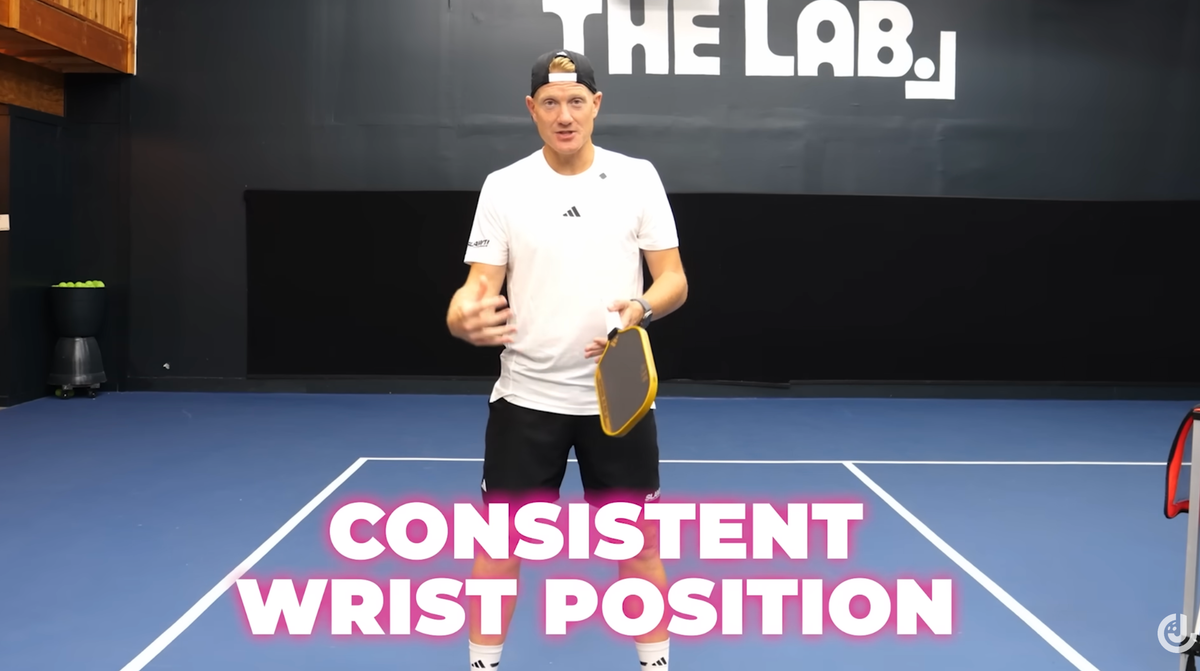
4. Extend Your Arm for Depth
Deep returns are the best returns. They force your opponent to either hit a perfect third shot drop or take a risk with a drive. Most players don't have the consistency to execute a flawless drop from deep in the court, so they're more likely to make an error.
The way to hit deep returns? Full arm extension through the ball. Don't get tight or compact. The more extension you have, the further the ball travels. It's physics, really. A short, jabby return motion produces a short return. A full, flowing motion produces depth.
5. Know When to Concede the Kitchen
Here's where the mental game kicks in. Sometimes you hit a perfect return, get all the way to the kitchen line, and your opponent hits an absolute drop shot right at your feet. What do you do?
A lot of players try to hit it hard and deep, thinking they can win the point outright. That's a mistake. If you hit it high, your opponents are crashing the net and they're going to put it away. Instead, Fu introduces the concept of "conceding the kitchen," which sounds like giving up but is actually the opposite.
Conceding the kitchen means accepting that this particular ball is going to be a dink. You're not trying to win the point on this shot. You're trying to start a kitchen rally where you have the advantage because you're already at the line and your opponents are scrambling.
 The Dink Media Team
How to Actually Concede the Kitchen Without Getting Punished
The execution matters here.
- First, use minimal wrist. The more wrist action you introduce, the harder it is to keep the ball down. A fixed, firm wrist throughout the shot is your friend.
- Second, stop your body before you make contact. Right when your opponent hits the ball, you want to be in a stopped position, not moving. It's counterintuitive because we're taught to stay active, but a moving body makes it nearly impossible to control a soft shot.
- Third, aim for the center of the court. The margins on the sides are too tight. You're not trying to be cute here. You're trying to put the ball in play in the safest possible spot, which is right down the middle.
The Bigger Picture
What Fu is really teaching here is the difference between playing pickleball and playing smart pickleball.
The return and the fourth shot aren't glamorous. They're not the shots that get replayed on social media. But they're the shots that determine whether you're winning matches or wondering why you keep losing to players you think you should beat.
 Alex E. Weaver

Love Pickleball? Join 100k+ readers for free weekly tips, news & gear deals.
Subscribe to The DinkGet 15% off pickleball gear at Midwest Racquet Sports