
The $3 Billion Pickleball Facility Boom Is Here, But a Shakeout May Be Next
First movers have rushed in to secure prime locations, sign leases, and build out clubs. But speed can come at a cost.
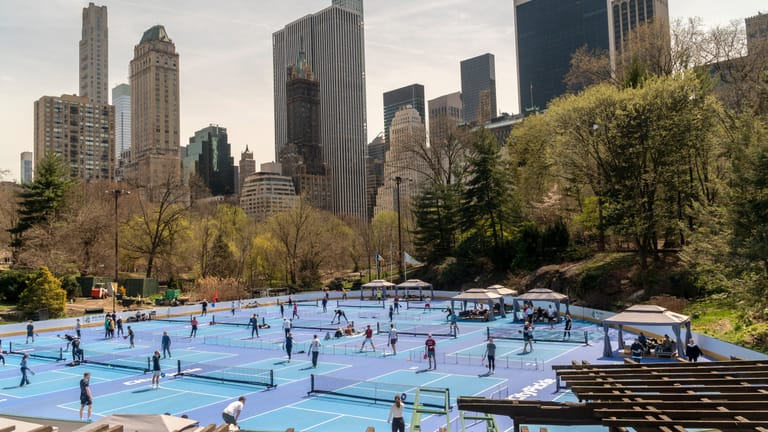
Over the past two years, the indoor pickleball facility boom has gone from zero to full throttle.
More than 1,200 new facilities have opened across the U.S. in that time, according to David Johnson's latest edition of The Business of Pickleball Newsletter.
Major franchise groups have emerged. Investors have poured money into the space. Established fitness brands like Life Time and Invited Clubs have embraced pickleball as a core offering.
And the dollars are real. Very real.
Indoor pickleball facilities now represent a market worth more than $3 billion when factoring in operating revenue and capital investment, says Johnson. That’s significantly larger than the equipment side of the sport, which comes in under $1 billion.
In short: facilities are the business of pickleball right now.
But rapid growth rarely comes without consequences.
The 'Wild West' Phase
This kind of explosive expansion often creates a land-grab environment — and that’s exactly what’s happening.
First movers have rushed in to secure prime locations, sign leases, and build out clubs. But speed can come at a cost. Poor site selection, bad lease terms, staffing challenges, and permitting hurdles are already creating cracks beneath the surface.
"In a market boom like this we often see first-movers gaining the advantage," says Johnson.
"But not always. The pressure to act quickly can lead to poor decisions that can cripple a facility long-term. Unreasonable expectations often hit the cold, hard wall of reality."
Building a successful facility is harder than it looks.
Operators are dealing with:
- Limited pools of experienced managers
- Seasonal demand swings
- High upfront capital costs
- Operational complexity that goes well beyond just putting courts in the ground
And in some markets, the biggest issue is starting to emerge: saturation.
When Supply Outpaces Demand
A facility might look like a home run — until another one opens a mile away.
There simply may not be enough paying players in certain areas to support multiple premium-priced memberships. At $100+ per month, the margin for error is thin.
That’s where things get interesting.
Signs of stress are already appearing:
- Some facilities are quietly going up for sale
- Others have shut down or entered bankruptcy
- Even franchise systems are seeing locations struggle or sit unopened
On the vendor side, a similar trend could follow. As facility growth slows, vendors may find themselves competing for a smaller slice of the pie.
Not All Doom and Gloom
This isn’t a collapse — it’s a correction.
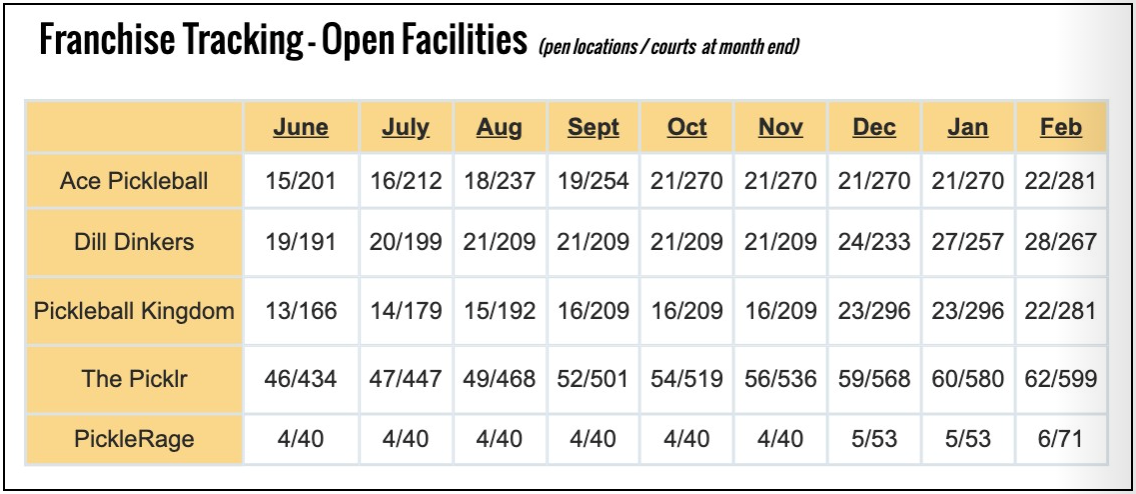
Plenty of facilities are thriving. The Picklr, for example, has nearly 600 courts across 60+ locations nationwide. And they're showing little sign of slowing down.
The ones that are succeeding tend to follow a clear formula:
- Strong locations
- Favorable lease structures
- Experienced operators
- Knowledgeable coaches
- Community-driven programming
- A focus on hospitality, not just court time
These operators aren’t just surviving — they’re expanding.
Some are opening second and third locations. Others are acquiring struggling facilities and turning them around.
A few are going gang-busters.
 Alex E. Weaver
A Maturing Industry
If anything, this signals the next phase of pickleball’s evolution.
The sport isn’t going anywhere. It’s simply moving from hypergrowth into maturation — where execution matters more than speed.
The gold rush phase is ending. The operators who win from here will be the ones who build sustainable businesses, not just fast ones.
And for the broader pickleball ecosystem, that’s a good thing.
David Johnson is the former founder of Pickleball Central and the current CEO of the IAPPF, a trade industry founded to support the pickleball industry.

Love Pickleball? Join 100k+ readers for free weekly tips, news & gear deals.
Subscribe to The DinkGet 15% off pickleball gear at Midwest Racquet Sports