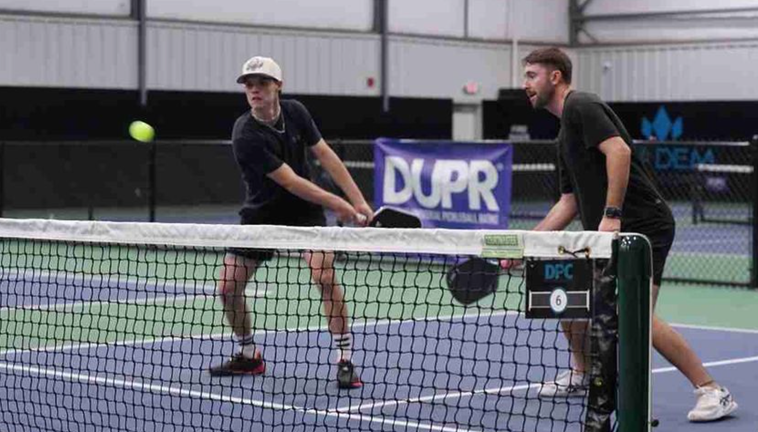
No one plays the game of pickleball like Riley Newman. Try as you might, it's nearly impossible to cover the court in his unique style.
The former college tennis and basketball player has created his own brand of pickleball that bucks the trend of traditional racquet sports. His Riley Newman pickleball grip and court coverage are unlike anything you will see in most pro matches.
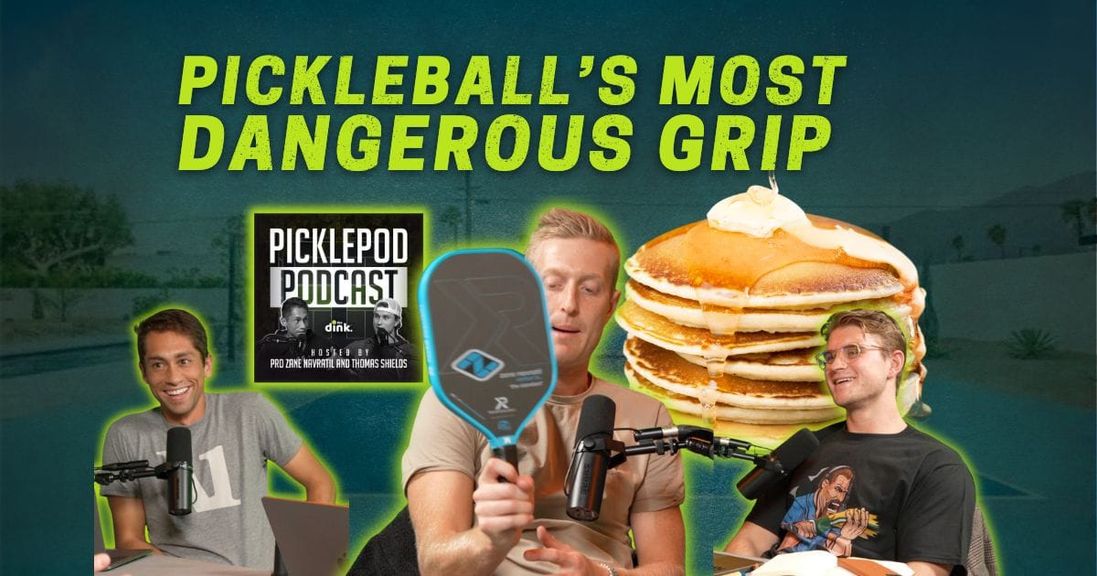
On last week's PicklePod episode, Newman explains how he landed on his grip and how it changed his play style.
When Newman was young he couldn't afford tennis lessons but received a tip while playing at the local courts. He was advised to close his paddle face to create more topspin with his forehand.
Fast forward two decades later and you can still see the effects. Instead of a continental grip that is popular on the courts, Newman holds his paddle like a stop sign.
He has built his game around being a complete menace at the kitchen line. Newman is not going to try to win the game with groundstrokes. He is going to get to the line and own you in the short game.
Throughout his pro career, he has become known for two signature shots, his pancake forehand and two-handed backhand.
For $50 off your first Pickleball Box, use code Dink50.
The Riley Newman Pickleball Grip Explained
The Riley Newman pickleball grip is the foundation of everything he does on the court. It is unconventional, biomechanically creative, and highly effective at both ends of the shot spectrum. Most players develop their game around a standard paddle grip, but Newman built his style from scratch after a single piece of coaching advice he received as a kid.
This grip is not something you stumble into. It takes deliberate practice and a willingness to play differently than everyone else around you. That willingness has made Newman one of the most studied and imitated players in the pro game.
The Riley Newman Pancake Forehand and What Makes It Different
A primary target in pickleball is the chicken wing. The chicken wing is the paddle side shoulder on the opposing player. Anatomically speaking, it is a hard area to protect.
Most players favor their backhand to protect themselves at the kitchen line. A backhand at your paddle side is tough to handle. When a ball is hit there, your elbow flares out and it is nearly impossible to be offensive, hence the name chicken wing.
Newman changed the game with his grip and the pancake shot.
Targeting the Chicken Wing With the Riley Newman Pickleball Grip
Newman's pickleball grip allows him to protect his chicken wing with his forehand. His wrist does not need to turn as far to square up the paddle face.
If a player targets his chicken wing, they're met with the ball being smacked down into the court for a winner. The motion resembles flipping a pancake in a frying pan which is where the name comes from.
He basically turned the most vulnerable spot on your body into an offensive weapon.
Related: PicklePod Recap: Riley Newman pulls no punches with Zane and Thomas
The Two-Handed Backhand
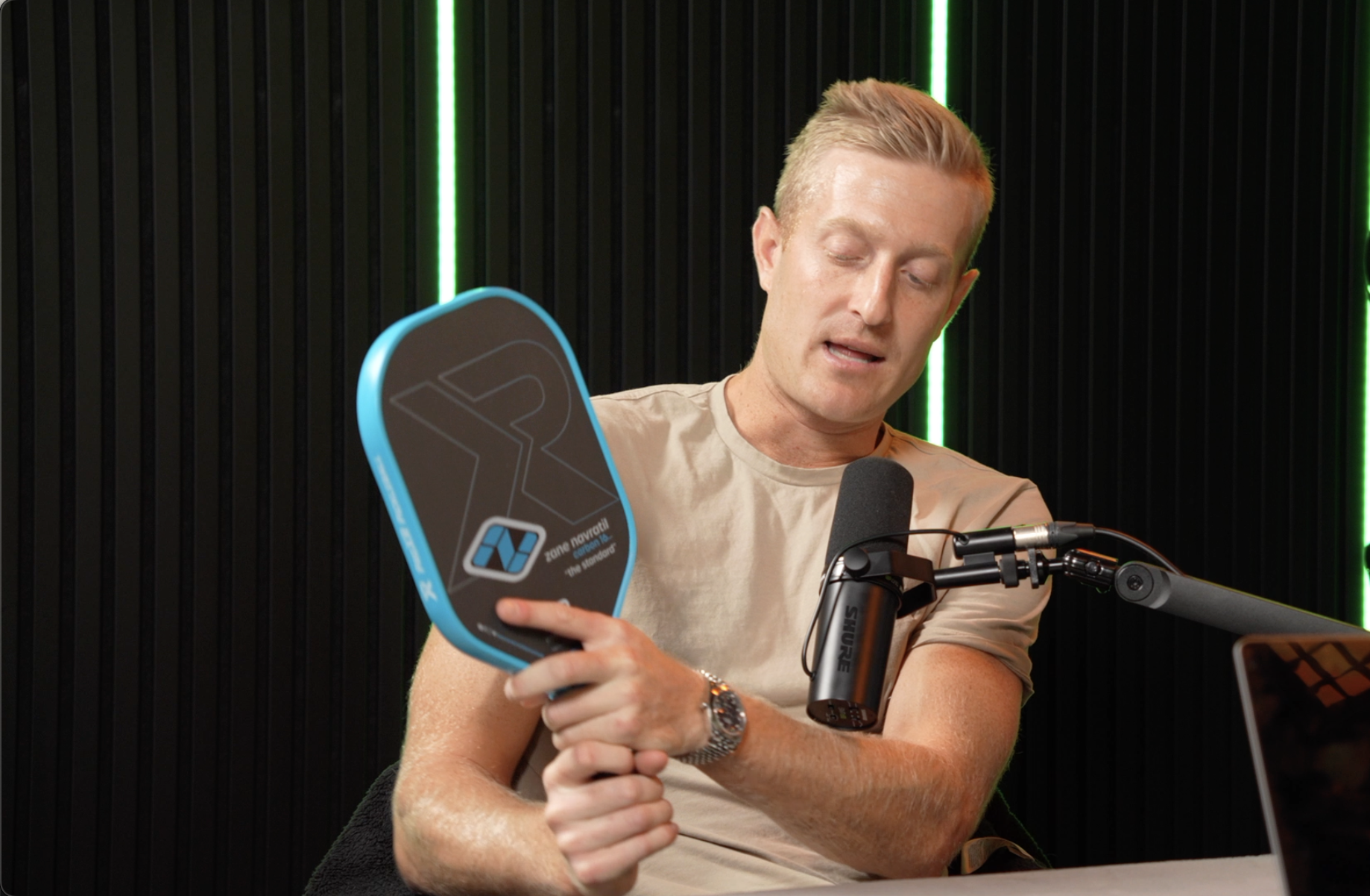
Newman's two-handed backhand allows him to maintain the same forehand grip and just squeeze his left in above his right on the paddle grip. He demonstrates his two-handed backhand on the PicklePod.
For most of a match, you will actually see Newman sitting on his backhand. He keeps two hands on the paddle more than any player besides his sister Lindsey. A majority of players will run around their backhand turning it into a forehand. The Newmans will hit a backhand from anywhere on the court and are masters at dropping them into the kitchen.
Riley doing Riley things, wait til the end to see this wizardry 🤩 🔥 😮💨
— D.C. Pickleball Team (@dcpickleball_tm) January 24, 2024
Just one of many incredible points in the most epic Championship match of the year @MajorLeaguePB Dallas 🏆 #dc #pickleball #team #finals #championship #pickleballhighlights #pickleballislife #wednesday pic.twitter.com/OOCbkMkz2K
How the Riley Newman Pickleball Grip Influenced Paddle Design
Newman was a major catalyst in paddle companies increasing the length of their grip to more than 5 inches. When developing signature paddles in the past, his paddle always stood out because of the grip length. If you're in the market for a new paddle, the pickleball paddle buying guide can help you find the right fit for your grip style.
Even with a longer grip, Riley still extends his index finger up the backside of the paddle. This provides added stability and control. This is evident in his unmatched consistency and power with the backhand.
Why the Newman Backhand Works Despite Looking Unconventional
Despite being one of the best in the game, the Newman backhand is not the most aesthetically pleasing. It usually involves whole-body movement, his elbows squeezed close together, and a fair amount of contortion.
But Riley is one player who never gets lazy on the court and can get away with the inefficient movement. His consistency on the backhand dink is something every player can study, as his backhand slice dink is among the most reliable in the sport.
Does the Riley Newman Pickleball Grip Transfer to Other Players?
Since seeing him play, I was always curious if this was the way Riley taught others to play. If you attended a Riley Newman clinic would you walk out with two hands glued to the paddle and more spring in your step?
When asked if he teaches his unique style to other players, Newman said "No." If Newman was mentoring a pickleball prodigy he would suggest a hybrid approach.
A more traditional paddle grip from the baseline, then switch into the pancake grip once you reach the NVZ. This approach to the non-volley zone is where the Riley Newman pickleball grip does its most damage.
It is worth noting that this pickleball grip is changing the game at every level, as more players study Newman's technique and try to incorporate elements of his paddle grip into their own game. The pancake forehand may be unique to him, but the philosophy behind it, turning your opponent's best target into your biggest weapon, is something every player can learn from.
Sign up today for the most informative newsletter in pickleball from The Dink!
Frequently Asked Questions
What is the Riley Newman pickleball grip?
The Riley Newman pickleball grip is an unconventional palm-forward paddle hold that resembles holding up a stop sign. Unlike the standard continental grip most players use, it allows Newman to protect the paddle side shoulder with his forehand rather than his backhand.
What is the pancake forehand in pickleball?
The pancake forehand is Riley Newman's signature shot, named for the motion of flipping a pancake in a pan. When opponents target his chicken wing, Newman's unique pickleball grip lets him snap the ball down into the court for a winner rather than being forced into a defensive position.
Why does Riley Newman use a two-handed backhand?
Newman's two-handed backhand lets him keep the same grip for both forehand and backhand shots, eliminating the need to switch paddle positions at the kitchen line. He simply squeezes his non-dominant hand above his dominant hand on the grip, giving him added power and consistency.
How did the Riley Newman pickleball grip influence paddle companies?
Newman's need for a longer grip to accommodate his two-handed backhand was a key reason paddle manufacturers increased standard grip lengths to over five inches. His signature paddle specifications stood out among pro models and helped push the entire industry toward longer grip designs.
Should recreational players try the Riley Newman pickleball grip?
Newman himself recommends a hybrid approach for most players, using a traditional grip from the baseline and transitioning to the pancake grip near the non-volley zone. Attempting to use his grip full-time without extensive practice can create inconsistency, so it's best to experiment with it gradually in specific situations first.
Love Pickleball? Join 100k+ readers for free weekly tips, news & gear deals.
Subscribe to The Dink