Pro Speed-Up Strategy: Master the Kitchen Line Attack Like a 5.0+ Player
Connor Garnett shows that winning kitchen battles isn’t about raw power, but about positioning, psychology, and reading opponents in real time
Connor Garnett is pulling back the curtain on the speed-up strategies that separate 5.0+ players from everyone else.
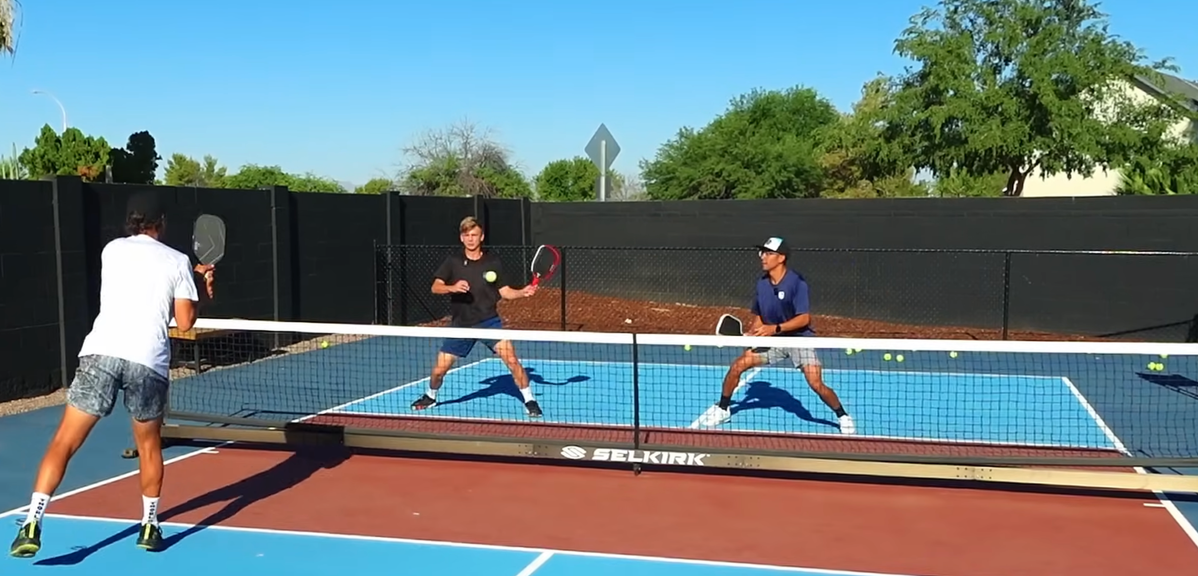
In a detailed breakdown with Jordan Briones, Garnett walks through the mental framework, positioning, and shot selection that make kitchen line attacks so devastating, and how to actually defend against them.
Love pickleball? Then you'll love our free newsletter. We send the latest news, tips, and highlights for free each week.
The Three-Point Attack System
Here's the thing about speed-ups: most players think they're just about hitting the ball harder. Garnett immediately corrects that misconception. Instead, he breaks down his approach into three core considerations before even thinking about where the ball is going.
- First, ball height matters more than you'd think. If Garnett can get the ball to around knee level, or high enough that it sits at his opponent's midsection or lower, he's ready to attack. This isn't complicated stuff, but it's the foundation. Too many players try to speed up balls that are still climbing, which is basically asking for trouble.
- Second, he emphasizes weight transfer. You can have perfect positioning and terrible footwork, and you'll still lose the point. Garnett admits he's made this mistake himself: leaning back slightly or using just a touch of force when he should be driving through the ball. These shots often look like setup shots rather than finishing attempts, which means he's not ready for the next ball. That's a recipe for getting passed.
- Third, and this is where it gets interesting, positioning on the court matters as much as the shot itself. If Garnett doesn't know his opponent, he starts from the middle of the court. But in professional matches where he's studied his opponent, psychology enters the equation. He likes to target a spot just right of center, roughly where his opponent's paddle sits. Why? Because it forces a choice: slide to protect the line, and the middle opens up. Stay neutral, and he can mix in a crosscourt shot. It's a chess move disguised as a tennis stroke.
The Three Targets: Straight, Middle, Diagonal
Once Garnett has the right ball height and positioning, he's got three primary targets. Think of them as his menu of options, and he picks based on what his opponent shows him.
- The straight line shot is the most conservative play. Garnett slows it down intentionally, counterintuitive, right? But here's his logic: if the opponent is already prepared for a fast ball, a slower one with more spin and height actually creates problems. For right-handers, they can use their forehand. For lefties, the backhand. By floating it slower and higher, Garnett exploits the fact that their attacking stroke might not be as powerful. It's about setting up the next ball, not necessarily winning it outright.
- The middle ball is his starting point against unfamiliar opponents. He targets the lowest point between them until someone proves they can cover it. Usually both players can reach it, but if they do, they're often sliding while hitting, which means their counterattack comes with less force. Garnett's ready for that. If they miss it, he knows the line is open.
- The diagonal shot is the advanced move. If the crosscourt player is defending well, Garnett aims for the spot directly in front of where his opponent is standing. High success rate, high risk. But here's the psychological edge: if the opponent is thinking "I need to speed up the diagonal," they're already committed to sliding that direction. Garnett knows this, so if he actually places it there, the court opens up more than people expect.
Reading Your Opponent (Even When You Lose)
This is where Garnett's approach gets genuinely sophisticated. He doesn't just win points and move on. He's collecting data constantly, even on balls he doesn't win.
During a practice rally, Garnett misses a speed-up but notices his opponent made a small adjustment in their ready position. Most players would just move to the next point. Garnett sees it as information. He knows that next time, his opponent might cheat the same way. That's confidence, not fear. He's thinking, "Great, now I have another attacking option."
This mindset flips the script on what losing a point means. Instead of getting discouraged when your speed-up gets countered, you're supposed to be watching how they countered it. Did they slide? Did they lean? Did they adjust their stance? All of that tells you where to attack next time.
 The Dink Media Team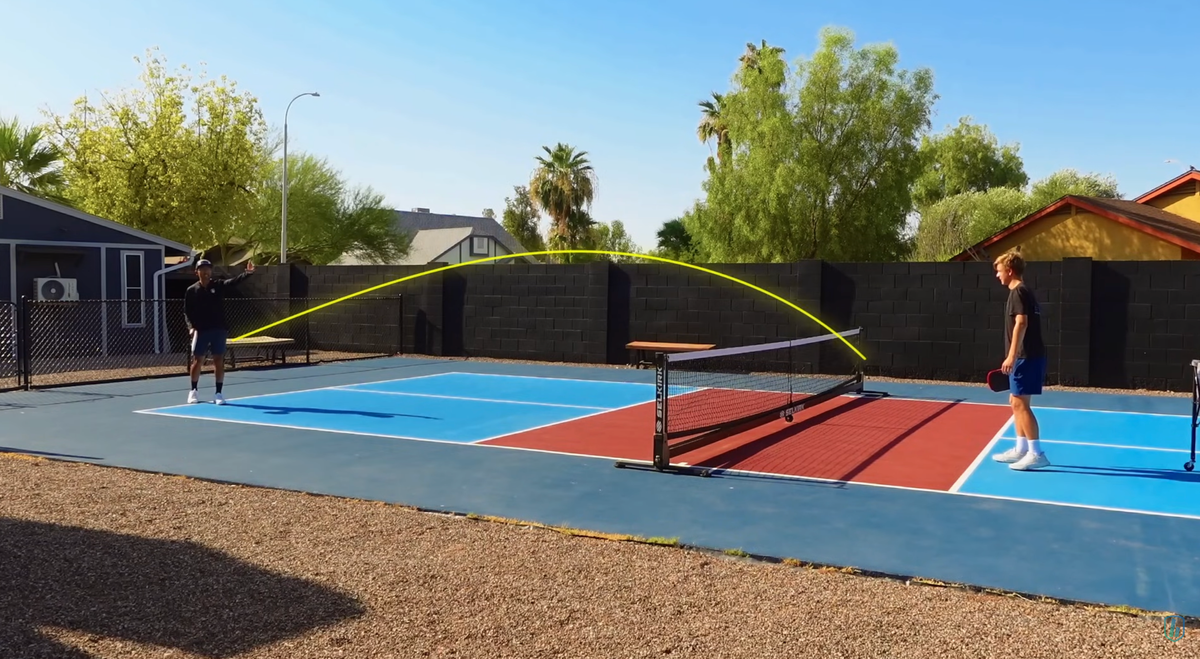
The Positioning Game: You Have to Cheat Somewhere
Here's something Garnett emphasizes repeatedly: you can't defend everything. You have to give up something to protect something else. If you're playing the diagonal, you're vulnerable in the middle. If you're protecting the middle, the line is exposed.
During live play, Garnett steps forward and leans toward the forehand side, essentially inviting his opponent to attack his backhand. But he's confident in his backhand, so he's willing to take that risk. The trade-off is that his forehand is now more exposed. It's a calculated gamble based on knowing your strengths and your opponent's tendencies.
This is the kind of strategic thinking that separates 5.0 players from 4.0 players. It's not about having perfect defense. It's about being intentional about what you're giving up and why.
 The Dink Media Team
Speed as a Variable, Not a Constant
Garnett also talks about speed as a tool, not just a goal. He mentions playing Anna Leigh Waters with a very slow speed-up that worked perfectly. But if he tried the same shot against a 5.0 player, they'd crush it immediately. The difference? Adjustment based on opponent level.
When you start varying your speed, you force your opponent to think more. And when they're thinking more, they're making more mistakes. It's not rocket science, but it's something a lot of players overlook. They get locked into one speed and wonder why it stops working.
 The Dink Media Team
The Bigger Picture
What Garnett is really teaching here is that pickleball at the highest level is as much about psychology and positioning as it is about stroke mechanics. You're not just hitting a ball; you're managing information, controlling court space, and forcing your opponent into uncomfortable decisions.
The speed-up isn't a secret weapon. It's a tool that works best when you understand the principles behind it: ball height, weight transfer, positioning, and opponent tendencies. Master those, and you'll start winning more points at the kitchen line.

Love Pickleball? Join 100k+ readers for free weekly tips, news & gear deals.
Subscribe to The DinkGet 15% off pickleball gear at Midwest Racquet Sports