
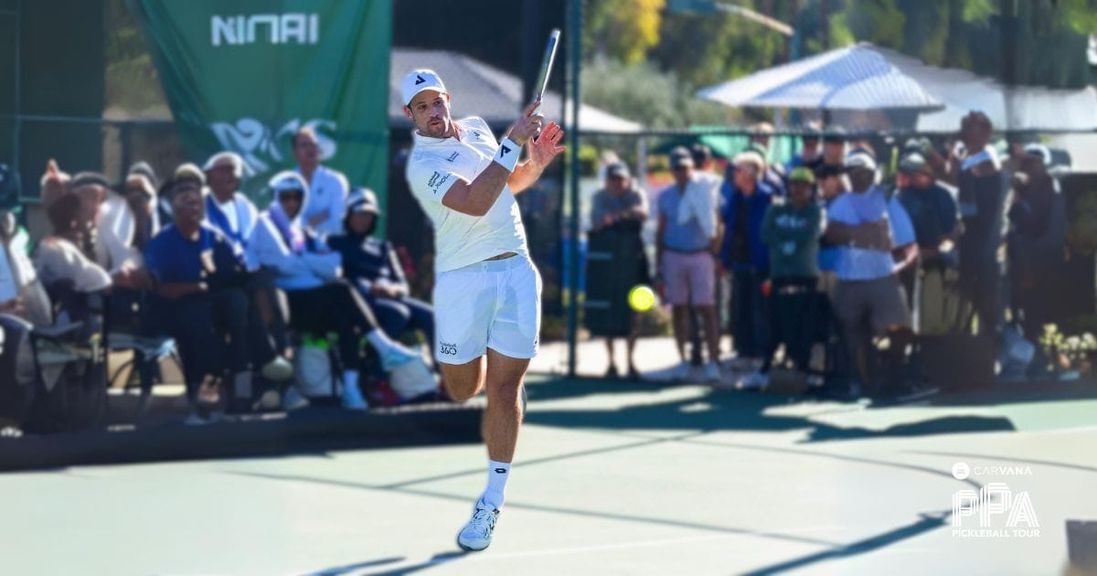
Recently it was announced that the PPA Tour would be implementing provisional changes to the service rules. It seemed as if the new rules were aimed at neutralizing some of the big serves on tour.
Players like Ben Johns, Dekel Bar, and Tyson McGuffin are known for serves that would give the average player fits. While most pros have learned to return the serves without issue, it's clear that big serves still offer an advantage even at the highest levels of play. But is it an unfair advantage? Or is it part of the game?
Get your special someone the #1 pickleball gift for Valentine's Day. Now 25% off
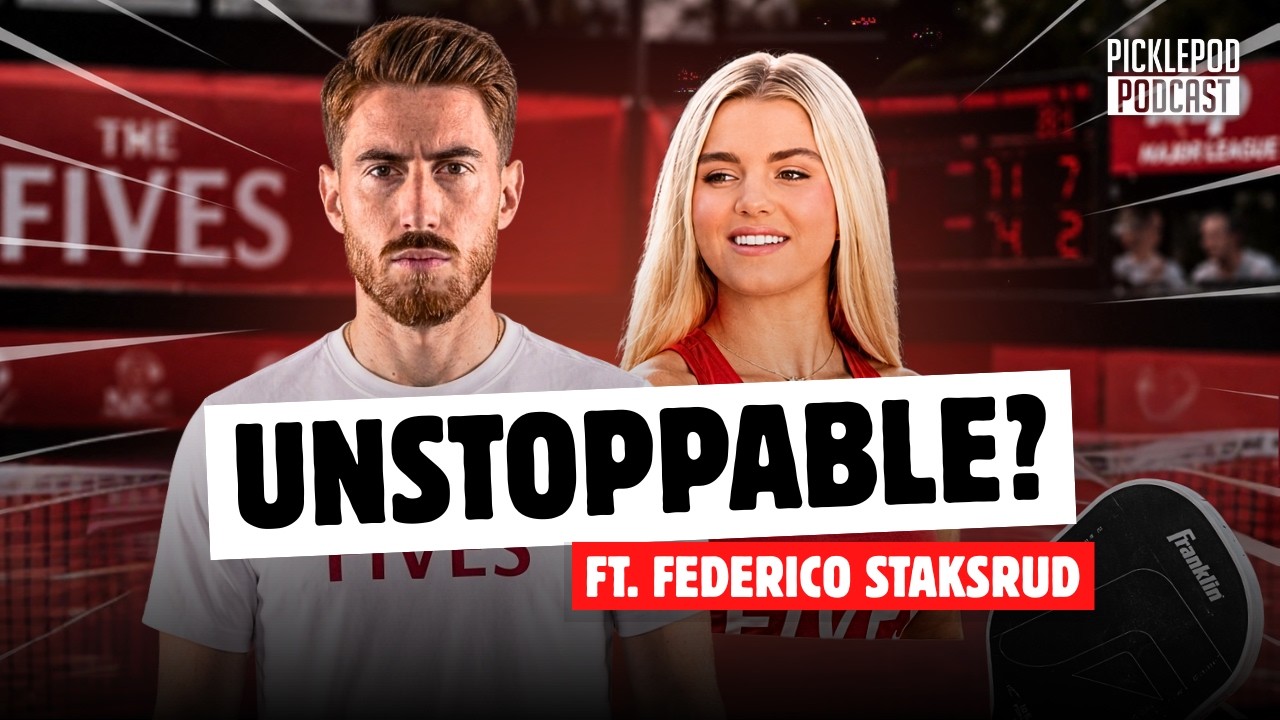
Dekel joined the PicklePod this week to discuss his take on the new serve rules, his body-bagging exchanges with Zane at Desert Ridge, and much more.
"I don't think the serve is too much of a weapon. Changing the rule to have the serve be less of a weapon just doesn't make too much sense to me. You lose a bit of athleticism when you force players to hit a certain way. It's nice to see different styles in any sport." – Dekel Bar on this week's PicklePod
Catching Up on the New Pickleball Serve Rule Changes
Let's catch up on the recent changes to the PPA Tour's service rules.
From the Jan 10, 2024 issue of The Dink Newsletter:
Imagine making it to an invitational pro event — only to be told you don't know how to serve correctly. Yesterday was the preliminary day of PPA Masters play, and refs were spotted giving pro players some pointers in order to maintain a legal serve.
In case you didn't know, the rules surrounding serves were temporarily changed for The Masters event:
- There is no tossing the ball up on the serve
- The ball must leave the hand in a downward motion
- The ball must leave the hand at or below the top of the hip
From Don Stanley, Director of Officiating, Carvana PPA Tour:
"At the prompting of the pro player council, PPA will be beta-testing a new service rule for the pro and senior open brackets. The Palm Springs tournament (Jan 9-14, 2024) will be used as a test basis for the new service rule. After the tournament has concluded, the results will be reviewed for implementation, revisions or possible deletion. The driving force behind this rule change is to make the serve less of a weapon.
New Rule: 'On the serve, (1) the ball must be released with the non-paddle hand, (2) no spin can be imparted on the ball at the time of release, and (3) the release of the ball must be downward and below the top of the hip.'
Application: All current serve rules still apply. There will be no re-serves for a questionable release. The release will either be completely legal or the referee will call a fault. Thank you for your help as we test this new service rule."
After the new pickleball serve rule was implemented at The Masters, the PPA reported that the qualifying rounds alone resulted in 72 faults for incorrect serves.
It was then announced that the provisional service rules would again be implemented at the Desert Ridge Open. This time around, however, players would be granted one re-serve upon committing their first service fault.
And that brings us to Bar's opinion on the new service rules.
Sign up today for the most informative newsletter in pickleball from The Dink!
Bar Weighs In on the Pickleball Serve Rule Debate
The serve is a shot in pickleball we all love to talk about. What is the purpose of the serve? Are certain serves or service motions legal? Should the serve be used as a weapon?
There have been many rule changes to the serve in the last few years. Some changes aimed to make it easier for players to serve, such as legalizing the drop serve, and some aimed to make it easier for people to return, like getting rid of the spin serve. However, the main issue often circles back to making the serve less of an advantage. But why?
Bigger serves in pickleball mean better third shots, which means all four players make it to the kitchen more often, which makes for more interesting points. Spectators often complain about watching long dink rallies, so encouraging athletes to develop their serves into a weapon leads to a more aggressive and faster-paced game, which spectators seem to enjoy more.
In 2023 MLP Premier Level, 97.8 percent of service returns were successful.
In the group stages of the PPA Tour finals in the men’s doubles division, we had four of the biggest servers in the game: Dekel Bar, Tyson Mcguffin, James Ignatowich and Ben Johns. In two of the matches, we had three of those players on the same court. In those two matches, only eight returns were missed out of 248. That’s a bit over three percent. Which means almost 97 percent of returns were returned successfully! This is not a large number of unreturned serves.
In tennis, close to 40 percent of serves are not returned. That is simply a part of the game. While we don’t want to be like tennis and have so many 1-2 shot rallies, we clearly are not! Many of the return errors in Pickleball come from a bad bounce or an unforced error.
Athletes will always try to get the biggest advantage they can, and should be encouraged to do so. You should be rewarded for having a skill.
Enforcing serving rules is difficult, as it is challenging to know exactly where the ball is being struck (Contact point cannot be higher than the naval). Referees often have to make judgment calls, which is obviously not the most accurate measure.
To that I say, let’s help our referees. We can use cameras that we have on the main courts to help have more accurate calls. Players could have the ability to challenge the serve and then refs could have playback capabilities to watch it in slow motion. The kitchen ref could track the serve contact point closely (helping the main ref as there can be no kitchen faults yet). A better/easier highest point of contact could be implemented for the refs to judge: the hip joint?
It is not entirely clear which option is the best and/or most feasible. However, making the serve less of a weapon and taking out the great variety of serves is certainly not the solution. Let’s help create a system that is easier to enforce and showcases our sport in the best way, instead of creating new rules that are harder to enforce and keep up with.What the Data Says About the Pickleball Serve Rule Controversy
In 2023 MLP Premier Level, 97.8 percent of service returns were successful.
In the group stages of the PPA Tour finals in the men's doubles division, we had four of the biggest servers in the game: Dekel Bar, Tyson McGuffin, James Ignatowich, and Ben Johns. In two of the matches, we had three of those players on the same court. In those two matches, only eight returns were missed out of 248, which is a bit over three percent. That means almost 97 percent of returns were returned successfully. This is not a large number of unreturned serves.
In tennis, close to 40 percent of serves are not returned. That is simply a part of the game. While we don't want to be like tennis and have so many 1-2 shot rallies, we clearly are not. Many of the return errors in pickleball come from a bad bounce or an unforced error.
Athletes will always try to get the biggest advantage they can, and should be encouraged to do so. You should be rewarded for having a skill.
Why Enforcing the Pickleball Serve Rule Is So Difficult
Enforcing serving rules is difficult, as it is challenging to know exactly where the ball is being struck. As explained in detail on The Dink, the contact point cannot be higher than the navel, and referees often have to make judgment calls, which is obviously not the most accurate measure.
To that I say, let's help our referees. We can use cameras that we have on the main courts to help have more accurate calls. Players could have the ability to challenge the serve, and then refs could have playback capabilities to watch it in slow motion.
The kitchen ref could track the serve contact point closely, helping the main ref since there can be no kitchen faults yet. A better and easier highest point of contact could be implemented for the refs to judge, for example, the hip joint.
A Smarter Solution for the Pickleball Serve Rule
It is not entirely clear which option is the best or most feasible. However, making the serve less of a weapon and taking out the great variety of serves is certainly not the solution.
Let's help create a system that is easier to enforce and showcases our sport in the best way, instead of creating new rules that are harder to enforce and keep up with. The PPA Tour has already been instituting stricter penalties for repeat offenders, and improving officiating technology would be a natural next step.
The pickleball serve rule conversation isn't going away. As CBS Sports has covered extensively, the PPA Tour continues to be one of the most-watched professional sports properties in the country, and the rules that govern pro play directly shape the game millions of recreational players watch and love. The serve is a fundamental part of that spectacle.
A look at how common mistakes affect even recreational players shows just how much serving strategy matters at every level. Limiting the serve as a weapon could ripple down from the pro game and reduce the ceiling of skill development for all players.
The question of how to govern the pickleball serve at the professional level is about more than just fairness. It is about what kind of sport pickleball wants to be.
As Sports Illustrated has noted in its coverage of the sport's rapid rise, pickleball is fighting to establish its identity on a national stage. How the game handles the pickleball serve rule debate will be a defining moment in that process.
The debate over service rules mirrors broader questions about court positioning and shot strategy that coaches and pros discuss constantly. A more restrictive serve doesn't just affect the server; it changes the entire tempo and structure of professional play.
Where Does the Pickleball Serve Rule Go From Here?
A powerful serve creates pressure, opens up the third shot drop, and forces opponents into defensive positions. Removing that tool doesn't just affect elite servers like Bar and McGuffin; it flattens the competitive landscape in ways that may not serve the sport.
The best path forward is smarter enforcement, not smaller skill sets. Investing in officiating technology, training better referees, and using existing court cameras would preserve the athleticism and excitement that makes professional pickleball worth watching. Exploring smart shot decisions and advanced strategies is exactly the kind of evolution the sport needs, not a rollback of what makes it compelling.
The PPA Tour's rule changes are still evolving, and the pickleball community will continue to debate the best way to balance fairness and excitement. One thing is clear: the serve rule conversation is far from over.
Frequently Asked Questions
What is the new pickleball serve rule being tested on the PPA Tour?
The provisional pickleball serve rule tested at the 2024 PPA Masters requires the ball to be released in a downward motion, below the top of the hip, with no spin imparted at release. It also eliminates the ability to toss the ball upward before contact. These changes apply only to professional and senior open brackets, not recreational play.
Why did the PPA introduce changes to the pickleball serve rule?
The PPA introduced the provisional service rule change primarily to reduce the serve's effectiveness as a weapon in professional play. The change was prompted by the pro player council, which felt that certain service motions were creating an unfair advantage, though many players and analysts disagree with that conclusion.
How often are pro serves actually being missed at the PPA Tour level?
Data from PPA Tour finals shows that nearly 97 percent of serves are successfully returned in professional men's doubles play. This statistic suggests that elite serves, while powerful, are not unmanageable for trained professionals, undermining the argument that the pickleball serve rule needs to be restricted.
Why is it so hard for referees to enforce pickleball serve rules?
The contact point between paddle and ball occurs in approximately 1/500th of a second, making it nearly impossible to judge with the naked eye. Referees are often forced to make judgment calls that may be inconsistent, which is why some advocates are pushing for camera-assisted officiating and challenge systems at the professional level.
Does the drop serve follow different rules than the standard pickleball serve?
Yes, the drop serve allows the ball to bounce before contact and does not restrict the paddle swing angle the way the volley serve does. It was legalized as a provisional rule in 2021 and made permanent in 2022, but it is currently not permitted on the PPA Tour, where only the volley serve is allowed under their specific rule set.
Love Pickleball? Join 100k+ readers for free weekly tips, news & gear deals.
Subscribe to The Dink