
Pickleball Mechanics for Seniors: Sharpen Your Grip, Footwork, and Net Play
If your footwork is sharper, your grip is more efficient, and your positioning is smarter, you can compete at any age.
If you've been playing pickleball for a while, you know that mechanics matter. A lot. The difference between a player who's stuck at a 3.5 rating and one climbing toward 4.5 often comes down to fundamentals, not flashy shots.
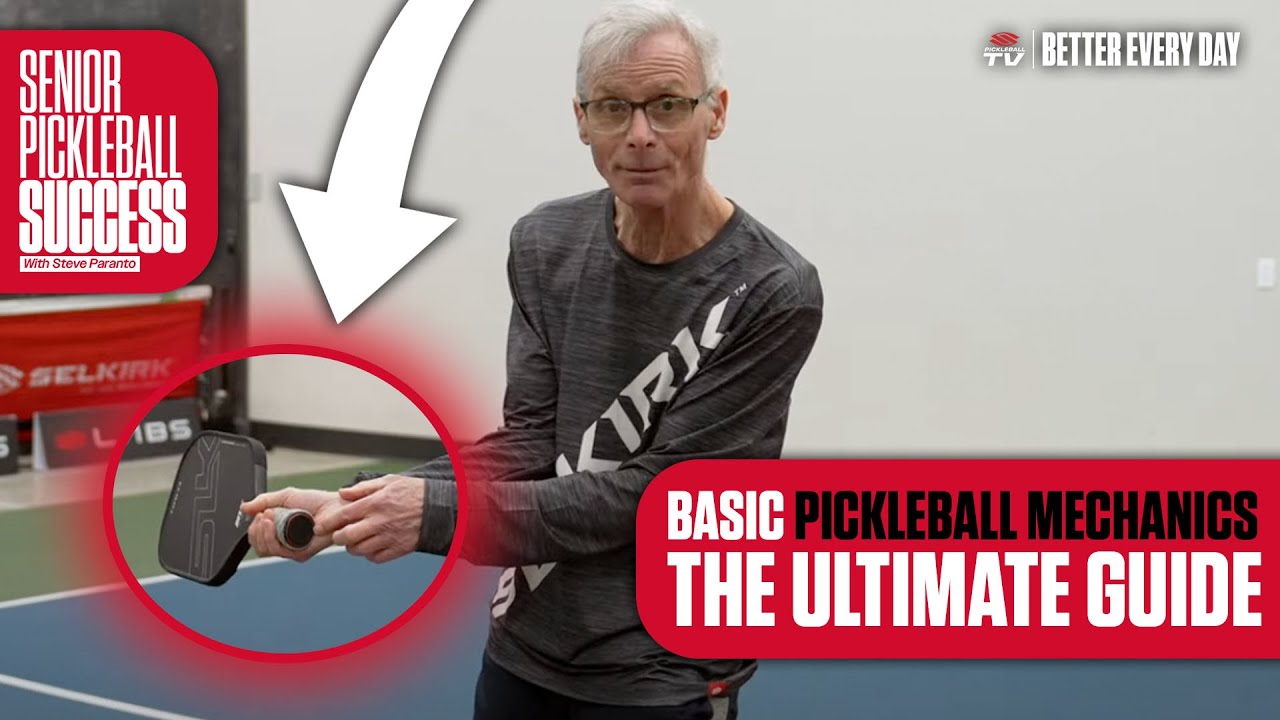
Steve Paranto, a coach featured on Selkirk TV, breaks down the essential mechanics that senior players need to master to stay competitive and enjoy the game for years to come.
Whether you're new to pickleball or looking to refine your game, these mechanics form the foundation of solid play.
Love pickleball? Then you'll love our free newsletter. We send the latest news, tips, and highlights for free each week.
Get Your Grip Right (Yes, There's More Than One Way)
The grip is where everything starts, and it's evolved significantly in modern pickleball. The Continental grip, that classic "shake hands" hold, used to be the standard. But today's game has shifted.
Most players are moving toward an Eastern forehand grip, where your hand sits more behind the paddle handle. This positioning lets you hit forehand volleys farther in front of your body, which is crucial at the net.
The Eastern forehand grip also opens up shots like the Scorpion and makes it easier to angle your backhand dink. That said, every grip has trade-offs. Some players keep their fingers on the paddle, which gives them better control but less reach. Others go full Eastern, gaining power and reach but sacrificing some touch.
The key is avoiding extreme grips that create extreme weaknesses. A windshield-wiper swing might crush balls at shoulder height, but it'll struggle with low balls unless you know how to adjust.
 The Dink Media Team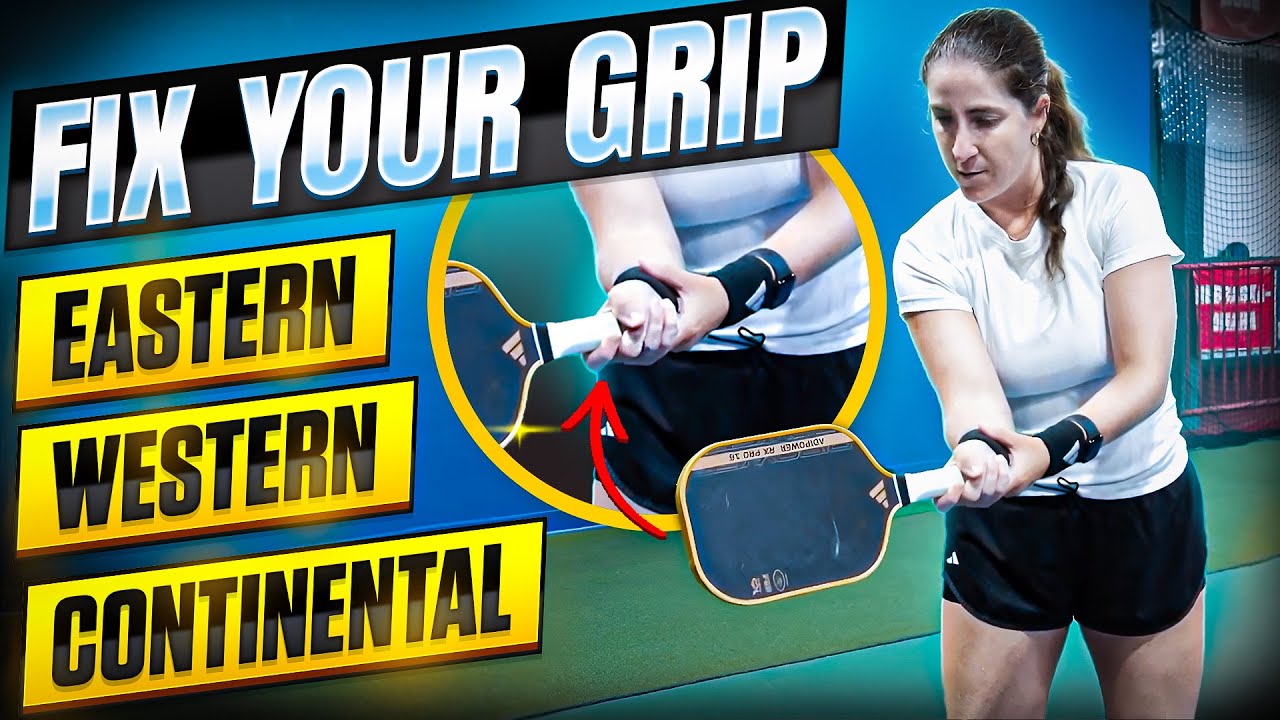
Dinking: Master the Lift, Not the Throw
Dinking is where rallies are won and lost, especially for seniors. The most consistent approach is the lift dink, where you let the ball fall onto your paddle and gently lift it over the net.
This removes a major variable: the angle of the incoming ball.
When you hit a falling ball, your paddle stays open to the sky at roughly the same angle every time. Compare that to hitting a ball on the rise, which requires you to calculate the incoming angle and adjust your paddle accordingly in real time. That's physics, and it's harder.
When teaching dinking, focus on these fundamentals:
- Keep your feet wide apart in an athletic stance. This lets you cover more court with just a lean or one step, saving energy.
- Lift with your arm, not your legs. Doing 10,000 leg lifts in a tournament will wear you out before the finals.
- Keep your head close to the paddle head. The closer you are, the more consistently you'll hit the sweet spot.
- Maintain a relaxed grip (about a 1 out of 10 in tension). This keeps your hands quick and your body loose.
Footwork: The Lunge and the Wide Stance
Seniors often overlook footwork, but it's the difference between scrambling all over the court and covering most balls with minimal effort. A wide athletic stance is your foundation. From there, you can reach most dinks by leaning or taking one step. When you need to go to an extreme left or right, use a lunge. Keep your weight on one leg and stay balanced so you can finish your shot before recovering.
One common mistake: crossing your feet to move laterally. If you cross, the next ball will come to the opposite side and you'll be out of position. A small lunge is almost always better.
And here's the thing, finish your shot before you come back. Too many players lunge, start moving back before they've completed their stroke, and then miss the ball entirely.
 The Dink Media Team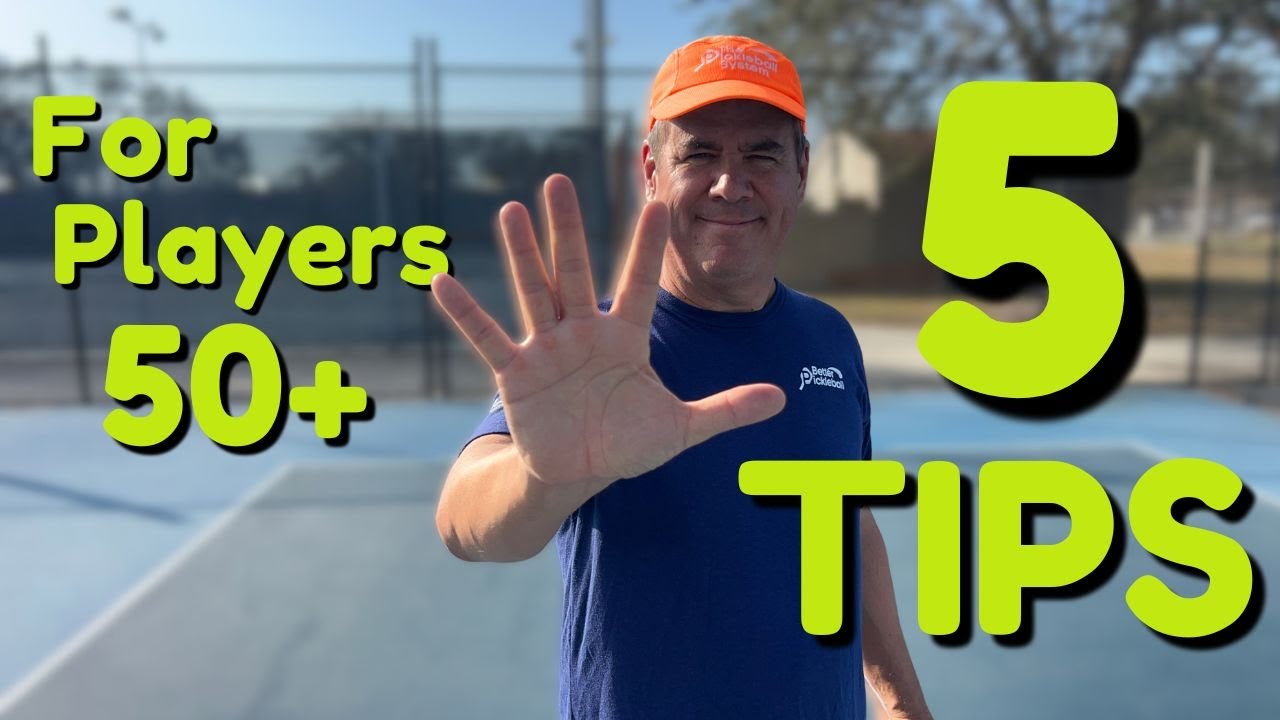
Net Play: Paddle Out, Hands Relaxed
At the net, your paddle should be out in front of you, ready to volley. Keep your grip pressure at a 1 (very soft) between shots so your hands stay quick. When you're hitting firm volleys, you can tighten up to a 6 or 7 for more power. The tighter your grip, the more force you generate, but only when you need it.
Preset your paddle early to the angle you need for that specific shot, then keep it there. A common error is presetting the paddle open, realizing it's wrong, and then closing it during the swing. That opening and closing changes the paddle angle mid-stroke, and the ball ends up in the net. Instead, pick your angle early and commit to it.
 The Dink Media Team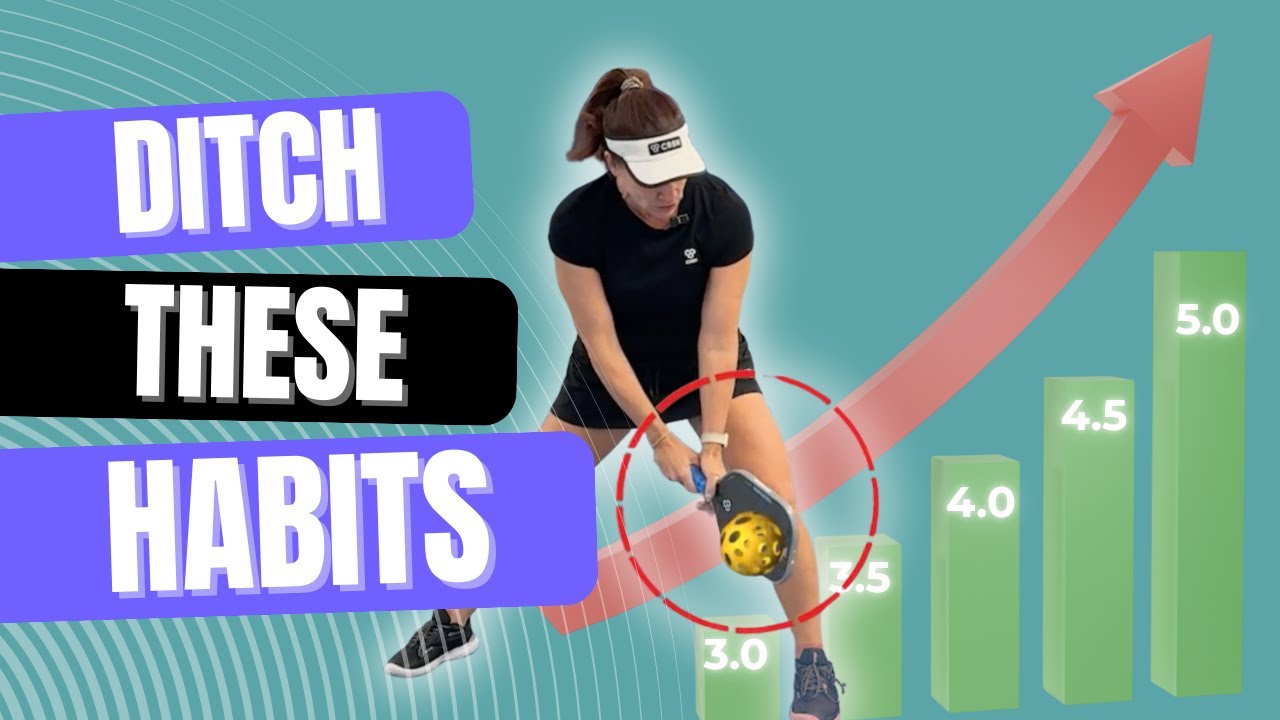
Ground Strokes: Borrow From Tennis
If you played tennis in the 70s or 80s, you already know how to hit a solid ground stroke in pickleball. Open your stance, close it as you step forward, transfer your weight, and follow through. The same Jimmy Connors and John McEnroe mechanics that worked then work now.
For most players, the baseline game is a forehand game, so build your game around your forehand and use your backhand to set it up.
Just like with volleys, preset your paddle to your impact position as early as possible. If you're hitting a forehand out in front of your left leg, lock in that wrist and paddle angle early. This lets you hit the ball consistently whether it's high, low, or somewhere in between.
Heads up: hundreds of thousands of pickleballers read our free newsletter. Subscribe here for cutting edge strategy, insider news, pro analysis, the latest product innovations and more.
The Bigger Picture: Mechanics Beat Age
Here's the reality for senior players: you might not be as quick or as high-jumping as younger opponents, but better mechanics give you a real chance. If your footwork is sharper, your grip is more efficient, and your positioning is smarter, you can compete. That's the whole point. Pickleball should be enjoyable for the rest of your life, and solid mechanics make that possible.
 The Dink Media Team

Love Pickleball? Join 100k+ readers for free weekly tips, news & gear deals.
Subscribe to The DinkGet 15% off pickleball gear at Midwest Racquet Sports