


An effective kitchen attack strategy requires knowing when to speed up, where to aim, and how to disguise your intentions.
If you're stuck between 3.5 and 4.0 in pickleball, there's a good chance your kitchen attack strategy is holding you back.
You're probably attacking the wrong ball, at the wrong time, with the wrong target in mind.
The good news? Once you understand the fundamentals of a proper kitchen attack, you'll start winning more points at the net and climbing toward 4.5 level play.
Love pickleball? Then you'll love our free newsletter. We send the latest news, tips, and highlights for free each week.
The Biggest Mistake Players Make at the Kitchen
Here's the thing: most players think the kitchen is where you go to attack everything. That's backwards.
According to Cliff Pickleball, the number one rule of a kitchen attack strategy is simple but critical: never attack below net height.
When you're at the kitchen line and your opponent hits a ball that sits below the net, your instinct might be to speed it up and put it away. Resist that urge. Attacking low balls is how you end up in the error column, and errors at the kitchen are momentum killers. Instead, you need to wait for the right ball to attack.
The difference between a 3.5 player and a 4.5 player isn't athleticism or paddle quality. It's decision-making. High-level players know exactly which balls deserve aggression and which ones demand patience.
What Ball Should You Actually Attack?
This is where your kitchen attack strategy gets specific. You're looking for a ball that's at or above net height, ideally one that's sitting up a bit. When your opponent hits a ball that bounces higher or floats toward you, that's your green light.
The key is recognizing the difference between a ball you can attack and a ball you should attack. A ball you can attack might be reachable, but it could still result in an error if you're not set up properly. A ball you should attack is one where you have a clear advantage and a high probability of winning the point.
Think about it this way: every time you speed up at the kitchen, you're taking a risk. The question isn't whether you can hit it harder. The question is whether hitting it harder actually improves your chances of winning the point.
 The Dink Media Team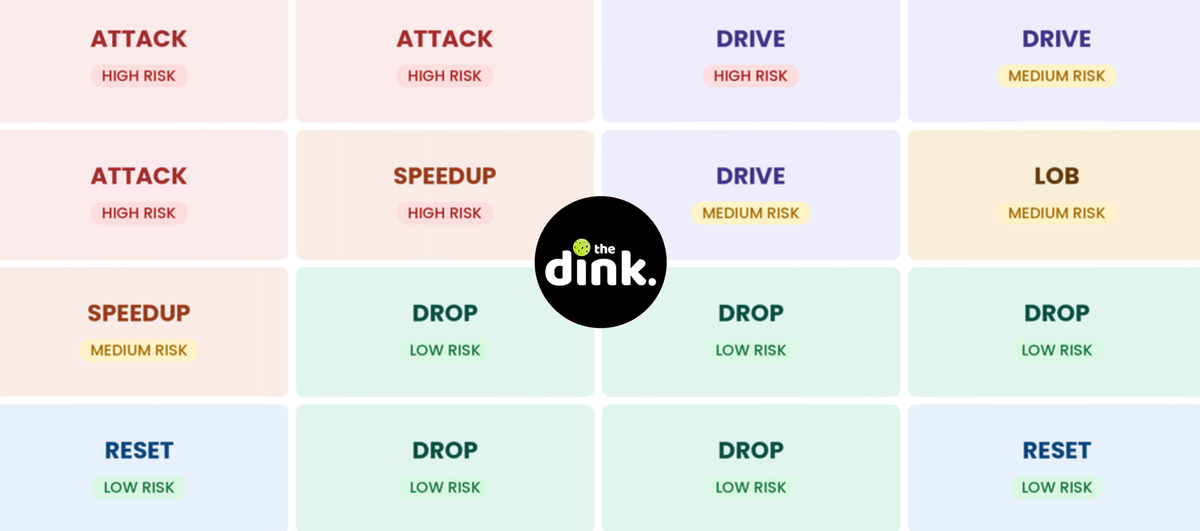
Why Power Isn't the Answer
This might sound counterintuitive, but hitting harder actually makes you worse at the kitchen. When you focus on power, you lose control. You lose consistency. You lose the ability to place the ball where your opponent can't reach it.
Cliff Pickleball breaks down the reality: most players who rush their attacks at the kitchen are trying to end the point with one shot. That's not how high-level pickleball works. The kitchen is about precision, placement, and patience. Speed is a tool, not the goal.
When you attack with power as your primary objective, you're more likely to hit the ball into the net, sail it long, or hit it straight to your opponent's forehand. None of those outcomes help you win the point.
Instead, think of your kitchen attack as a setup move. You're not trying to end the rally immediately. You're trying to create a situation where your opponent has to make a difficult choice or hit a weak return.
The Three Best Targets for Your Kitchen Attack
Once you've identified the right ball to attack, you need to know where to aim. There are three targets that high-level players focus on:
- Body: Hitting toward your opponent's body forces them to make a quick decision and limits their options. They can't step back or get their paddle in the ideal position.
- Backhand shoulder: Most players have a weaker backhand, and attacking the backhand shoulder is especially effective because it's harder to defend. Your opponent has to reach across their body or move laterally.
- Feet: A ball hit at the feet is one of the hardest to handle at the kitchen. Your opponent has to bend down and hit up, which usually results in a weak return you can put away.
These three targets should be your focus every time you execute a kitchen attack strategy. Don't aim for the sideline or the corner. Aim for one of these three zones, and you'll see your success rate climb immediately.
 The Dink Media Team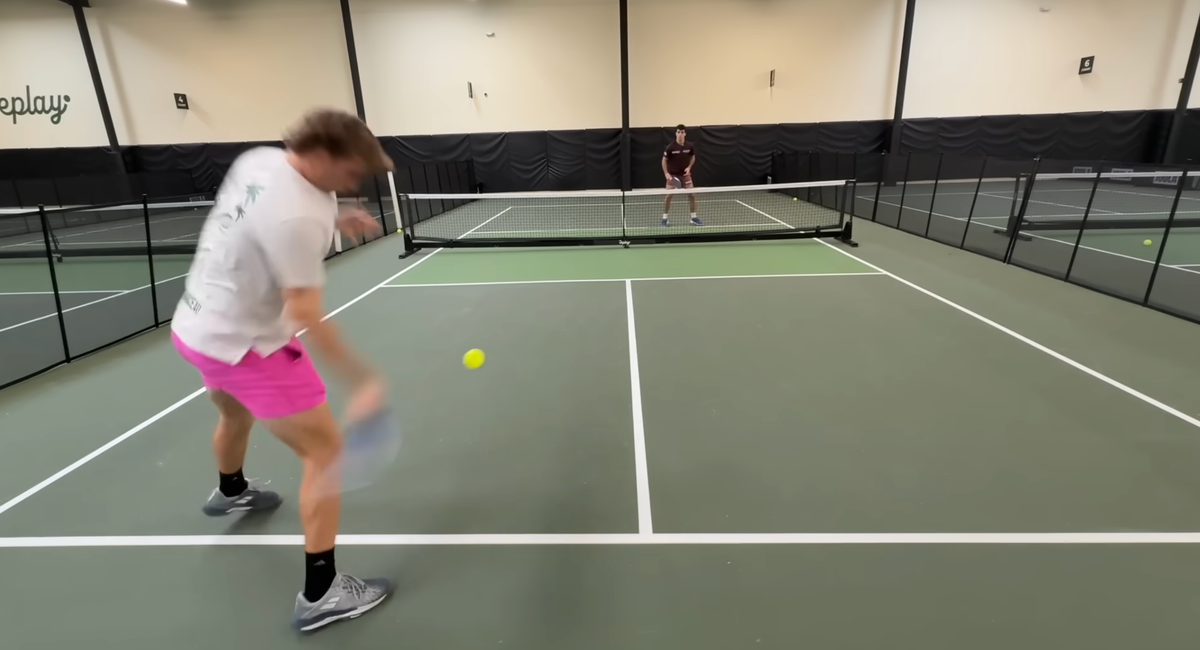
How to Disguise Your Speed-Ups
Here's where your kitchen attack strategy becomes an art form. Once your opponent knows you're about to speed up, they'll be ready for it. That's why disguise matters.
The best way to disguise a speed-up is to set it up with a few regular-pace dinks first.
- Hit three or four dinks at normal speed, then suddenly accelerate on the fourth or fifth one.
- Your opponent won't see it coming because they've settled into a rhythm.
You can also disguise your speed-up by using the same preparation and swing as you would for a regular dink. Keep your backswing short, keep your motion smooth, and then just accelerate through the ball at the last moment. The less telegraphing you do, the more effective your kitchen attack will be.
Another technique is to disguise direction. If you've been hitting to your opponent's forehand, suddenly attack their backhand. If you've been hitting down the line, hit cross-court. Mixing up your targets keeps your opponent guessing and makes your kitchen attack strategy much harder to defend against.
 The Dink Media Team
The Drill That Changes Everything
Want to improve your kitchen attack strategy? Cliff Pickleball recommends a specific drill: speed up, block, counter.
Here's how it works: Start at the kitchen line with your opponent. Hit a dink, then speed up on the next ball. Your opponent blocks your speed-up (hits it back without attacking). Then you counter their block with another aggressive shot. This drill teaches you the rhythm of attacking, defending, and attacking again.
The beauty of this drill is that it simulates real match situations. You're not just practicing your speed-up in isolation. You're practicing what happens after you speed up, which is where most players fall apart.
Do this drill for 10 minutes a few times a week, and you'll notice a massive improvement in your kitchen attack strategy. You'll feel more confident speeding up, and you'll know how to handle the responses you get.
Heads up: hundreds of thousands of pickleballers read our free newsletter. Subscribe here for cutting edge strategy, insider news, pro analysis, the latest product innovations and more.
Why Players Rush Their Attacks
Understanding why you rush is just as important as understanding how to attack properly. Most players rush because they're afraid.
- They're afraid the ball will drop below net height.
- They're afraid they'll lose the advantage.
- They're afraid their opponent will hit a winner.
That fear leads to premature aggression.
You speed up too early, on a ball that's still dropping, and you hit it into the net. Then you get frustrated and rush even more on the next opportunity.
The antidote to rushing is patience. Trust that if you wait for the right ball, it will come. Trust that your opponent will eventually hit a ball you can attack. Trust that your kitchen attack strategy works when you execute it correctly.
High-level players have this patience because they've practiced it. They've hit thousands of dinks. They've learned what a good attacking ball looks like. They've built the confidence to wait.
 The Dink Media Team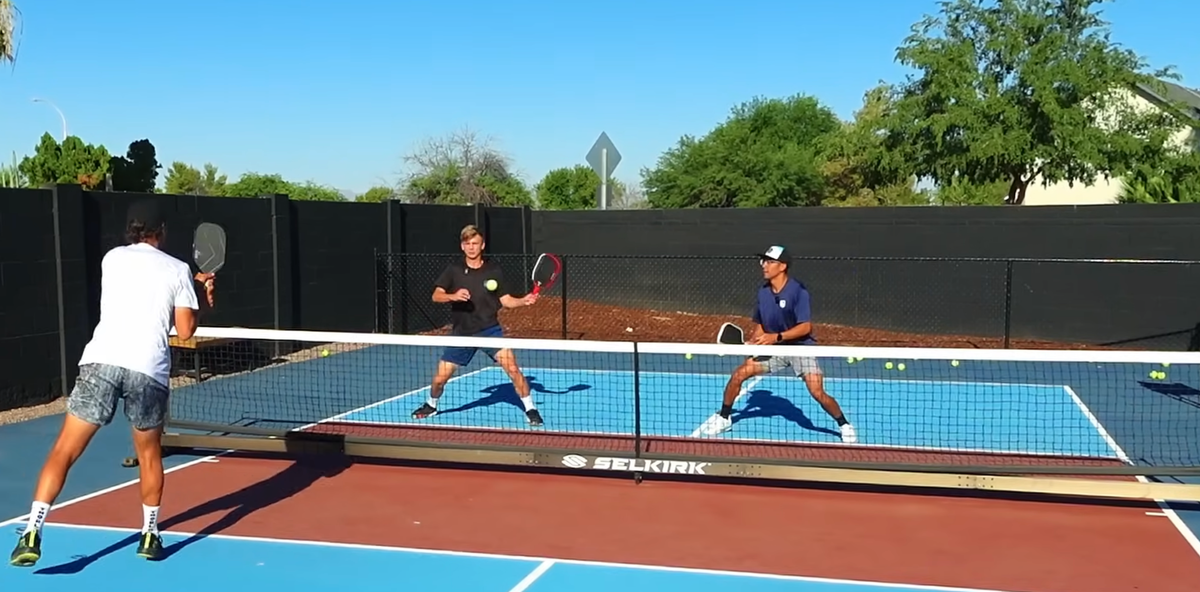
Putting It All Together
Your kitchen attack strategy doesn't need to be complicated. It needs to be consistent. Attack the right ball, at the right time, with the right target in mind. Disguise your intentions. Trust the process.
The gap between 3.5 and 4.5 isn't as wide as it feels. It's mostly about making smarter decisions at the kitchen line. Stop attacking low balls. Stop trying to end points with power. Start being selective about which balls you attack, and start focusing on placement over pace.
Love pickleball? Then you'll love our free newsletter. We send the latest news, tips, and highlights for free each week.
Frequently Asked Questions
When is the best time to speed up at the kitchen?
Speed up when the ball is at or above net height and sitting up a bit. Wait for a ball that gives you a clear advantage. If you're unsure whether to attack, it's usually better to dink and wait for a better opportunity.
What's the most common kitchen attack mistake?
Attacking balls that are below net height. This leads to errors and gives your opponent an easy point. Patience is more valuable than aggression at the kitchen line.
How can I practice my kitchen attack strategy?
Use the speed-up, block, counter drill. Start with regular-pace dinks, then accelerate on a predetermined shot. Have your opponent block your speed-up, then practice your counter-attack. This simulates real match situations.
Should I always aim for the same target?
No. Mix up your targets between body, backhand shoulder, and feet. Variety keeps your opponent guessing and makes your kitchen attack strategy harder to defend. If you're predictable, your opponent will be ready for you.
How do I know if I'm ready to attack more aggressively?
If you're consistently winning points when you speed up, you're ready. If you're making errors or your opponent is handling your attacks easily, you need more practice with the fundamentals before increasing your aggression.

Love Pickleball? Join 100k+ readers for free weekly tips, news & gear deals.
Subscribe to The DinkGet 15% off pickleball gear at Midwest Racquet Sports