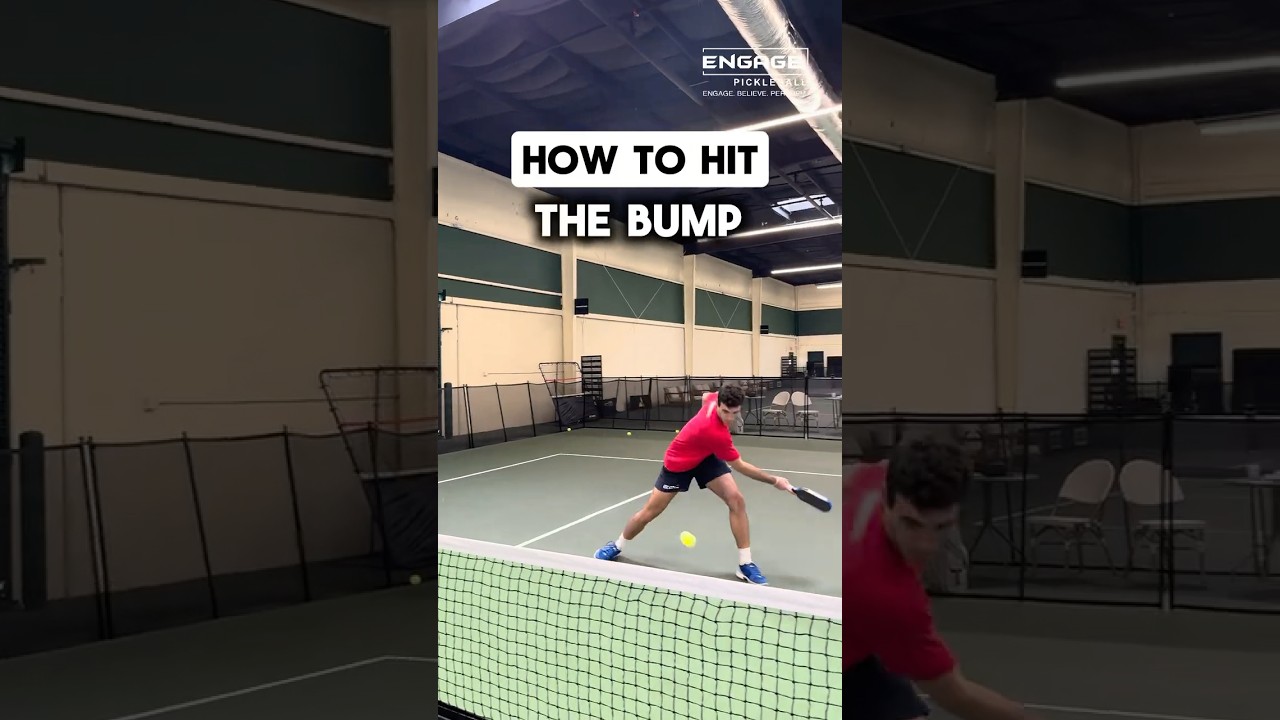
The net used to be a simple barrier between two sides of the court. Now it's a place where players are finding loopholes and pushing the limits of what's technically allowed.
Pickleball has a reputation for being a sport with easy-to-learn rules, but that doesn't mean there aren't loopholes.
In fact, some of the game's most interesting gray areas exist right at the net, where the rules can get surprisingly nuanced.
Love pickleball? Then you'll love our email newsletter. We send the latest news, tips, and highlights for free each week.
We recently tested one of the pickleball's biggest rule quirks, live and on-court with USA Pickleball referee Ron Ponder – and the findings might surprise you.
The Setup: When Your Opponent's Spin Works Against Them
Picture this scenario: your opponent hits the ball over the net with enough topspin that it bounces on your side and immediately comes back over before you even have a chance to react.
It's one of those moments where the ball seems to have a mind of its own, and you're left scrambling to figure out what to do. It's rare, sure, but it does happen.
The Dink Founder and CEO Thomas Shields has a clever hack, and posed it to Ponder.
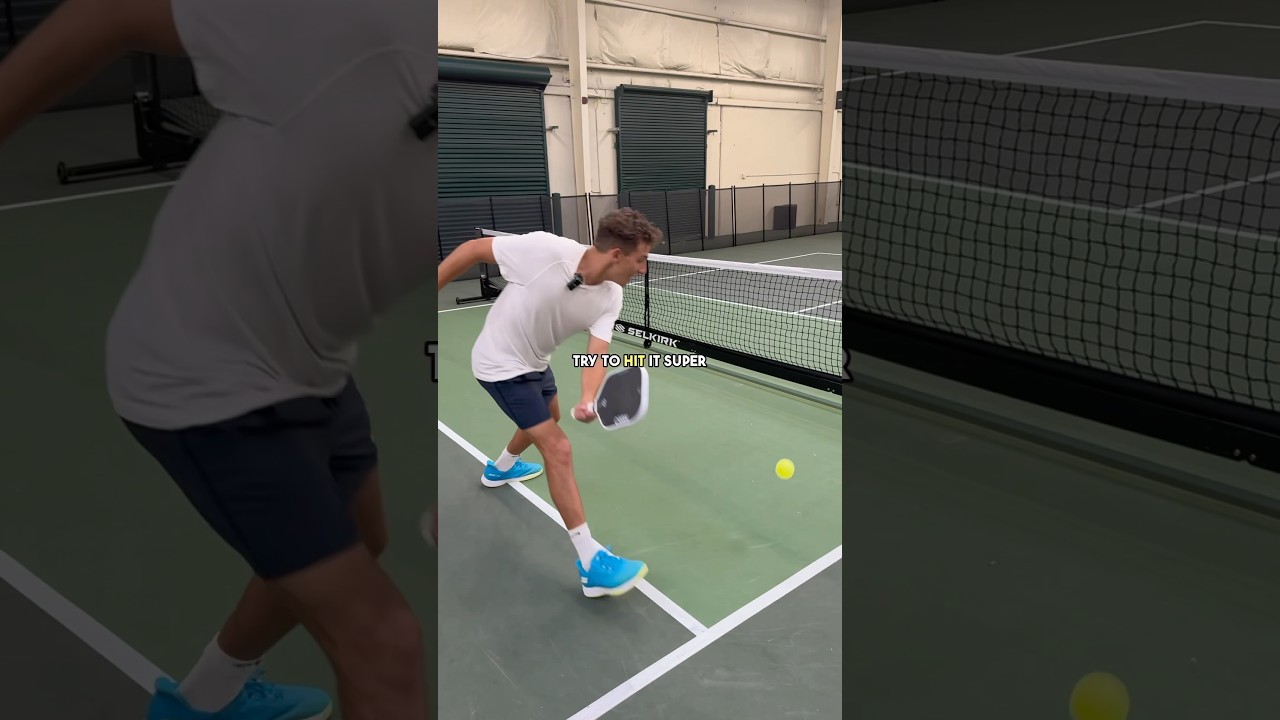
Turns out, you're actually allowed to reach your paddle underneath the net to make contact with that ball, as long as you don't hit the net itself or touch the court.
The ball just needs to bounce off your paddle—you don't even have to hit it cleanly. Any contact will do. With a little foresight and some quick action, you're basically guaranteed to win the point.
The Net Clearance Question: More Room Than You'd Think
One of the most surprising revelations from the video is just how much space exists between the court and the bottom of the net.
The net is required to be 30 inches high lengthwise, and there's roughly 6 inches of clearance underneath. That's actually quite a bit of room to maneuver a paddle.
But just because there's enough room to technically pull this off, doesn't mean you should. This is obviously a rare situation that would require an extremely skilled touch to capitalize on in this way...
What we're trying to say here is pull this off and you'll be a rec league legend for life. You have our full blessing. You miss 100% of the shots you don't take.
 The Dink Media Team
The Timing Rule: When You Can and Can't Go Under
Now here's where the rule gets a little complicated.
You have to wait for the ball to break the plane of the net before you can reach underneath it.
Breaking the plane means the ball has crossed back over the net line onto your opponents' side of the court. (This rule is different if you're a PPA Pro. But if you are, what are you doing coming to The Dink for rule advice?)
For everyone else—and that's the vast majority of pickleball players—you need to wait for that ball to cross the plane before you make your move. Go too early, and you're committing a fault. It's a subtle timing issue that makes all the difference.


The Bigger Picture: Why These Rules Matter
The net has become this fascinating battleground in modern pickleball.
It used to be a simple barrier between two sides of the court. Now it's a place where players are testing boundaries, finding loopholes, and pushing the limits of what's technically allowed.
Referees like Ponder are essentially the guardians of these gray areas, making sure that innovation doesn't cross the line into unfair advantage – but also that we can continue to test what's possible. And legal.
Honestly, most recreational players will never need to use this particular move. But it's fun to know you can. And if the opportunity ever presents itself, you owe it to yourself, your teammate, and all of us to get low and lay it all on the line.
Heads up: hundreds of thousands of pickleballers read our free newsletter. Subscribe here for cutting edge strategy, insider news, pro analysis, the latest product innovations and more.

Love Pickleball? Join 100k+ readers for free weekly tips, news & gear deals.
Subscribe to The DinkGet 15% off pickleball gear at Midwest Racquet Sports