
Deploy this simple bait-and-switch at the kitchen line and you'll be a middle-court menace in no time
Ever feel like you’re just stuck in a dink battle that’s going nowhere? You’re moving the ball side to side, waiting for a mistake that never comes. It’s frustrating, right?
Well, Eric Oncins, currently ranked 11th on the PPA Tour, has a solution that’ll turn you into a legitimate threat from the middle of the court.
In a recent breakdown with Tanner Tomassi, Oncins shared his blueprint for becoming dangerous when the ball sits right in the heart of the court. It’s not about hitting the ball hard; it’s about the setup and the mechanics that keep your opponents guessing.
Love pickleball? Then you'll love our free newsletter. We send the latest news, tips, and highlights for free each week.
Setting the Trap: The Inside-Out Play
Before we get into the mechanics, let’s talk strategy. Oncins points out a pattern that works about 80 percent of the time.
If you can pull off two inside-out shots in a row, you’ve essentially baited your opponents. By stretching them wide, you create a massive gap right down the middle.
That’s your opening. When that middle ball comes back, it’s usually ripe for a speed-up. But you can’t just slap at it. You need a foundation. Honestly, most players miss this opportunity because they’re too upright or their feet are a mess. Here is how Oncins breaks down the execution.
 The Dink Media Team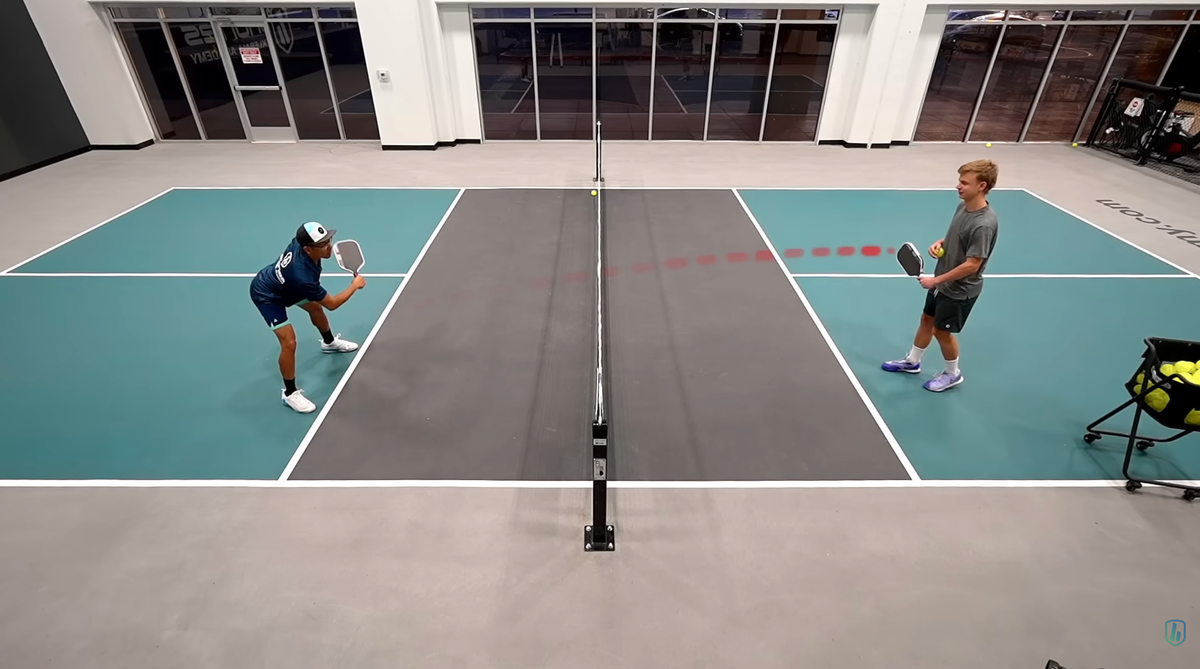
1. The Drop Step: Keeping the Ball in Front
The first mistake people make when attacking from the middle is letting the ball get too close to their body. If you’re jammed, you lose all your leverage. Oncins emphasizes using a drop step.
By stepping back slightly with one foot, you create the space necessary to keep the ball out in front of you. This gives you a better look at the court and allows you to see where the defenders are leaning. You know what? It’s the difference between a controlled attack and a desperate flick that ends up in the net.
2. The Paddle Head: Spin and Deception
Once you’ve got your spacing right, it’s all about the paddle. Oncins suggests dropping your paddle head low. This serves two purposes.
- First, it allows you to get under the ball to generate maximum topspin. That spin is what keeps the ball from sailing long when you decide to pull the trigger.
- Second, it’s about deception. When your paddle head is down, your opponent can’t tell if you’re going to dink it softly or rip it at their hip. In the high-stakes world of pro pickleball, keeping the other team guessing for even a split second is a massive advantage.
 Alex E. Weaver
3. The Right Knee: Power Through the Ball
The final piece of the puzzle is your weight distribution. Oncins wants your weight loaded on your right knee (for right-handed players). As you make contact, you aren't just swinging your arm; you’re transferring that weight forward.
Think of it like a pitcher in baseball or a golfer. The power comes from the ground up.
By hitting through the ball and moving your momentum forward, you ensure the shot has enough pace to actually be "dangerous."
It’s not about arm strength; it’s about body mechanics.
Heads up: hundreds of thousands of pickleballers read our free newsletter. Subscribe here for cutting edge strategy, insider news, pro analysis, the latest product innovations and more.
Why This Changes Your Game
Having this shot in your arsenal is a total game-changer. It allows you to initiate aggression rather than just reacting to what your opponents are doing. You’re taking control of the point and forcing them onto the defensive.
Next time you’re at the kitchen line, remember the Oncins formula: set the trap with the inside-out, drop step for space, drop the paddle for spin, and drive through with your legs.
It’s a simple sequence that separates the casual players from the ones who actually know how to end a point on their own terms.
 Alex E. Weaver

Love Pickleball? Join 100k+ readers for free weekly tips, news & gear deals.
Subscribe to The DinkGet 15% off pickleball gear at Midwest Racquet Sports