
Your grip size isn't just about comfort or feel. It's a legitimate performance variable that affects injury risk, shot consistency, and long-term sustainability in the sport.
Your grip size might be the silent saboteur of your pickleball game.
While players obsess over grip pressure and technique, grip size often flies under the radar, even though it's equally important to your performance and injury prevention.
According to Zane Navratil, understanding the right grip thickness for your hand can transform how you play and how your body feels on the court.
Love pickleball? Then you'll love our free newsletter. We send the latest news, tips, and highlights for free each week.
Smaller Grips: More Wrist Action, More Stress
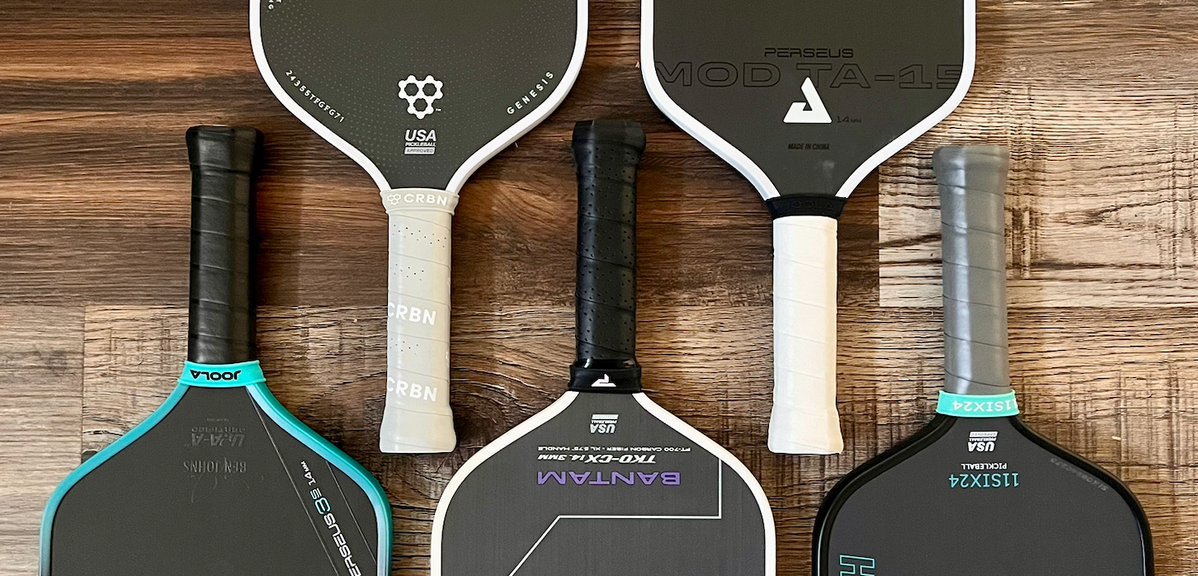
A thinner grip gives you more freedom with your wrist.
You get easier grip changes and more wrist action, which sounds appealing if you're chasing that snappy, dynamic feel.
But here's the catch: a smaller grip forces you to squeeze harder to maintain control. Think about the difference between holding a water bottle and gripping a pen. The pen requires significantly more hand tension.
That extra squeezing puts real stress on your forearm. Over time, this tension could become a major contributor to tennis elbow, a condition that plagues many pickleball players.
If you're already dealing with forearm fatigue or pain, your grip size might be part of the problem.
Thicker Grips: Stability Over Snap
A thicker grip offers the opposite trade-off. You get more wrist stability and can maintain a looser, more relaxed grip. This reduces forearm strain significantly.
The downside is less wrist snap and a slightly more restricted feel when you're trying to generate quick movements.
But here's where Navratil's pro perspective matters: most players shouldn't be snapping their wrists like Hayden Patriquin or J.W. Johnson anyway.
Those are elite-level movements that require years of technical refinement. For the vast majority of pickleball players, a more stable, technically sound approach built from solid mechanics beats flashy wrist action every time.
 The Dink Media Team
Finding Your Fit
The best way to discover your ideal grip size is simple experimentation. If you're currently using a standard grip, try adding an overgrip to increase thickness and see how it changes your game.
Pay attention to how your forearm feels, how your shots respond, and whether your control improves. Small adjustments can have surprisingly big effects.
Your grip size isn't just about comfort or feel. It's a legitimate performance variable that affects injury risk, shot consistency, and long-term sustainability in the sport.
If you've been struggling with forearm pain or feeling like something's off with your game, before you overhaul your technique, consider whether your paddle grip is actually the right fit for your hand.

Love Pickleball? Join 100k+ readers for free weekly tips, news & gear deals.
Subscribe to The DinkGet 15% off pickleball gear at Midwest Racquet Sports