
It's an unconventional shot in pickleball, yes. But done properly — and practiced relentlessly — it can become a devastating and unpredictable weapon when the time is right.
There's a moment in pickleball when you realize that everything you thought you knew about the sport might be slightly off.
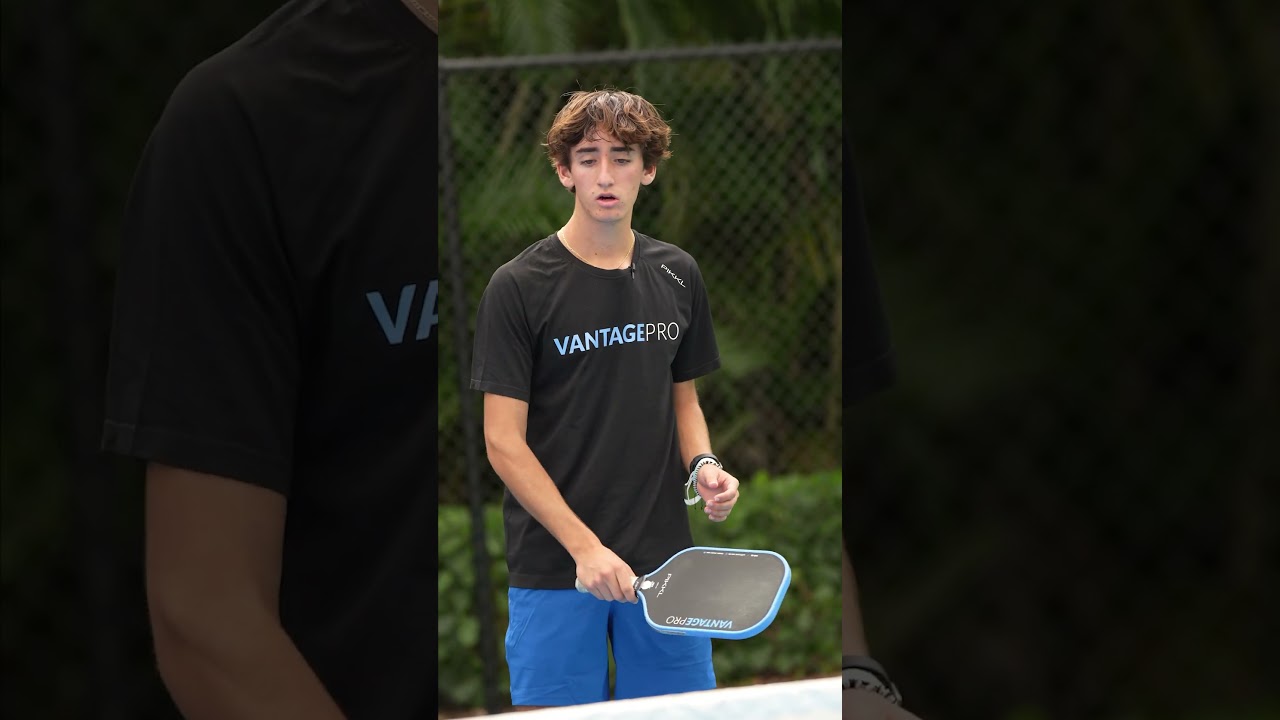
For Ed Ju, that moment came when he watched Elenga Satuala, a 16-year-old phenom, unleash a one-handed backhand that looked less like a pickleball shot and more like something Roger Federer would hit on a grass court.
"It looks like Fed," Ed said in the video, immediately recognizing the elegance and power of the stroke. And honestly? He wasn't exaggerating.
Love pickleball? Then you'll love our free newsletter. We send the latest news, tips, and highlights for free each week.
In a recent video, Ed hit the court with Elenga and her father, Coach John, to break down exactly how to hit this devastating shot. What unfolds is a technical masterclass that challenges conventional pickleball wisdom and offers a blueprint for players looking to add serious firepower to their backhand arsenal.
1. The Setup: Footwork and Positioning
Before you even think about swinging, Elenga emphasizes that footwork is everything. This isn't some throwaway comment; it's the foundation of the entire shot.
- Start with a split step, that little bunny hop that most players know about by now.
- Your toe positioning matters way more than you'd think. Instead of pointing toward the net or the court, your toe should point diagonally to the side.
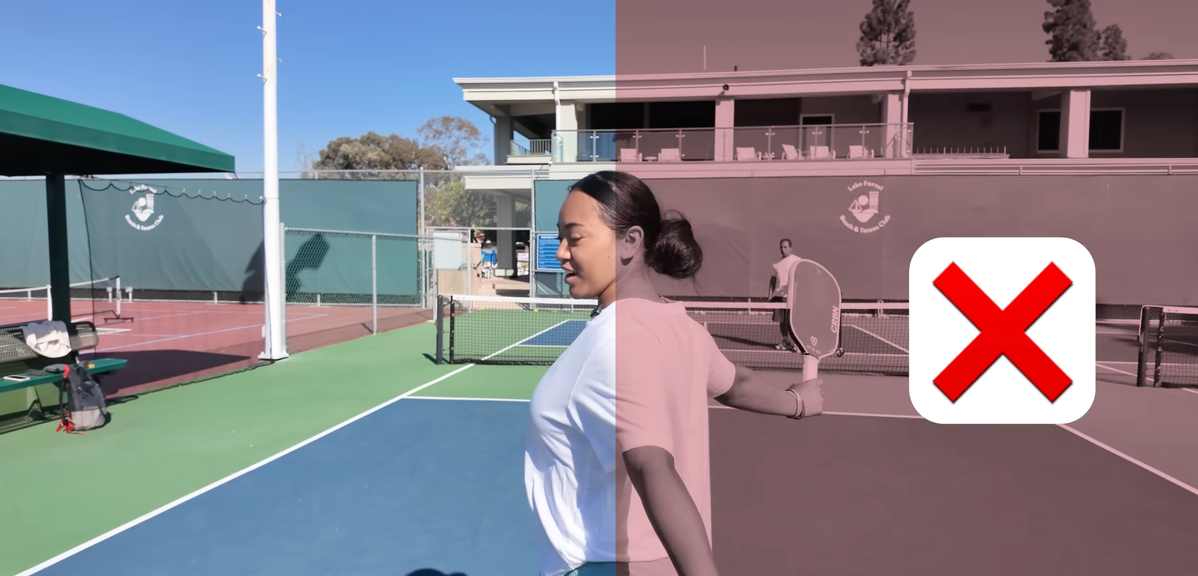
- You're essentially facing sideways, which allows your body to rotate and generate power from your core rather than just your arm.
From there, you can shuffle to the ball if needed. The key is getting your legs positioned diagonally so that when you make contact, your body is already coiled and ready to explode through the shot.
2. The Paddle Path: Poke, Pull, and Flip
This is where Elenga's technique diverges from what most players are taught. Forget about pushing the ball. Instead, think about poking the butt cap of your paddle backward, toward where you want the ball to go. Your butt cap should already be facing your target before you even pull the paddle.
Then comes the pull. This is crucial. Rather than thinking about hitting the ball, imagine a little string attached to your butt cap pulling you forward. The power comes from this pulling motion, not from arm strength. It's almost like you're using your paddle as a lever, with the butt cap as the fulcrum.
As you pull the paddle toward your hip, you're building momentum. And right as you're about to make contact with the ball, you flip the paddle so it's flat. This flip happens near your hip, and it's what creates that whip-like action that makes the shot so devastating.
 The Dink Media Team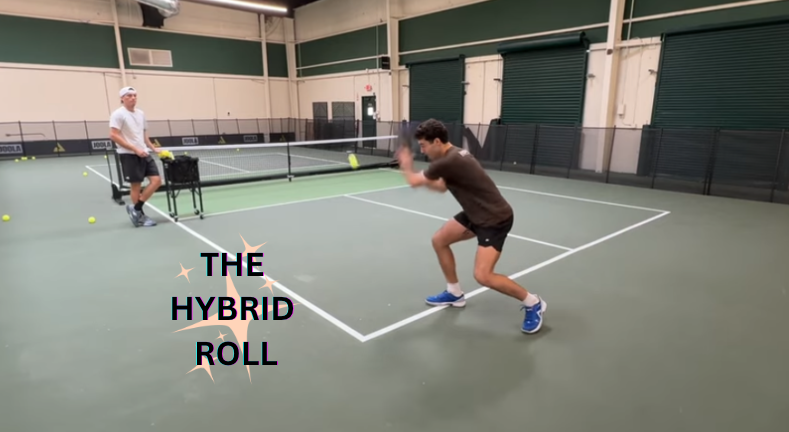
3. Contact and Follow-Through: The Wall Analogy
Ed asked Elenga to use a wall as a visual reference, and this is where the explanation becomes crystal clear. Imagine your paddle path as a straight line. You pull the paddle back, flip it flat at contact, and then finish straight in front of you; never behind your body.
If you finish your paddle behind you, you lose control. Your ball goes wherever your paddle goes, not where you want it to go.
If you finish straight in front of you, you maintain control and can direct the ball exactly where you intend.
Elenga also mentions that if you want more power, you can finish slightly higher, but you never break that plane in front of your body. It's all about keeping the paddle in a controlled zone that allows for precision and power simultaneously.
4. The Snap: Adding the Spice
After Ed tried the shot a few times, Elenga revealed the secret ingredient: the snap. This is the whip-like action that happens when you hit the ball with the paddle. The faster you snap, the faster the ball comes off your paddle.
But here's the catch; and Coach John reinforces this; the more you snap, the less control you have. So Elenga recommends starting with smooth form and gradually adding snap as you get more comfortable. Think of it like learning to crack a whip. You don't start by going full force; you build up to it.
The snap is what separates a decent one-handed backhand from a laser beam. It's the difference between a shot that's good and a shot that makes your opponent wonder what just happened.
5. Coach John's Wisdom: The Bigger Picture
By the end of the video, Coach John steps in with some additional insights that tie everything together. He emphasizes the importance of the split step, turning your body, moving your feet, and then pulling the paddle to the height of the ball before whipping through.
He also mentions that if the ball comes quick, you have a quick form: poke, pull, finish. If you have a regular ball, you get the full form with the opening and whip. The power, he stresses, comes from the pull, not from arm strength or trying to muscle the ball.
One detail that stands out: Coach John talks about pointing your body sideways toward your destination.
- If you want to hit to the corner, finish to the corner
- If you want to hit to the middle, finish to the middle
It's all about that straight-line geometry.
Heads up: hundreds of thousands of pickleballers read our free newsletter. Subscribe here for cutting edge strategy, insider news, pro analysis, the latest product innovations and more.

Love Pickleball? Join 100k+ readers for free weekly tips, news & gear deals.
Subscribe to The DinkGet 15% off pickleball gear at Midwest Racquet Sports