
Generate Effortless Power in Pickleball Through Proper Body Rotation
The unit turn is simple in concept but transformative in practice – it means rotating your hips, shoulders, and non-dominant arm together as one unit, rather than isolating your arm for power
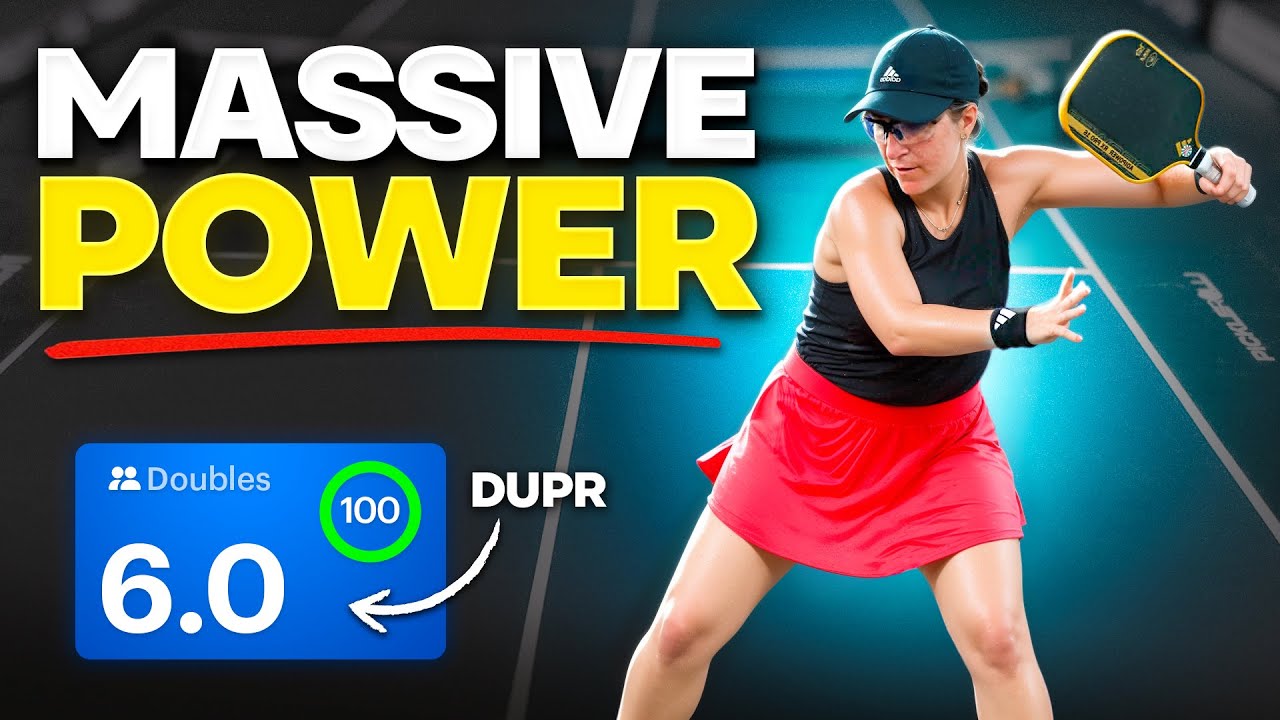
Pickleball power doesn't come from your arm. That's the big takeaway from Mari Humberg's lesson with Tanner Tomassi – and it's a game-changer for anyone who's felt their drives lack pop or their putaways fall short.
Humberg, a PPA-ranked top 20 player, breaks down the mechanics of generating effortless power through proper body rotation and what she calls the "unit turn."
If you've been muscling the ball and wondering why you're exhausted but not winning points, this is the fix you've been looking for.
Love pickleball? Then you'll love our free newsletter. We send the latest news, tips, and highlights for free each week.
The Unit Turn: Your Secret Weapon
The unit turn is simple in concept but transformative in practice. It means rotating your hips, shoulders, and non-dominant arm together as one unit, rather than isolating your arm for power.
Humberg demonstrates this brilliantly with a throwing drill: without hip rotation, a throw barely reaches the baseline. With full body rotation, it sails to the fence. That's the difference between arm-heavy tennis players (and non-tennis players alike) and players who generate real power.
For drives, Humberg recommends a closed stance, especially if you're new to the unit turn. A closed stance naturally forces you to rotate your entire body; you can't cheat by just swinging your arm. Once you master the mechanics, you can experiment with semi-open or open stances, but the principle stays the same: turn your whole body, not just your arm.
 The Dink Media Team
Drives: Control Your Arm, Unleash Your Body
Here's the counterintuitive part: putting your full body into a drive doesn't mean you have to swing hard with your arm.
In fact, Humberg emphasizes keeping your arm controlled and loose while your hips and shoulders do the heavy lifting. When Tanner loosens up his rotation, his drives immediately gain topspin and dip without him swinging any harder. The momentum from his body does the work.
The practical drill is straightforward. Have a partner feed you balls, or rally ground strokes, and focus on rotating fully into each shot while keeping your arm relaxed. You'll feel the difference immediately, and your consistency will improve because you're not relying on arm strength to control the ball.
Putaways: The Same Principle, Higher Stakes
Kitchen line putaways are where Tanner admits he struggles most, and Humberg shows why: he's using all arm and no rotation.
The fix is identical to the drive, but the stakes feel higher because you're closer to the net and the ball is lower. Humberg uses the same throwing drill at the kitchen line, asking Tanner to spike the ball down without rotation, then with full hip and shoulder turn. The difference is staggering.
One key detail for putaways: you'll typically use an open stance because you want to stay as close to the kitchen line as possible without stepping in. But the rotation principle doesn't change. Your arm should feel loose and almost passive, following the momentum of your body. Humberg demonstrates this with a loose, flowing motion that generates serious pace without looking forced.
 Alex E. Weaver
Why Tight Arms Fail
Tanner mentions that people always tell him his tight arm is the problem. Humberg reframes this perfectly: he keeps a tight arm because he's trying to generate power from it.
Once you shift the power source to your hips and shoulders, your arm naturally relaxes. It's not about forcing your arm to be loose; it's about not needing it to be tight in the first place.
Heads up: hundreds of thousands of pickleballers read our free newsletter. Subscribe here for cutting edge strategy, insider news, pro analysis, the latest product innovations and more.
The Overhead and Beyond
Before wrapping up, Humberg notes that the overhead follows the same mechanics. Everything in pickleball, she says, comes from the unit turn. The only difference with an overhead is that you're executing it closer to the net. The rotational power principle is universal across every shot in the game.
If you're struggling to generate power without sacrificing control, this lesson from Tanner Pickleball is worth your time. The unit turn isn't complicated, but it does require practice to feel natural. Start with the throwing drill, move to ground strokes, and watch your game transform.
Love Pickleball? Join 100k+ readers for free weekly tips, news & gear deals.
Subscribe to The DinkGet 15% off pickleball gear at Midwest Racquet Sports