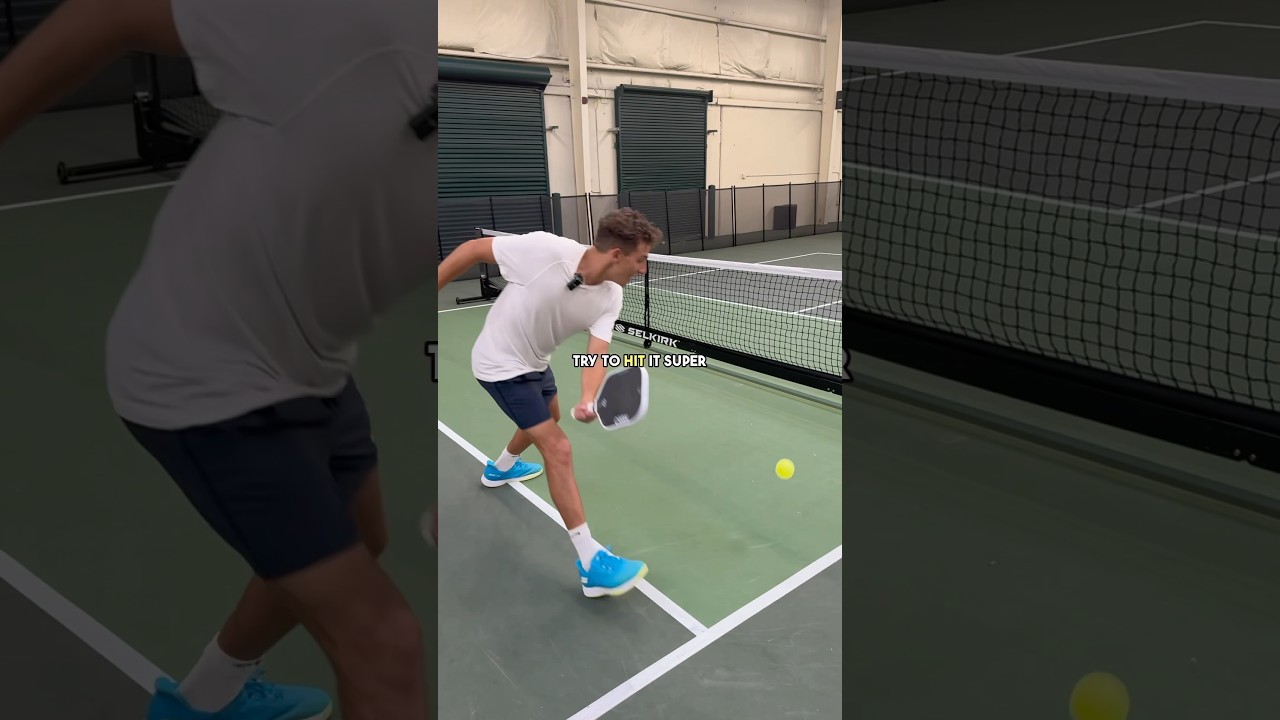
Mastering is about understanding when to attack, positioning yourself for success, controlling your pace, and thinking two shots ahead.
The forehand speedup is one of pickleball's most dangerous weapons, and if you're serious about climbing the ranks, you need to master it.
Roscoe Bellamy, host of a popular pickleball coaching channel, recently broke down this shot with PPA pro Wes Burrows, one of the game's best practitioners. T
heir breakdown covers everything from recognizing the right ball to execute with precision, and it's packed with insights that'll transform how you attack at the kitchen line.
Love pickleball? Then you'll love our free newsletter. We send the latest news, tips, and highlights for free each week.
When to Use the Forehand Speedup
Here's the mistake most players make: they speed up everything. The reality? You can't just attack any ball that comes your way.
The goal of a speedup isn't to hit a winner outright. It's to start a short, fast exchange that you feel confident winning.
Think of it as initiating a firefight with an advantage.
Bellamy and Burrows identify three critical cues to look for before committing to an attack:
- Ball height. You need a ball that's sitting up, not one that's already low at the net.
- Tempo and pace. Look for a dead ball, something that's moving slowly or sitting still, not one that's coming at you with pace.
- Court balance. Check where you and your partner are positioned versus your opponents. You want the advantage before you pull the trigger.
Once you can read these three things, you'll stop wasting energy on attacks that don't work and start winning more exchanges.
The latest drop from 11Six24 is here — and The Dink is giving you a shot to get one for free.
We’re giving away 10 Power 2 paddles, the hottest new paddle on the market built around a powerful premise: Surface grit that lasts the life of the paddle.
Enter here. And checkout their new Power 2 lineup and get $10 off with code THEDINK.
Footwork Fundamentals for a Forehand Speedup
Perfect technique means nothing if your feet aren't in the right place. Burrows emphasizes that body positioning and movement are everything. You need to move efficiently so you're strong, stable, and ready to attack from a position of control.
Three keys stand out:
- Get behind the ball. Don't reach. Move your feet and line up your body so you can attack through the ball, not sideways or off-balance.
- Load your outside leg. For forehand speedups, that's your right leg. Loading it gives you balance, power, and the ability to drive through the ball instead of just leaning.
- Get there early and stay low. Arriving early lets you hold your paddle for a split second to create deception. Staying low keeps you athletic and in control through contact.
When you nail these three things, your execution becomes confident and your opponents start feeling the pressure.
The Modern Coil Technique for Forehand Speedups
The new-age forehand speedup uses what Burrows calls "the coil."
Instead of taking a big backswing, you stay compact and coil your body like you're loading up. Your paddle stays close to your body, and that coil builds power without giving anything away.
Here's why it works: when you coil up, your opponents instinctively go to protect their body. That opens up options.
You can roll the ball in front of them, attack their wings, or hit to a spot they're not guarding. It's deception through body language.
The contact point matters too. Don't reach way out in front. You'll lose control. Instead, make contact just slightly in front of your right hip so you can get the outside of the ball and drive through it cleanly.
And remember, you're not trying to hit this ball as hard as possible. You're trying to hit it clean with spin and control.
Wrap that paddle up aggressively around the outside of the ball to hit different spots and locations.
 The Dink Media Team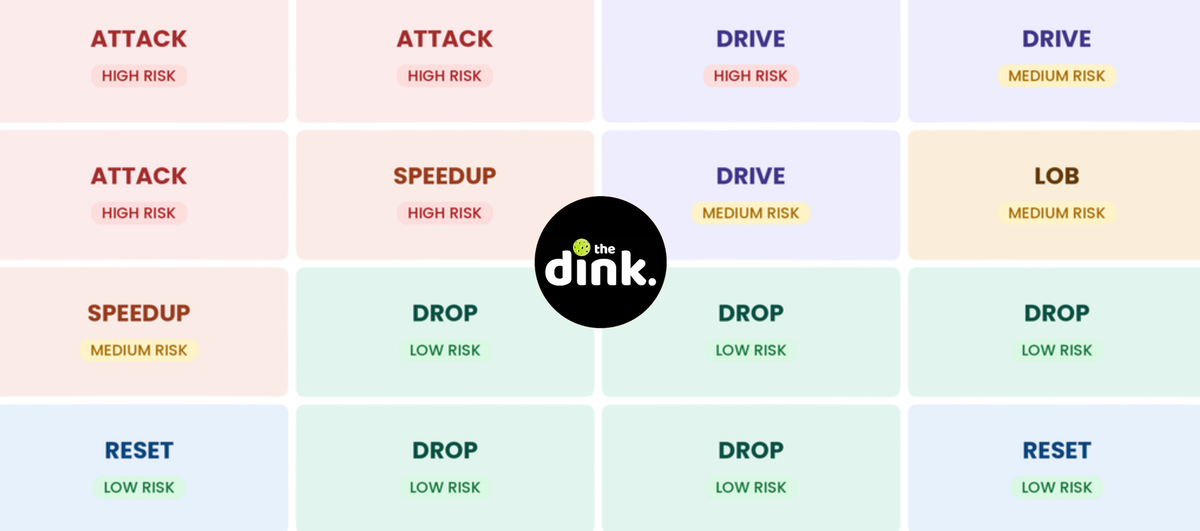
Speed Control and Placement Win Points
The best players don't hit every speedup at 100%. They control their pace using 60 to 80% power, which lets them mix tempos and create deception.
Sometimes showing that big coil and then taking a little pace off completely throws off an opponent's timing.
Placement is equally important. Instead of attacking straight at the body where most players are strongest, target awkward zones:
- The chicken wing (outside the shoulder)
- The right hip (just outside their body)
- The high right shoulder
These spots are tougher to counter and help you set up putaways.
 The Dink Media Team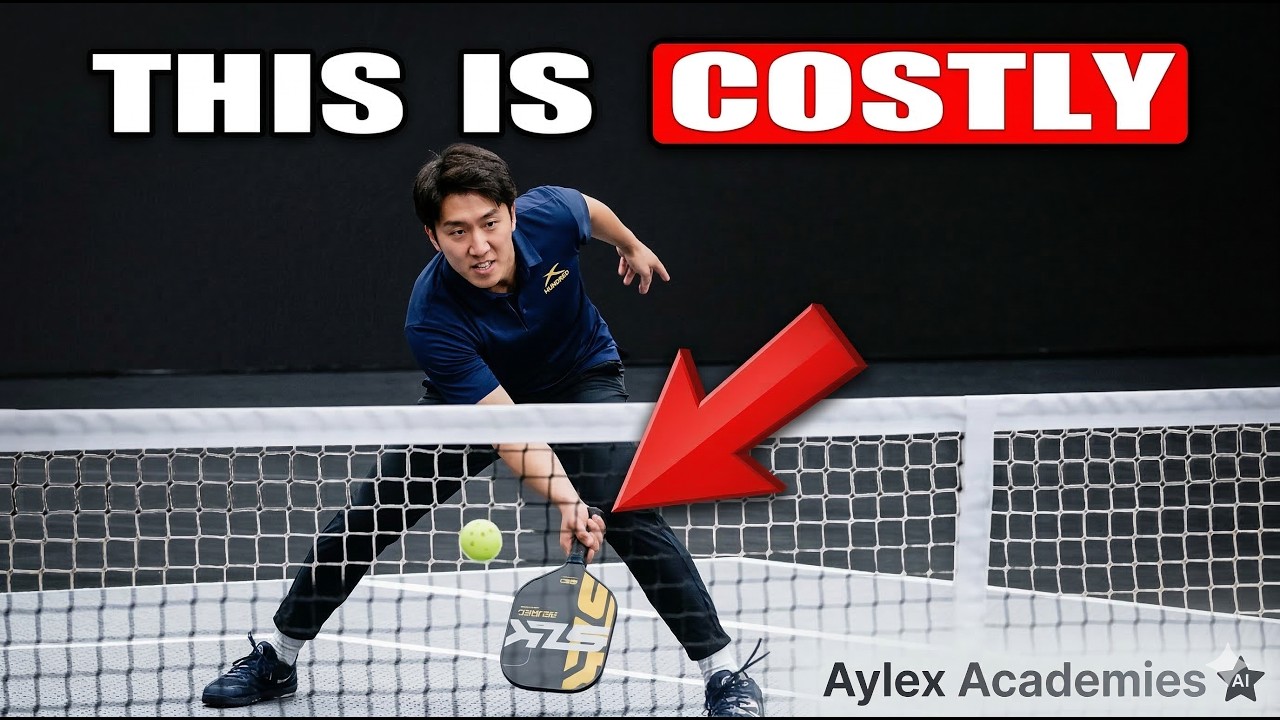
Think Ahead When Using a Forehand Speedup
At the highest levels, players expect a two or three-shot rally after a speedup. You need to anticipate what comes next. Bellamy introduces the "rebound effect" or "triangle effect" to help you read where the next shot is coming.
If you speed up down the line, sit on the line because your opponent will likely give you a line counter. If you speed up cross-court, position yourself cross-court because the ball tends to come back in the same direction you fired it.
Always have a second shot or a spot in mind before you hit the first one.
The right hip attack is one of the most common setups. When you coil and load on your outside leg, your opponent feels like they need to cover their body immediately. That opens up the right hip. They go on their heels, and suddenly you've got options they can't defend.
 The Dink Media Team
Wing Attacks: Exploit the Open Court
Most players are most powerful closer to their body, especially with backhand counters. But if you coil and make them sit on their heels to cover their body, their wings become vulnerable. That's when you load up and play a softer, off-pace shot to their side.
For players with one-handed backhands, this is especially effective. Once they start reaching out to the side, it becomes very hard to counter with any power. They're overextended, and the ball comes back soft, giving you the putaway.
Frequently Asked Questions
What is a forehand speedup in pickleball?
A forehand speedup is an aggressive shot used to initiate a fast exchange at the net. It is designed to pressure opponents rather than immediately win the point.
When should I use a forehand speedup?
You should use it when the ball is high, slow, and you are balanced. Attacking the wrong ball often leads to easy counters.
How hard should a forehand speedup be hit?
Most forehand speedups are hit at 60 to 80 percent power. This helps maintain control while still applying pressure.
Where should I aim my forehand speedup?
Aim for awkward zones like the right hip, shoulder, or outside arm. These areas are harder for opponents to counter effectively.
How do I improve my forehand speedup quickly?
Focus on footwork, timing, and recognizing the right ball to attack. Practicing controlled speedups will improve consistency faster than hitting harder.

Love Pickleball? Join 100k+ readers for free weekly tips, news & gear deals.
Subscribe to The DinkGet 15% off pickleball gear at Midwest Racquet Sports