
Fix Your Feet: The Pickleball Technique That Transforms Your Transition Game
You can have perfect shot technique, but if your feet aren't in the right place when you need them to be, you're fighting an uphill battle
Most players lose points in the midcourt without ever realizing why. It's not because their shots are bad. It's not because they lack athleticism.
It's because their feet put them in the wrong position at the wrong time, and by then, it's too late to recover.
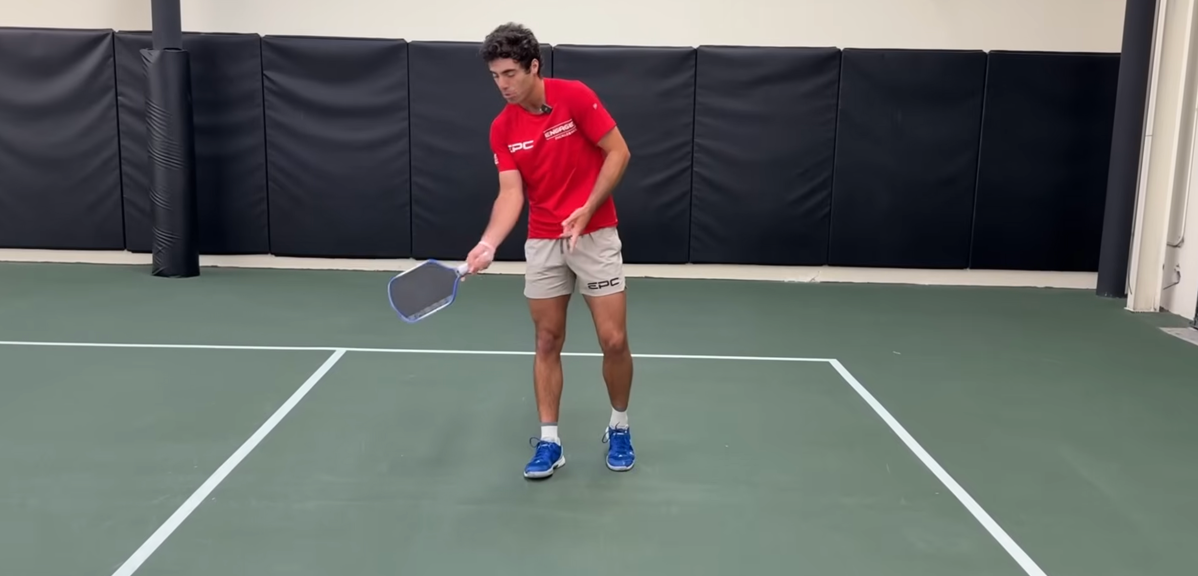
That's the core insight from Richard Livornese Jr., who just released a comprehensive breakdown of midcourt footwork that challenges how many of us approach the transition zone.
The video focuses on something that doesn't get nearly enough attention:
Love pickleball? Then you'll love our free newsletter. We send the latest news, tips, and highlights for free each Monday, Wednesday, and Friday.
The Transition Zone Is Where Matches Are Won and Lost
Here's the thing about pickleball: the transition zone is where the game is actually decided. You can have perfect shot technique, but if your feet aren't in the right place when you need them to be, you're fighting an uphill battle.
"The footwork in that zone makes or breaks your transition," Livornese explains in the video.
"The players that have the best footwork are the best at transitioning because the shots they're hitting become so much easier to hit."
Think about it this way. You're moving up to hit a midcourt ball. If you're in the wrong position, you're either reaching awkwardly, off-balance, or both. But if your footwork is dialed in? You've got time, space, and control. The shot becomes almost automatic.
1. Moving Into the Midcourt (The Foundation)
The first footwork pattern Livornese breaks down is moving up into the midcourt to hit a ball. This typically happens off a drive, a good roll, or when your opponents are just bumping the ball back into the middle of the court.
The biggest mistake players make here is running through the shot. You see the ball, and you just sprint toward it without any rhythm or control. That's a recipe for disaster.
Instead, Livornese recommends a three-step process:
- Wait and see. After your opponent hits the ball, don't immediately charge forward. Assess whether the ball is landing deep or in the midcourt. If it's landing near the baseline, you can hang back. If it's clearly a midcourt ball, then you move.
- Take small steps. Once you've identified a midcourt ball, creep forward with small, controlled steps. Big steps make it hard to slow down or change direction. You want to stay light on your feet.
- Split step before the bounce. Right as the ball is getting near the ground, execute a split step. This is crucial because it allows you to push off in any direction. If you take any other kind of step, you lose that flexibility. The split step is your insurance policy against spin, pace changes, or unexpected movement.
After the split step, you step toward the ball, push through it (not past it), and move into the net. On the forehand, you can step with either foot. On the backhand, you need to use your dominant leg to execute the slice properly.
 The Dink Media Team
2. Resetting Out of the Air (The Most Common Scenario)
Now we're in the midcourt, but the ball is a little high. You need to reset it. This is probably the most common reset situation you'll face, and it's where a lot of players fall apart because they're not using any footwork at all.
The problem is twofold.
- First, some players get too stationary, just lunging around without moving their feet.
- Second, others get their legs too close together, which kills their athleticism and mobility.
The solution? Get athletic and get mobile.
Before your opponent even hits the ball, get into an athletic stance. Bend your knees, keep your weight on the balls of your feet (not your heels), and be ready to move.
Congrats, you just executed the split-step.
When the ball comes to you, take a small step, usually laterally and forward. This increases your radius by a foot or two, which means you can take more balls and stay balanced while doing it. It's the difference between reaching like you're playing octopus tag and actually controlling the shot.
"Trying to take that small step as much as possible is huge for our balance, mobility, and reset ability," Livornese says.
 The Dink Media Team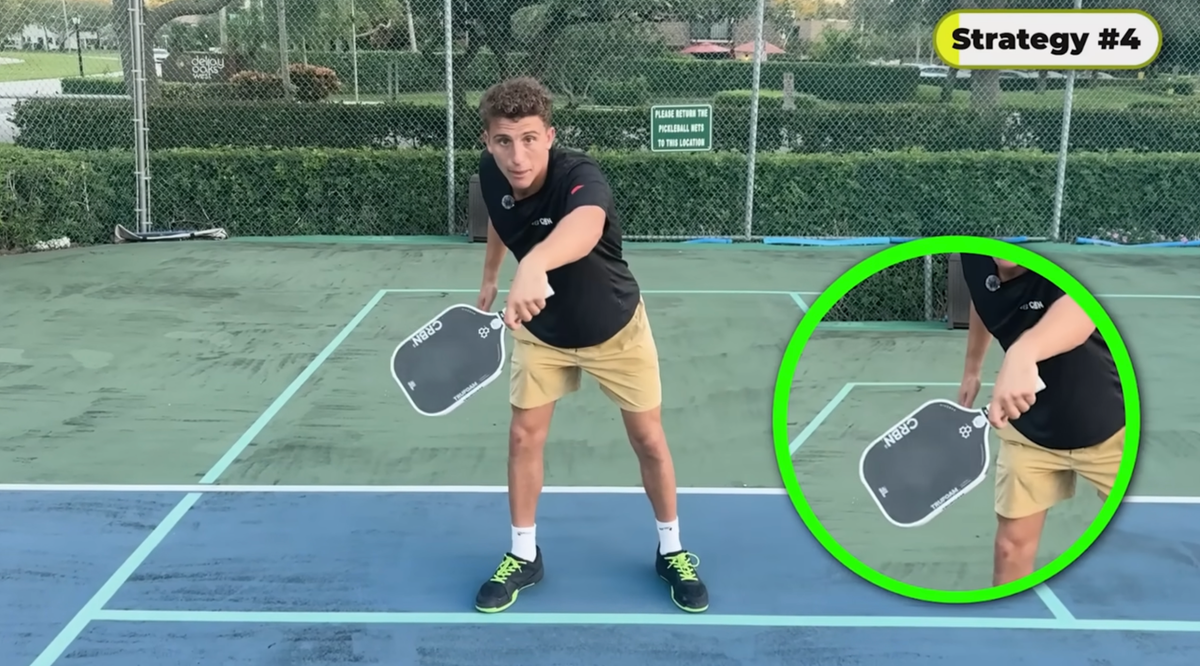
3. The Short Hop Reset (The Advanced Move)
At the highest levels of pickleball, players are actually choosing to hit short hops instead of taking balls out of the air.
Why? Because mathematically, the short hop is the easier shot.
The ground reduces the pace of the incoming ball significantly, which means it's much less likely to pop up. Plus, you have a little extra time to read the shot, so you're less likely to misjudge the pace and either under-hit or over-hit it.
The footwork on a short hop is more complicated than the other two patterns.
- The key is timing
- You want to hit the ball right on the way up after it bounces, not after it reaches its second apex
- You're essentially using your paddle like a trampoline
The height of your short hop is controlled entirely by your paddle angle.
If the ball is soft, open your paddle face more because you need extra height and pace to get it over. If the ball is hard, close your face more. You might even go slightly past neutral on really hard, low balls.
Your stance on the short hop is usually closed or semi-closed. You're giving yourself space to hit, and you're positioning your body to absorb the pace. Livornese prefers using two hands when the ball comes right at him, and one hand when it's anywhere else.
Heads up: hundreds of thousands of pickleballers read our free newsletter. Subscribe here for cutting edge strategy, insider news, pro analysis, the latest product innovations and more.
The Bigger Picture: Slow Is the Name of the Game
Across all three footwork patterns, there's one theme that ties everything together: slow is the name of the game.
The slower you hit the ball, the more likely you are to get all the way into the net. Speed comes later, after you've mastered positioning and footwork.
This is where a lot of intermediate players get stuck.
They're trying to be aggressive before they've earned the right to be aggressive.
They're trying to speed up the point before they've controlled it.
Look at Ben Johns, the best player in the world. He regularly passes on balls out of the air and hits short hops instead. Why? Because it's easier.
That's a huge advantage. You get up to the net faster, you slow down the ball, and you make your resets more consistent.
 The Dink Media Team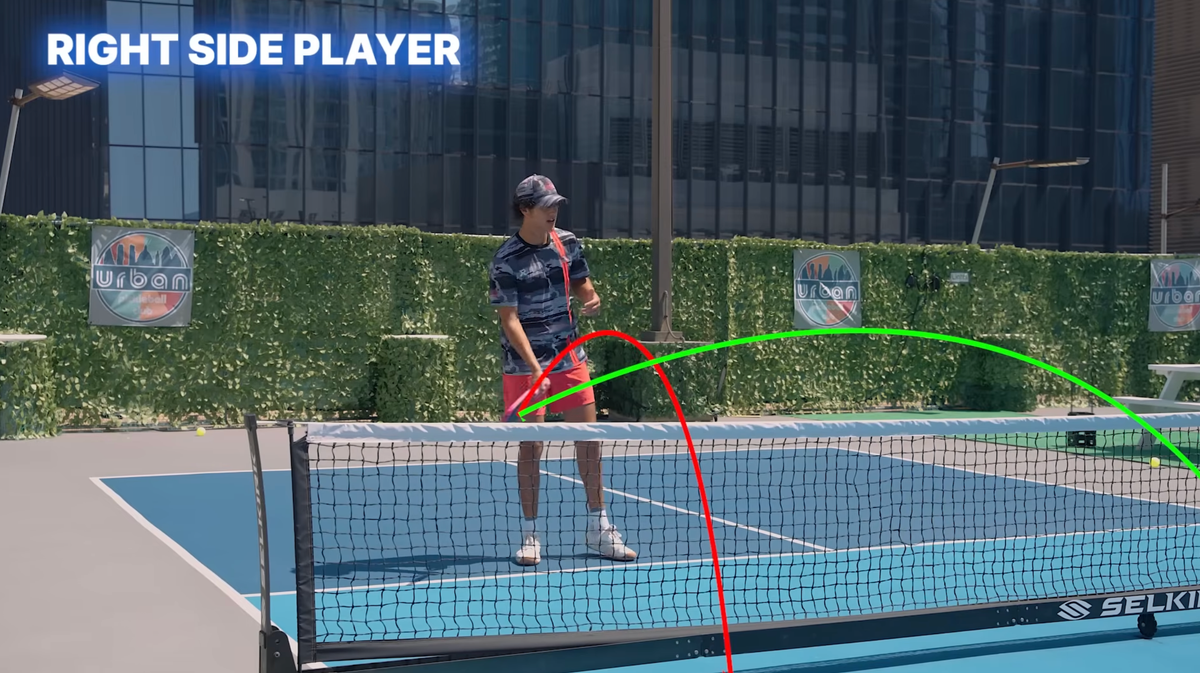

Love Pickleball? Join 100k+ readers for free weekly tips, news & gear deals.
Subscribe to The DinkGet 15% off pickleball gear at Midwest Racquet Sports