

Contrast Training for Pickleball: Building Strength & Power That Translates to the Court
Over time, one factor consistently separates athletes who stay healthy and competitive from those who fade away: fitness and proper training
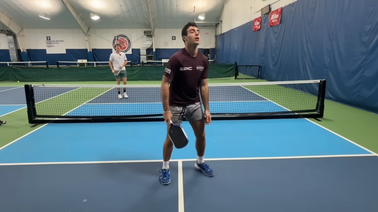
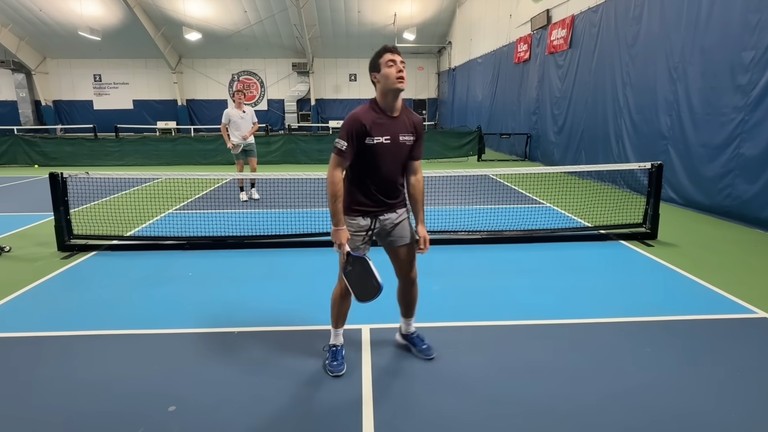
Connor Derrickson, the trainer behind That Pickleball Trainer, recently shared a comprehensive one-on-one fitness session that goes way beyond typical court drills.
This isn't just about hitting balls harder or moving faster. It's about building the kind of functional strength and mobility that actually translates to better pickleball performance.
Love pickleball? Then you'll love our free newsletter. We send the latest news, tips, and highlights for free each week.
Building a Foundation with Mobility and Activation
The session with pro Travis Rettenmaier kicks off with mobility work and activation exercises, which might seem boring compared to explosive drills, but they're essential.
Derrickson focuses on midback mobility and glute activation, two areas that matter more than most players realize. A tight midback limits your rotation, and weak glutes throw off your balance and power generation.
The warm-up sets the tone for everything that follows, establishing proper movement patterns before adding intensity.
 The Dink Media Team
Contrast Training: Strength Paired with Power
The real meat of the workout involves contrast training, a technique that pairs heavy strength work with explosive power movements. Here's how it works:
- Perform six reps of a single-leg goblet squat
- Then immediately drop the weight and do four to six explosive jumps on the same leg
This combination recruits more muscle fibers and trains your body to generate power from a position of strength.
For pickleball, this matters because you're constantly shifting weight, changing direction, and exploding into shots.
The contrast approach teaches your muscles to be both strong and reactive.
Derrickson emphasizes full-body, multi-planar movements rather than isolating individual muscle groups. Instead of just bench pressing or doing bicep curls, the focus is on exercises that move you forward and back, side to side, and rotationally.
That's the real world of pickleball, where you're rarely moving in just one direction.
Why Rotational Work Matters
A lot of traditional gym routines ignore rotation, but pickleball demands it. Constantly. Your forehand, backhand, flicks, and drives all involve twisting through your core and hips.
The session includes lateral bounds and side plank variations that build stability and power in the rotational plane. This kind of training reduces injury risk and improves shot consistency because your body can generate force from a stable, mobile position.
 Luke Burton
Putting It All Together on the Court
The session wraps up with on-court agility work that ties everything together. Derrickson has his training partner run the baseline while dropping shots to different locations, forcing movement and decision-making under fatigue.
The partner has to make 15 shots in a row with only three chances to miss. It's competitive, it's fun, and it's exactly the kind of pressure you face in real matches.
The takeaway from this session is straightforward: pickleball fitness isn't just about court-specific drills. It's about building a strong, mobile, reactive body that can handle the demands of the sport without breaking down.

Love Pickleball? Join 100k+ readers for free weekly tips, news & gear deals.
Subscribe to The DinkGet 15% off pickleball gear at Midwest Racquet Sports