

Your forehand attack isn't just about power or technique. It's about deception, positioning, and reading your opponent. Hit the same spot twice, and they'll be waiting for it the third time.
Christian Alshon is ranked number three on the PPA Tour across singles, mixed, and men's doubles. He's one of the best players on the planet, full stop.
And in a recent video from Tanner Tomassi, he breaks down exactly how to hit a lethal forehand attack, the kind that separates good players from great ones. If you've been wondering why your speed-ups aren't working the way you want them to, this is the masterclass you need.
Love pickleball? Then you'll love our free newsletter. We send the latest news, tips, and highlights for free each week.
The Backswing Mistake That's Holding You Back
Here's the thing about the forehand attack: most players telegraph it before they even hit the ball.
They take a big backswing, step back, and suddenly their opponent knows exactly what's coming.
Christian changed his game early on by doing the opposite. He shortened his backswing as much as possible while still generating the same power. The result? His speed-up went from good to great.
When you're attacking, you want to disguise your intentions. A short, compact backswing keeps your opponent guessing. They won't have time to react or prepare their defense.
Wrist or Shoulder? The Real Answer
This is one of the most common questions Christian gets asked. And the answer might surprise you.
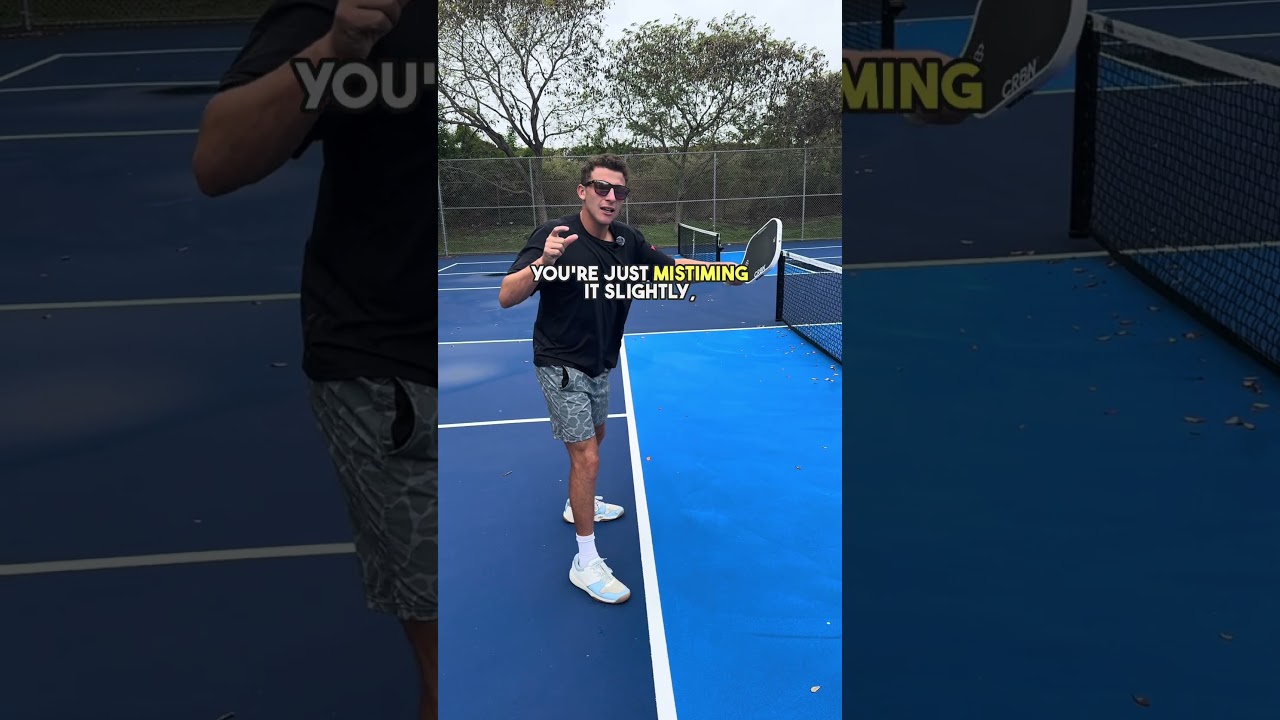
He tries to relax his wrist as much as possible. The real power comes from your grip and how you position your paddle.
Christian uses a continental grip, similar to how you'd hold a hammer. This grip lets him drop the paddle below the ball and accelerate through the shot without forcing it.
The key is not to overthink it. You're not trying to whip the ball with your wrist or muscle it with your shoulder. You're accelerating smoothly through the contact point.
 The Dink Media Team
Where to Attack: The Chicken Wing and Beyond
Knowing where to aim is half the battle. Christian thinks about his opponent's handedness and positioning before he even hits the ball.
If you're facing a righty from the right side of the court, there's a golden target: the chicken wing. Hit the ball just past their right hip, and they'll be forced into an awkward position where they can't hit a clean backhand. They'll either pop it up or reset defensively.
But here's where it gets smart. Once your opponent knows you love that shot, they'll start positioning for it. That's when you need to mix it up.
- Attack the line instead of the body
- Go through the middle to keep their partner honest
- Hit it right at them to force a different kind of counter
- Use an off-pace speed-up to catch them stepping back
Variety is what keeps your opponent off balance. If you're predictable, even the best shot becomes defendable.
Choosing the Right Ball to Attack
This is where patience separates the pros from everyone else.
At the highest levels, players will hit dozens of dinks before attacking. They're waiting for the right ball.
You can't attack every ball. In fact, attacking the wrong ball is a quick way to lose the point. Here's what to look for:
- The ball needs to be high enough to attack down into the court
- You need to be close enough to the net that you don't have to step back
- Your opponent should be in a defensive position, not already aggressive
- Consider how good your opponent is at handling attacks before you commit
If you're stepping way back to hit an attack, you're already out of position. Your opponent's partner will volley at your feet, and you'll lose the point. Stay close to the net. Keep the ball in front of you.
 The Dink Media Team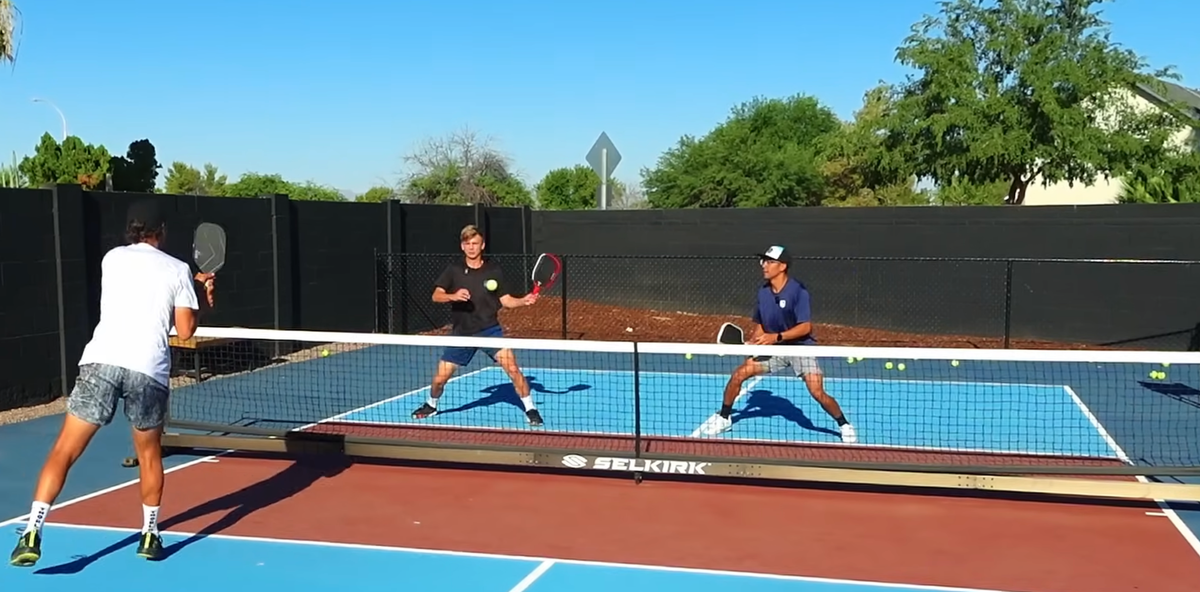
The Height of the Ball Matters More Than You Think
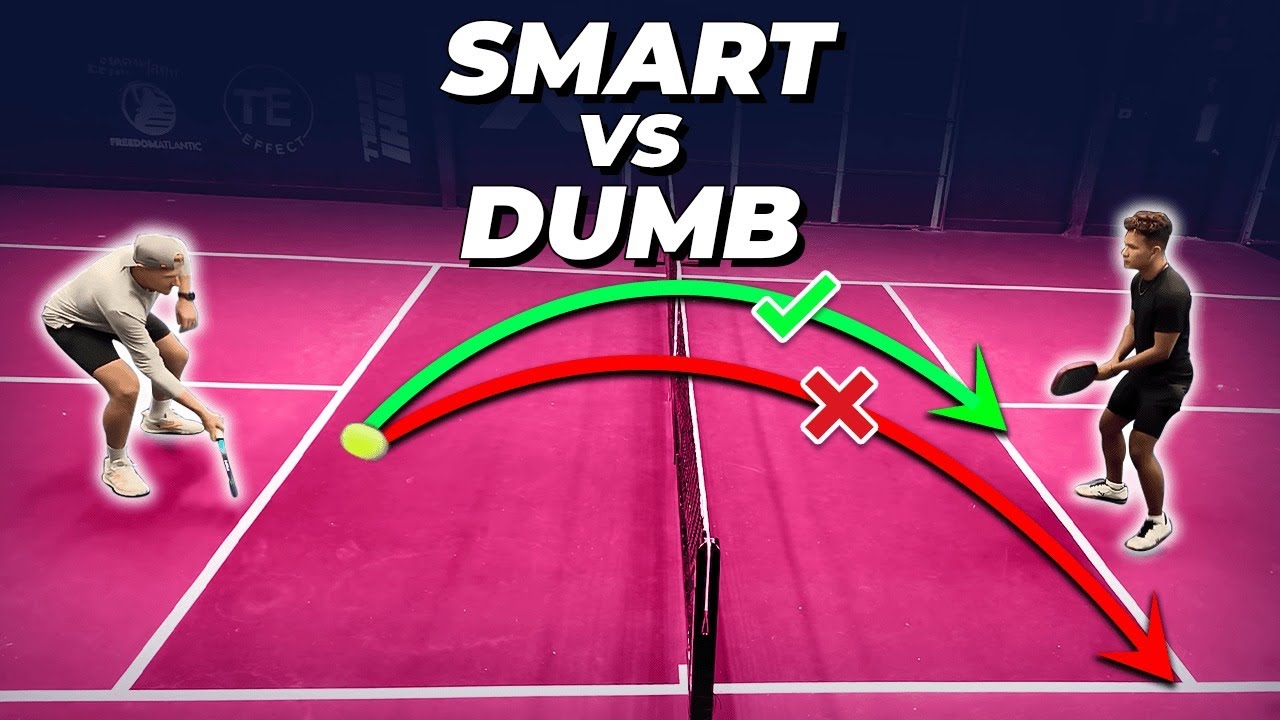
A ball that barely clears the net and sits low is almost impossible to attack effectively. You won't be able to get it down and over the net at the same time.
The higher the ball, the more options you have. But don't wait for a perfect setup every time. You can attack a slower ball too, especially if your opponent expects you to go hard. An off-pace speed-up catches them stepping back, and suddenly they're reaching for a ball they thought would be faster.
Heads up: hundreds of thousands of pickleballers read our free newsletter. Subscribe here for cutting edge strategy, insider news, pro analysis, the latest product innovations and more.
Reading Your Opponent's Dink
Christian demonstrates this by having Tanner hit dinks at him while he calls out whether he'd attack or not. The pattern becomes clear pretty quickly.
When Tanner hits an aggressive dink, Christian doesn't attack. He's waiting for the dead dink, the one where Tanner is playing defensively. That's when the opportunity opens up.
Learn to read the difference between an aggressive dink and a defensive one. An aggressive dink has pace and depth. A dead dink is soft and sits up. Only attack the dead dink.
Putting It All Together
When Tanner hits attacks at Christian, the feedback is immediate and practical. Some attacks are too high. Others lack variety. A few hit the net because they weren't low enough.
The biggest issue? Tanner wasn't mixing up his targets. He was predictable. Once Christian figured out the pattern, he was ready for every shot.
This is the real lesson.
Your forehand attack isn't just about power or technique. It's about deception, positioning, and reading your opponent. Hit the same spot twice, and they'll be waiting for it the third time.
Alshon's forehand attack works because it combines technical precision with strategic thinking.
- A short backswing keeps it disguised
- A continental grip generates power without forcing it
- Smart target selection and variety keep opponents guessing
But the biggest factor is patience. Wait for the right ball. Stay close to the net. Mix up your targets.
Do those things, and your speed-up will go from good to great, just like his did.

Love Pickleball? Join 100k+ readers for free weekly tips, news & gear deals.
Subscribe to The DinkGet 15% off pickleball gear at Midwest Racquet Sports