
5 Simple Pickleball Tips That Actually Work (No Drilling Required)
You don't need to spend eight hours a week on the court to see improvement. Sometimes a mindset shift or a focus on one specific element is enough to move the needle.
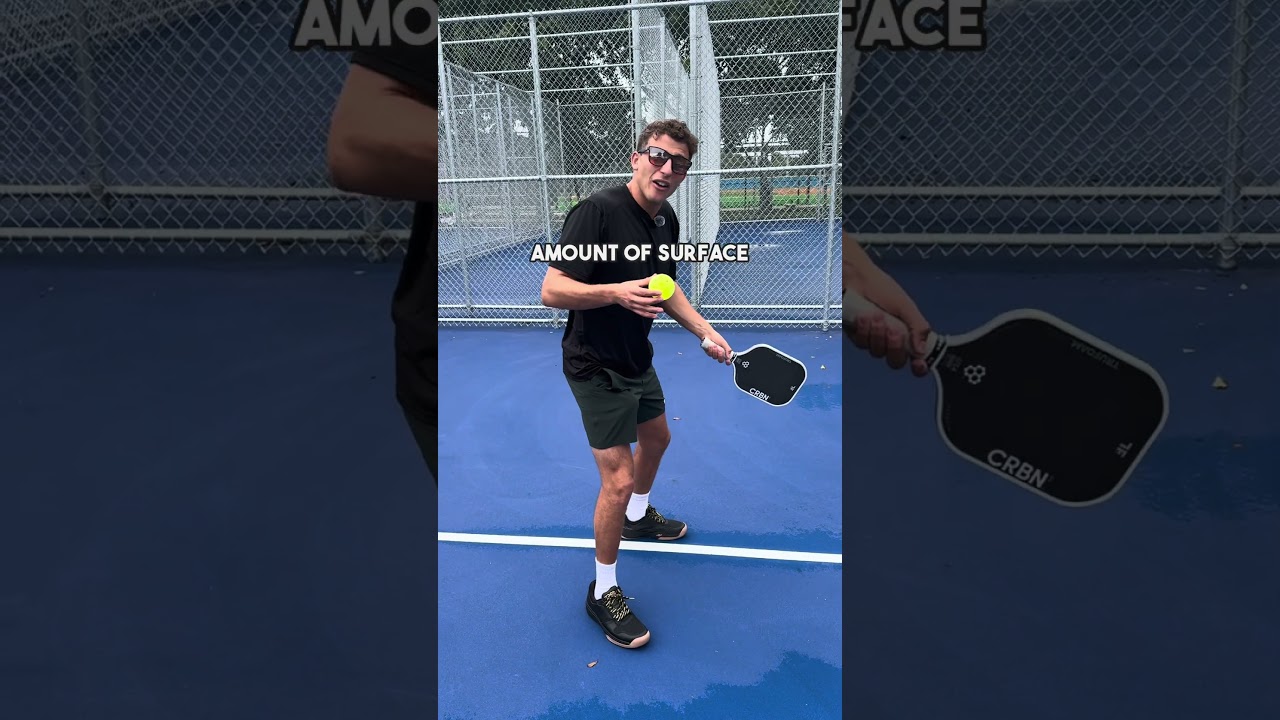
John Cincola just dropped something refreshing on his YouTube channel: a video about pickleball improvement that doesn't require you to spend your entire weekend grinding on the court.
In "5 Tips to Instantly Improve Your Pickleball Game," the coach breaks down five straightforward adjustments that can genuinely move the needle on your performance right now.
Here's the thing about online pickleball instructional content: a lot of it feels like you need to overhaul your entire game to see results. Cincola's approach is different. He's focused on mindset shifts and small technical tweaks that can create immediate impact. Let's walk through what he's sharing.
Love pickleball? Then you'll love our free newsletter. We send the latest news, tips, and highlights for free each Monday, Wednesday, and Friday.
1. Target Fix: Aim Small, Miss Small
The first tip centers on something that sounds obvious but most recreational players completely miss: having a specific target for every single shot you hit.
Cincola explains that when he works with amateur-level players, he'll ask them where they were trying to hit a particular shot. The response? "I don't know. I was just trying to get it somewhere in the court." That's the problem right there. Without intention, you can't develop control.
Here's what he recommends: every time you touch the ball, you should be thinking about three things simultaneously.
- First, what type of spin do you want?
- Second, what trajectory are you going for?
- Third, how hard do you want to hit it?
When you nail all three, you end up with a specific landing spot.
The beauty of this approach is that it gives your brain something to measure against. You can actually judge whether you succeeded or failed. Did you hit it too high? Was the spin flatter than intended? Did you overcook the pace? That feedback loop is what separates players who improve from those who just hit balls.
2. Elbow Push: Stop the Flip
Next up is something Cincola calls the "elbow push," and it's all about eliminating what he refers to as "flipping"; that moment when your hitting elbow rolls across your body and creates inconsistency.
The fix is straightforward:
Focus on where you want the ball to go, then move your hitting elbow in exactly that direction.
If you're hitting it straight ahead, your elbow goes straight. If you're going crosscourt, your elbow moves crosscourt. Sounds simple, right? But watch recreational players on any court and you'll see the opposite happening constantly. Someone tries to hit a crosscourt shot while their elbow flies the other way. That's a recipe for net misses and high balls.
Getting your elbow aligned with your target line eliminates a major source of inconsistency. It's one of those adjustments that feels awkward for about five minutes, then suddenly clicks.
 The Dink Media Team
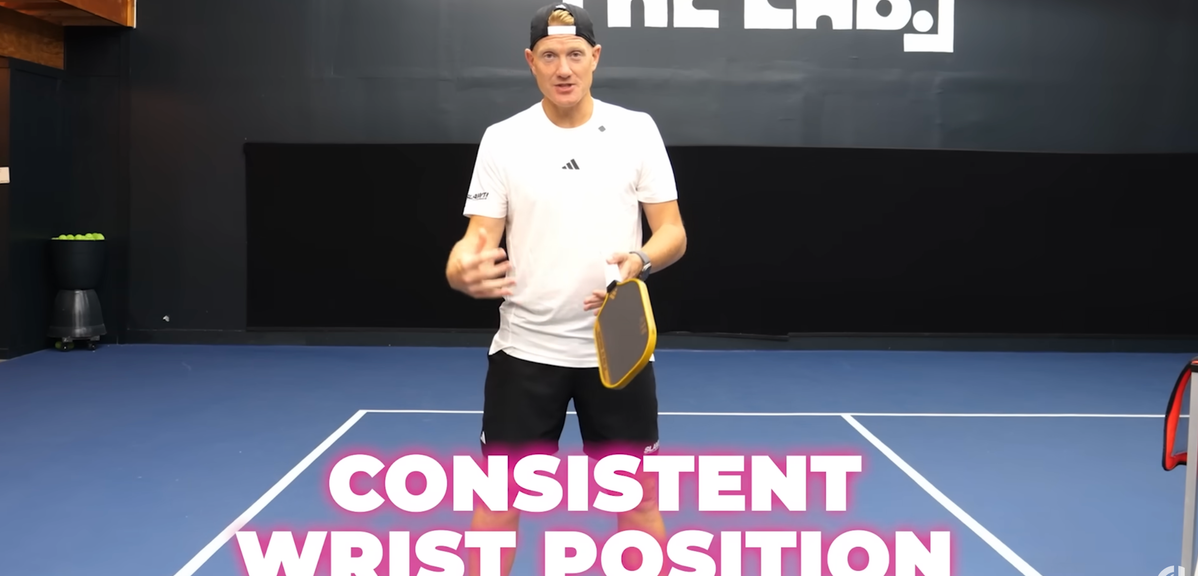
3. Wrist Set: Control the Paddle
The third tip focuses on wrist position, which Cincola argues is the closest thing you have to controlling the paddle itself. Every tiny movement (open, closed, left, right) impacts where the ball ends up.
His method involves starting in a ready position with a neutral wrist, then setting your wrist position for whatever shot you're about to hit. For a forehand dink, you'd move your wrist to that forehand position and lock it in. Then you execute the shot, making sure your wrist feels exactly the same when you finish as it did when you started. After that, you return to neutral.
The same applies to backhand shots.
- Different wrist position
- Lock it in
- Execute
- Finish with the same feel
- Return to neutral
It sounds repetitive because it is, but that repetition is the point. Consistency comes from doing the same thing over and over.
 The Dink Media Team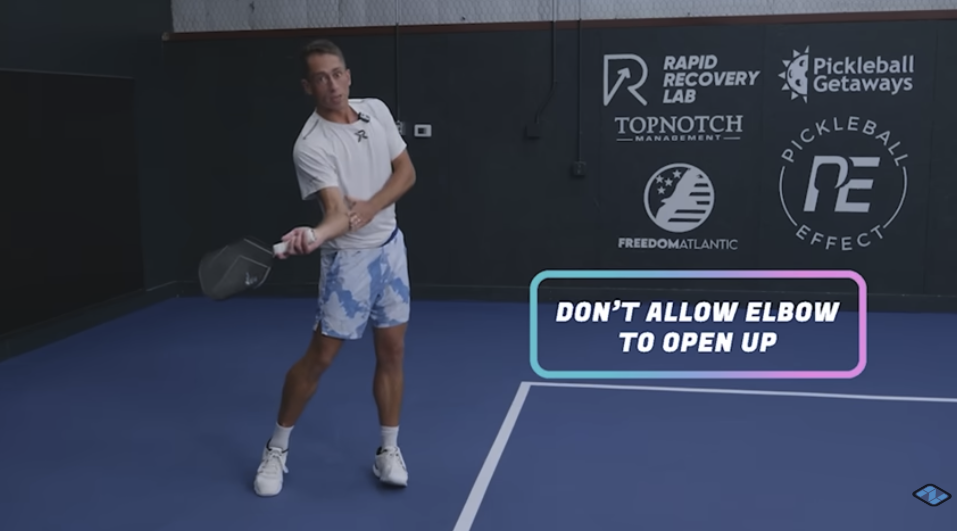
4. Split Step: Be Ready for Anything
Cincola's fourth tip is something he admits he talks about constantly because it's that important: the split step.
The split step is what allows you to react to anything your opponent throws at you. After you hit a shot and the ball travels to your opponent, you don't know what's coming back. Forehand? Backhand? Left? Right? Hard? Soft? You need to be ready for all of it.
The timing is crucial. Right as the ball is about to touch your opponent's paddle, you want to get into a wide base, get low, keep your body posture upright and solid, and most importantly, get your legs loaded. That means your leg muscles are bent and ready to explode in whatever direction you need to go.
It's a small movement, but it's the difference between being reactive and being proactive on the court.
Heads up: hundreds of thousands of pickleballers read our free newsletter. Subscribe here for cutting edge strategy, insider news, pro analysis, the latest product innovations and more.
5. Get Behind the Ball: Feel Versus Real
The final tip addresses something Cincola calls "feel versus real"; the gap between what you think you're doing and what you're actually doing.
He uses an example from coaching his 10-year-old daughter. She was hitting the ball off to the side of her body when she should have been getting behind it. When he told her to line the ball up with the outside of her foot, she thought she was doing it. But she wasn't. So he had to exaggerate the cue: "Imagine the ball is coming right down the middle of your stance."
Almost instantly, her shots improved. She felt like she was positioning the ball in the middle of her stance, but she was probably only about halfway there. The point is that when you're trying to make an adjustment, you need to exaggerate the feeling to actually hit the target.
Cincola recommends trying a few shots where you imagine the ball coming right down the middle of your stance for both forehand and backhand dinks. You'll notice significantly more control when you're actually behind the ball instead of reaching out to the side.
 Alex E. Weaver
The Bigger Picture
What makes Cincola's approach valuable is that these aren't complicated technical overhauls. They're adjustments in how you think about the game and small tweaks to your mechanics that compound over time.
You don't need to spend eight hours a week on the court to see improvement. Sometimes a mindset shift or a focus on one specific element is enough to move the needle.
The video is worth watching if you're looking for practical, actionable tips that don't require a complete game rebuild. Cincola's coaching style is straightforward and his explanations are clear, which is refreshing in a space that sometimes gets bogged down in overly technical jargon.
If you're serious about improving your pickleball game, these five tips give you a solid starting point. Start with one, master it, then move to the next. That's how real improvement happens.
Ready to take your game further? Learn how to master the first 4 shots in pickleball – your blueprint for winning more points.

Love Pickleball? Join 100k+ readers for free weekly tips, news & gear deals.
Subscribe to The DinkGet 15% off pickleball gear at Midwest Racquet Sports