
Start with efficiency. Master that. Then move to prediction. Then pace control. Then resetting. Finally, work on your transition game.
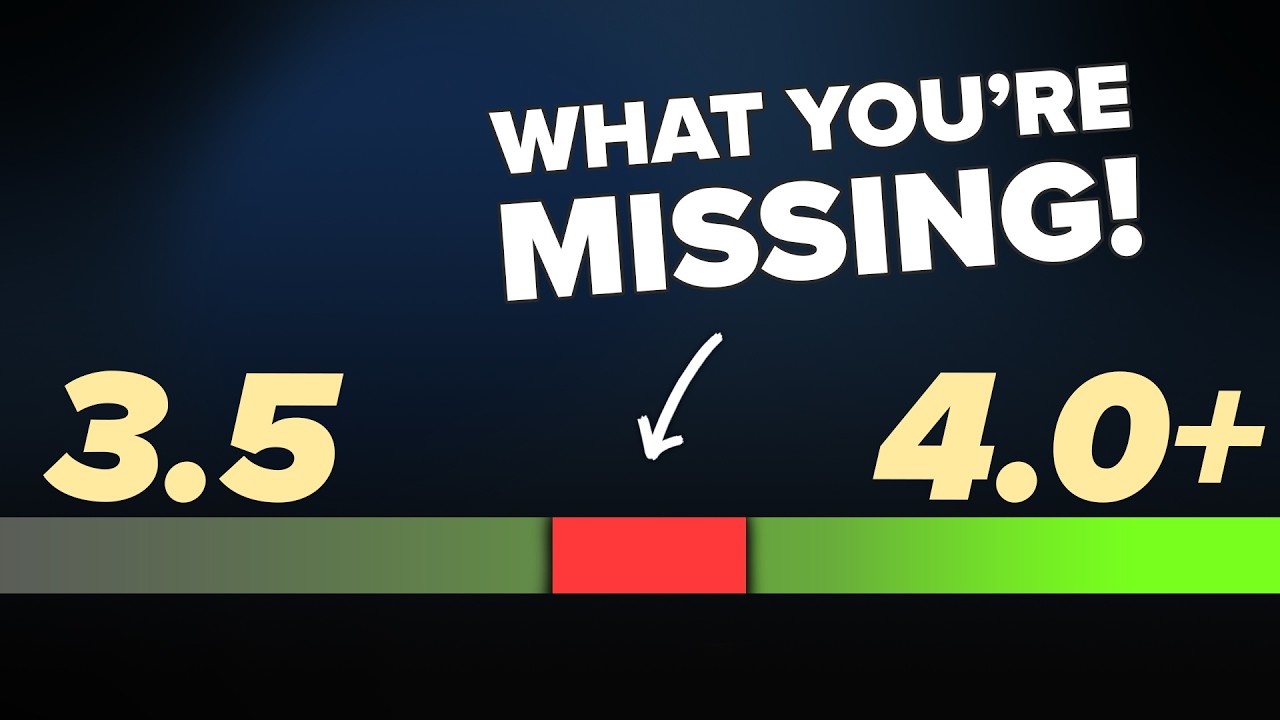
You're a solid 3.5 player. Your technique is clean. Your shots are consistent. But something's holding you back from that next level, and you can't quite figure out what it is.
That feeling of being stuck is real, and it's more common than you'd think. The good news? The jump from intermediate to advanced pickleball isn't some impossible chasm.
According to Pickleball Kitchen, a respected instructional channel, it's more like a stepladder—a series of manageable rungs you can climb one at a time.
In a recent video, Pickleball Kitchen breaks down five essential pickleball skills that will help you bridge that gap and start competing at the 4.0+ level. These aren't flashy tricks or advanced techniques that only pros can pull off. They're foundational concepts that, once you understand them, will fundamentally change how you approach the game.
The Stepladder Approach to Each Pickleball Skill
Before we break down each skill, here's the framework: think of your progression as a ladder, not a wall.
Each rung builds on the one below it, and you don't need to master everything at once. You just need to understand the order and focus on one skill at a time.
The five pickleball skills Pickleball Kitchen identifies are efficiency, prediction, pace control, resetting, and transition. They're presented in order of difficulty, which means you should tackle them in that sequence.
1. Efficient Hands Beat Fast Hands
Here's something that might surprise you: you don't need lightning-quick reflexes to play advanced pickleball. What you actually need is efficiency.
Watch a 4.5 or 5.0 player at the net and you'll see them banging the ball back and forth in intense firefights. Your first instinct is probably, "Man, that person has fast hands." But that's only half the story.
Before you can develop fast hands, you need to develop efficient hands.
The difference is subtle but crucial. Most intermediate players waste movement. They move their paddle around too much, take inefficient paths to the ball, and generally create extra work for themselves. Advanced players, by contrast, move from point A to point B in the most direct line possible.
Think about basic geometry: the shortest distance between two points is a straight line. Apply that principle to your paddle movement.
- When a hard shot is coming at you, don't think about being fast. Think about being efficient. Get your paddle in the path of that ball as quickly as you can by taking the most direct route.
Keep your paddle out in front of you in your peripheral vision. Move it efficiently to intercept the ball. This is a hallmark of advanced play, and it's totally achievable for you right now.
2. Predict Your Opponent by Spotting Patterns
One of the most satisfying moments in pickleball is when you predict exactly what your opponent is about to do and then counter it perfectly. It's brutal. It's fun. And it's a skill you can develop.
The trap most players fall into is thinking they need to study their opponent's entire game intensively. That's too much information to process in real time. Instead, focus on patterns.
Ignore the one-offs. If your opponent hits a crazy two-handed backhand down the line passing shot once, don't worry about it. Move on. But if that same shot happens again, and then again, now you've got a pattern. Once you identify a pattern, you can predict it. And once you predict it, you can counter it.
This is where the mental game comes in. When you start countering your opponent's predictable shots, you're not just winning points. You're sending a message: I'm watching you, and I know what you're trying to do. That psychological edge puts real pressure on your opponent and forces them to second-guess their shot selection.
 The Dink Media Team
3. Master Pace Control by Reading Your Opponent
Pace control is one of the most common themes you'll see in advanced pickleball, and it's also one of the most misunderstood.
Here's the key insight: pace control is more about your opponent than it is about you.
- If your opponent hits a hard shot at you, you can't react the same way you would to a soft shot. Those are two completely different situations.
- But if you're not paying attention to the pace your opponent is putting on the ball, one shot will be fine and the other will be a disaster.
The biggest mistake intermediate players make is doing too much with the ball.
When a hard shot comes your way, your instinct is to push forward and add more pace. Stop. That's killing your ability to have finesse.
Here's the physics: when pace comes in, pace comes out. Trust that principle. When you're absorbing a hard shot, bring your paddle into your body slightly rather than pushing it forward.
This absorbs the pace and allows you to block the shot back into the kitchen with control.
Practice this drill:
- Stand in the middle of the transition zone with a partner on the kitchen line.
- Have them hit hard shots at you.
- Your goal is to absorb that pace and block it back softly.
- Do this repeatedly until the concept becomes second nature.
 The Dink Media Team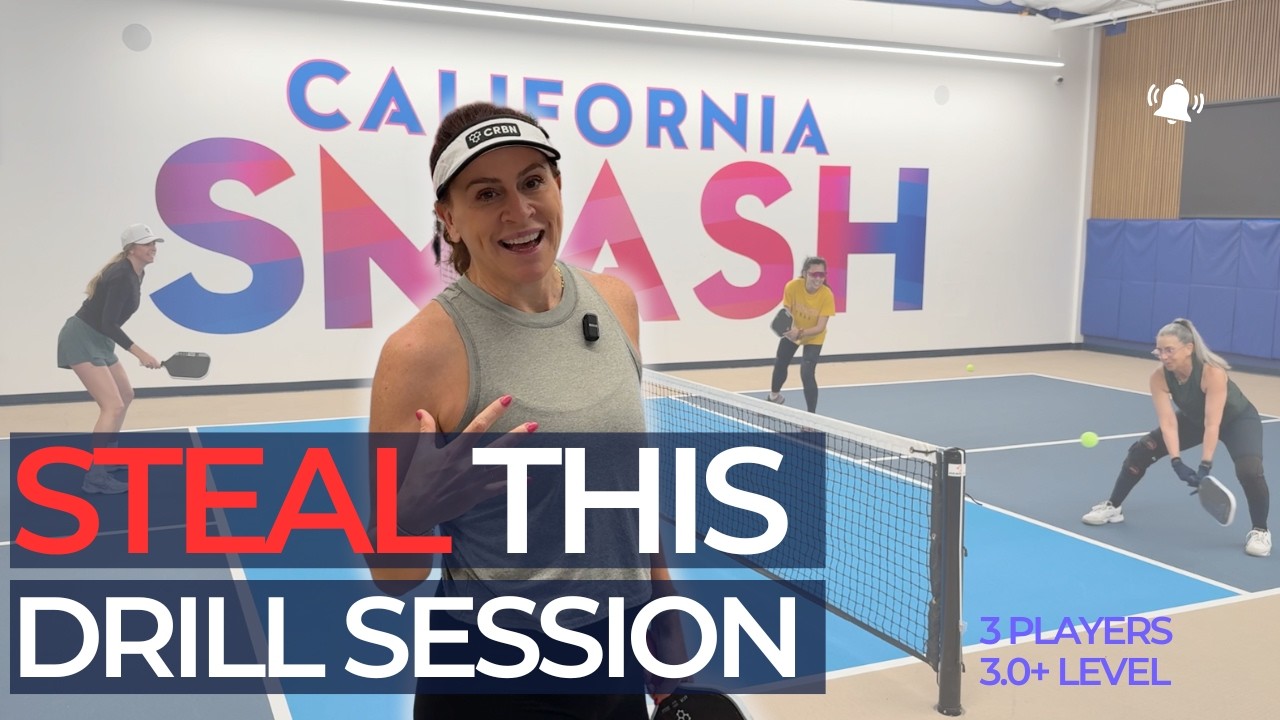
4. Reset the Point When Your Opponent Has the Advantage
Advanced play isn't just about absorbing hard shots. It's also about neutralizing the advantage your opponent has and resetting the point back to neutral.
Here's a scenario: you're the serving team on the baseline. Your opponents are at the net. You hit a decent shot, but they slam it back at you. Who has the advantage? They do, obviously. Your job now is to reset the overall tempo of the point and neutralize that advantage.
The way you do this is by getting the ball somewhere in the kitchen where it's not bouncing up high. When the ball is below the net on your opponent's side, they're forced to hit from low to high. If they don't, they'll dump it into the net. The higher the ball is on their side, the more likely they can hit down and add pace. Your job is to keep it low.
This requires self-awareness. When you're in the middle of a point and you realize you're about to lose, that's when the resetting mindset has to kick in. Tell yourself: It's time to reset. No more chaos. No more fancy shots. I have to reset this point.
Be calm. Be organized. Reject the chaos. This is what separates intermediate players from advanced ones. Intermediate play is often chaotic. Advanced play is organized and intentional.
 The Dink Media Team
5. Transition to the Net More Aggressively
We've saved the most important pickleball skill for last: the transition.
Pickleball points are won at the net. Full stop. If you're not at the net, you're at a disadvantage.
Yet one of the biggest reasons players stay stuck in intermediate play is because they're not moving forward after their third shot.
The reason is fear. Players don't want to move forward because they're scared of getting hit at, getting banged on, or having shots hit to their feet. That makes sense. But here's the paradox: moving forward after your third shot is actually how you win more pickleball.
The key is understanding that you should only move forward if your third shot is at least decent. If you hit a beautiful third shot with heavy topspin that's going crosscourt, your opponent can hardly do anything with it. But if you hit that same shot and don't move forward, your opponent can do whatever they want. Your lack of movement negates the quality of your shot.
Your third shot isn't a third shot in a vacuum. The quality of your third shot is based on your movement forward. The whole point of hitting a third shot is to get to the net. If you're not moving forward, what's the point?
When you move forward, you put pressure on your opponent to make the right shot. All of a sudden, shot selection becomes their main objective. They can't think about fancy shots or aggressive plays. They have to be defensive. You're controlling the point.
The more you move forward with your transitions, the more you move forward as a player. It's absolutely true. Physical movement and developmental progress are directly connected in pickleball.
Focus on the quality of your third shot. Is it bouncing really high? Is it going to be a volley? If it's bouncing low or making your opponent move, book it. Get to that net. Be more aggressive. Just try it out.
Heads up: hundreds of thousands of pickleballers read our free newsletter. Subscribe here for cutting edge strategy, insider news, pro analysis, the latest product innovations and more.
Putting It All Together
The beauty of this stepladder approach is that each pickleball skill builds on the previous one.
- Efficiency gives you the foundation.
- Prediction teaches you to read your opponent.
- Pace control helps you manage different situations.
- Resetting keeps you organized when things get chaotic.
- And transition puts you in position to finish points.
You don't need to be a naturally gifted athlete to climb this ladder. You just need to understand the order and practice each skill deliberately. Start with efficiency. Master that. Then move to prediction. Then pace control. Then resetting. Finally, work on your transition game.
The gap between 3.5 and 4.0+ play isn't as big as it feels right now. It's just a stepladder. And you're ready to start climbing.
Frequently Asked Questions
What's the difference between efficient hands and fast hands in pickleball?
Efficient hands mean taking the most direct path to the ball and minimizing unnecessary paddle movement. Fast hands are about reaction time. You can develop efficient hands right now, but fast hands take longer to develop. Focus on efficiency first, and speed will follow naturally.
How do I identify patterns in my opponent's game?
Watch for shots that repeat multiple times during a match. If your opponent hits the same type of shot two or three times, that's a pattern. Ignore one-off shots and focus only on the repeating behaviors. Once you spot a pattern, you can predict it and counter it.
Why is pace control more about my opponent than me?
Because your response should match the pace they're putting on the ball. A hard shot requires you to absorb and block. A soft shot requires a different touch. If you're not reading their pace, you'll react the same way to both, and one will go out or into the net.
When should I move forward after my third shot?
Only move forward if your third shot is decent. If it's a high-quality shot that puts pressure on your opponent, move forward aggressively. If it's a weak third shot, stay back. Quality of the third shot determines whether you transition.
How do I practice resetting the point?
Work on keeping the ball low in the kitchen when your opponent has the advantage. Practice with a partner where they're at the net and you're trying to reset by hitting soft, low shots. Focus on the mental aspect: recognizing when you need to reset and committing to that strategy rather than going for winners.
Love Pickleball? Join 100k+ readers for free weekly tips, news & gear deals.
Subscribe to The DinkGet 15% off pickleball gear at Midwest Racquet Sports