


Most pickleball players are unknowingly sabotaging their pickleball serve power with three critical mistakes. Fix your shoulders, hips, and ball placement to generate explosive power on every serve.
Your pickleball serve power is one of the most underrated weapons in the sport.
Most recreational players think the serve is just a way to start the point, but the truth is that a strong, aggressive serve can set the tone for the entire rally.
The problem? Most people are making the same three critical mistakes that completely tank their serve power before they even make contact with the ball.
According to APP pro Tanner Tomassi, these three mistakes are the reason why so many players struggle to generate real pace on their serves. The good news? They're all fixable, and once you understand what you're doing wrong, you can start hitting serves that actually put pressure on your opponents.
Love pickleball? Then you'll love our free newsletter. We send the latest news, tips, and highlights for free each week.
Mistake #1: Your Shoulders Aren't Facing Your Target
Here's the thing about pickleball serve power: it doesn't come from your arm alone.
Most amateur players line up to serve with their shoulders already facing the net, which forces them to swing across their body. When you do this, you're essentially trying to generate all your power from your arm and wrist, which is like trying to move a car with just the steering wheel.
The fix is simple but requires a mental shift: You need your shoulders and hips facing the target before you even begin your serving motion.
This positioning allows you to swing through the court using your entire body as momentum, not just your arm. Think of it like a baseball pitcher: they don't face the batter when they throw. They rotate their shoulders perpendicular to their target, which lets them use their whole body to generate velocity.
When your shoulders are properly aligned, you're engaging your core, your legs, and your upper body all at once. That's where real serve power comes from. It's not a flick of the wrist; it's a coordinated movement that starts from the ground and transfers all the way through to the ball.
 The Dink Media Team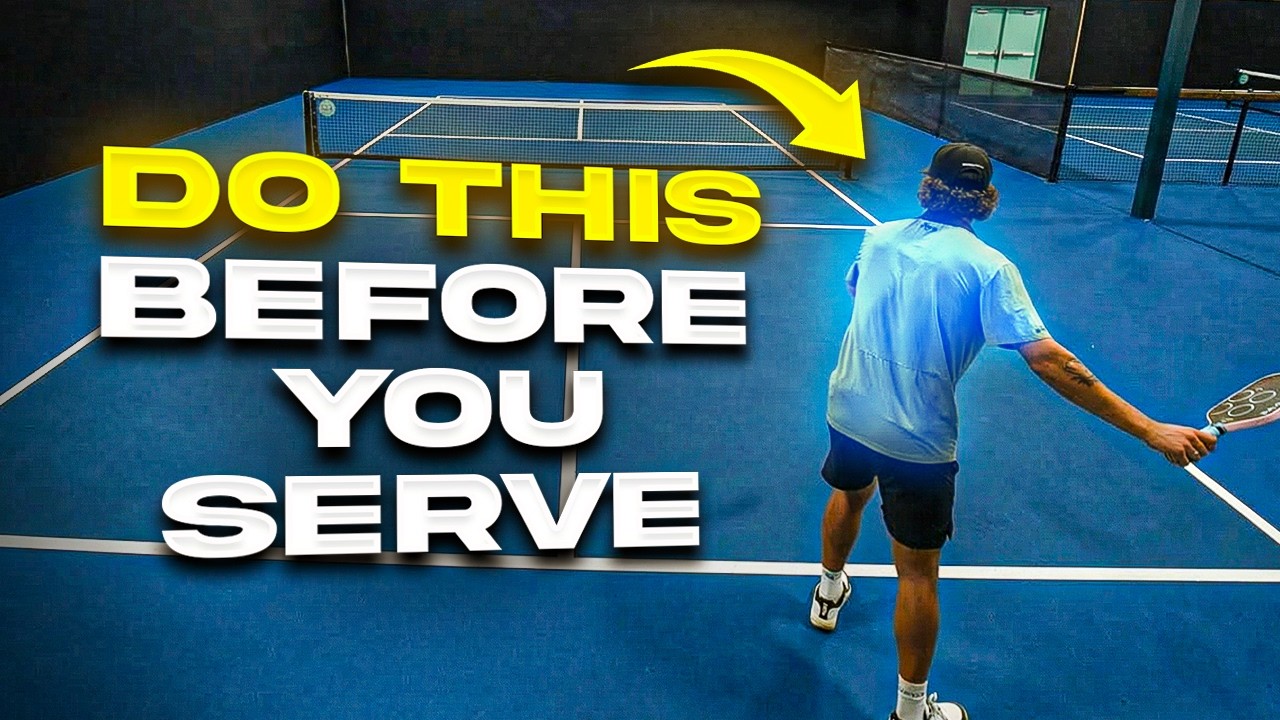
Mistake #2: You're Staying Stationary on Your Serve
The second mistake is staying completely still during your serve. If you're planting your feet and not moving, you're leaving massive amounts of power on the table.
The back hip is where all the power originates, and if you're not using it, you're not using your serve to its full potential.
What you should be doing is exploding through with that back hip when you make contact with the ball. This explosive movement brings you forward onto the court and generates the kind of pace that makes your opponent uncomfortable. The hip drive is everything in a powerful serve.
Think about it this way: when you watch professional tennis players serve, they're not standing still. They're loading up on their back leg and then driving forward with their hips. The same principle applies to pickleball.
Your serve power comes from that hip drive, and if you're staying stationary, you're essentially serving with one hand tied behind your back.
The movement also helps you get into the court faster, which is crucial in pickleball. You want to be aggressive and take the net whenever possible, and a serve that forces you to move forward naturally puts you in a better position for the next shot.
Mistake #3: You're Holding the Ball Way Too Close and Back
The third mistake is one that most players don't even realize they're making. When you hold the ball too close to your body and too far back, you're severely limiting your range of motion. It's like trying to throw a baseball with your arm bent at a 90-degree angle.
When you hold the ball in this position, you have what Tanner calls "T-Rex arms." You can't fully extend, which means you can't generate the kind of velocity that comes from a full, natural arm swing. Instead, you want to let your arm rest naturally at your side and reach out to strike the ball at the optimal spot.
- The optimal striking position is when your arm is extended and you're making contact with the ball in front of your body.
- This gives you maximum leverage and allows you to transfer all your body weight into the shot.
- It's the difference between a weak, defensive serve and an aggressive one that puts your opponent on their heels.
Why This Matters for Your Game
A stronger serve power changes the entire dynamic of pickleball. When your opponents know you can hit a hard serve, they have to be ready for it. They can't relax on the baseline. They have to stay alert and prepared to handle pace, which puts them in a reactive position rather than a proactive one.
This is especially important in competitive pickleball, where every advantage matters. A serve that's just a few miles per hour faster can be the difference between winning and losing a match. It's not about hitting an unreturnable serve every time; it's about having the option to be aggressive when you need to be.
Heads up: hundreds of thousands of pickleballers read our free newsletter. Subscribe here for cutting edge strategy, insider news, pro analysis, the latest product innovations and more.
Frequently Asked Questions
What's the most common serve mistake in pickleball?
The most common mistake is keeping your shoulders facing the net instead of perpendicular to your target. This forces you to swing across your body and limits your power generation to just your arm. Proper shoulder alignment is the foundation of a powerful serve.
How do I know if I'm using my hips correctly on my serve?
If you're using your hips correctly, you should feel yourself moving forward into the court after you make contact with the ball. Your back hip should drive forward explosively, bringing your body weight into the shot. If you're staying stationary, you're not using your hips effectively.
Can I generate serve power without moving my feet?
No. The hip drive is essential for generating real serve power in pickleball. If you're staying completely still, you're limiting yourself to arm and wrist power, which isn't enough to create an aggressive serve. Movement is a key component of a powerful serve.
Where should I strike the ball on my serve?
You should strike the ball in front of your body with your arm fully extended. This gives you maximum leverage and allows you to transfer your body weight into the shot. Holding the ball too close or too far back limits your range of motion and reduces your power.
How long does it take to fix these serve mistakes?
Most players see improvement within a few practice sessions once they understand what they're doing wrong. The key is to practice these adjustments consistently until they become muscle memory. It's not a complicated fix; it just requires awareness and repetition.

Love Pickleball? Join 100k+ readers for free weekly tips, news & gear deals.
Subscribe to The DinkGet 15% off pickleball gear at Midwest Racquet Sports