The 3 Core Pickleball Skills Top Players Can Do in Their Sleep
Forget fancy shots. The best pickleball skill to develop is knowing when not to attack. Master these three core pickleball skills and watch your game transform faster than you thought possible.
Forget everything you think you know about getting better at pickleball. The real pickleball skill that separates competitive players from the rest isn't some flashy ATP-style winner or a trick shot you saw on Instagram. It's something far more fundamental, and honestly, it's what most players get wrong from day one.
According to Your Pickleball Guideman, a coaching channel focused on practical skill development, the problem isn't effort. Most players practice constantly.
The problem is focus. When you're trying to learn a dozen different shots at once, your brain gets crowded, your confidence tanks, and your game plateaus. But when you master a few core ideas that show up in every single rally, everything else starts to click into place.
Here are the three pickleball skills that will transform your game faster than you'd expect.
Love pickleball? Then you'll love our free newsletter. We send the latest news, tips, and highlights for free each week.
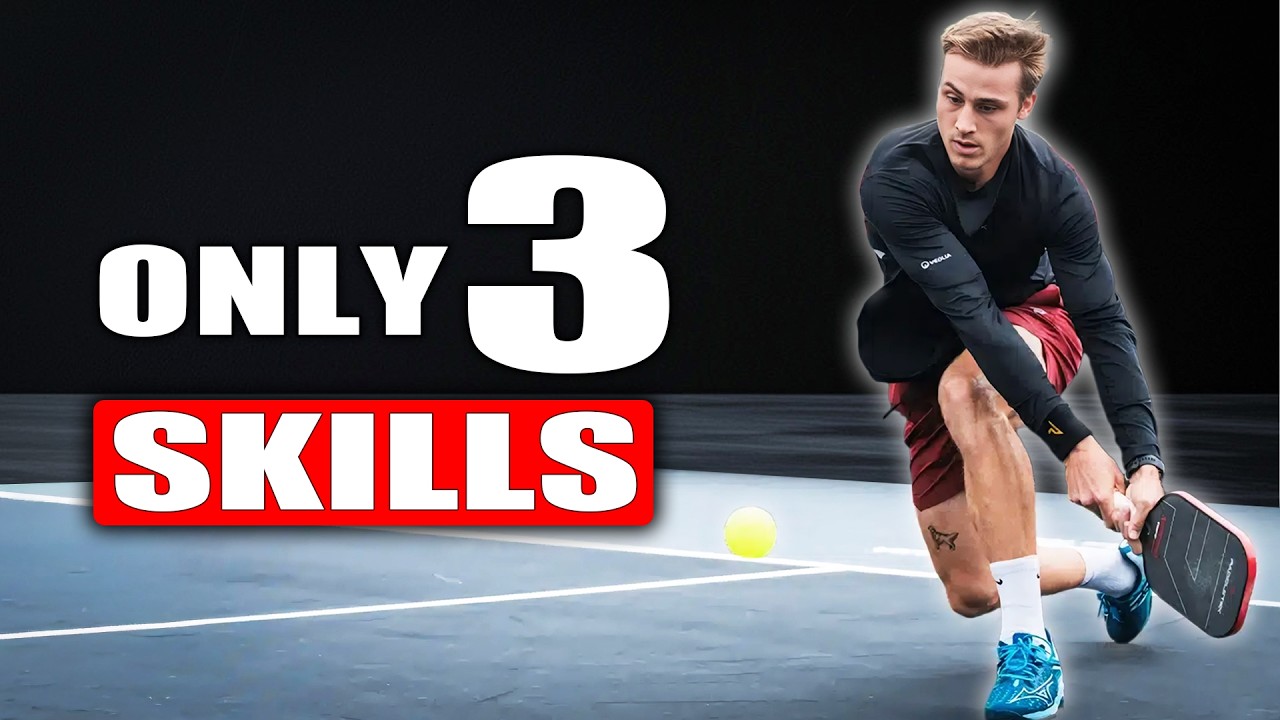
Skill #1: Stop Attacking From Disadvantage
Here's the thing that separates players who improve from those who plateau: knowing when not to attack is actually a pickleball skill in itself.
Most players lose points not because their attack was poorly executed, but because the attack should never have been attempted in the first place.
- You're stretched out.
- You're off balance.
- Your feet aren't set.
And yet, panic kicks in, and you try to do something heroic. You speed up the ball from a terrible contact point. You lean and reach for a winner. And the point ends for the wrong reason.
The mental shift here is critical. When you're in a disadvantaged position, your job isn't to win the rally right then and there. Your job is to neutralize the rally and work your way back into a better position.
What does that look like in practice?
- Sometimes it's a controlled drive that keeps your opponent from attacking too aggressively on the next ball.
- Sometimes it's a reset that lands softly in the kitchen so you can move forward and get balanced again.
- Sometimes it's even a high defensive ball that gives you time to recover and reorganize your court position.
The exact shot varies, but the goal stays the same: you're not trying to be brilliant from a bad position. You're trying to get yourself out of trouble.
This is one of those ideas that sounds simple but changes everything once it clicks. Players who master this pickleball skill stop donating points to themselves. They stop making unforced errors from positions where they had no business attacking in the first place.
Skill #2: Know Your Safe Zones
When pressure hits, your brain gets crowded. Should you go middle or crosscourt? Push it wide or drop it short? Drive it hard or reset it soft?
That mental overload leads to hesitation, and hesitation leads to mistakes.
One of the smartest things you can do is decide in advance where your safest targets are in common situations. This pickleball skill removes the guesswork when the game speeds up.
For example, when you're under pressure and trying to work your way forward, one of the safest general targets is often the backhand side. Most players are simply less dangerous there, especially when the ball forces them to hit while moving or from an uncomfortable contact point.
Instead of feeling like you have to invent the perfect shot in the moment, you simplify the decision: if you're under pressure, look for the backhand.
But there's another layer to this pickleball skill that separates smarter players from reactive ones. Don't just think about court space. Think about body positions.
There are certain contact points where players can really unload on the ball, and there are other contact points that feel awkward and weak.
- If the ball is out where the arm can extend naturally, that's usually a strong hitting zone.
- But if you jam someone toward their body or force them to contact the ball in a spot that limits their swing, you've made the game much harder for them.
Make your opponent hit from awkward positions, not powerful ones. That's the essence of this pickleball skill. Maybe that means targeting the backhand hip. Maybe it means a body ball that jams the contact point.
The details vary, but the principle is simple: you're not just trying to hit open court. You're trying to send the ball to places where your opponent can't attack comfortably.
 The Dink Media Team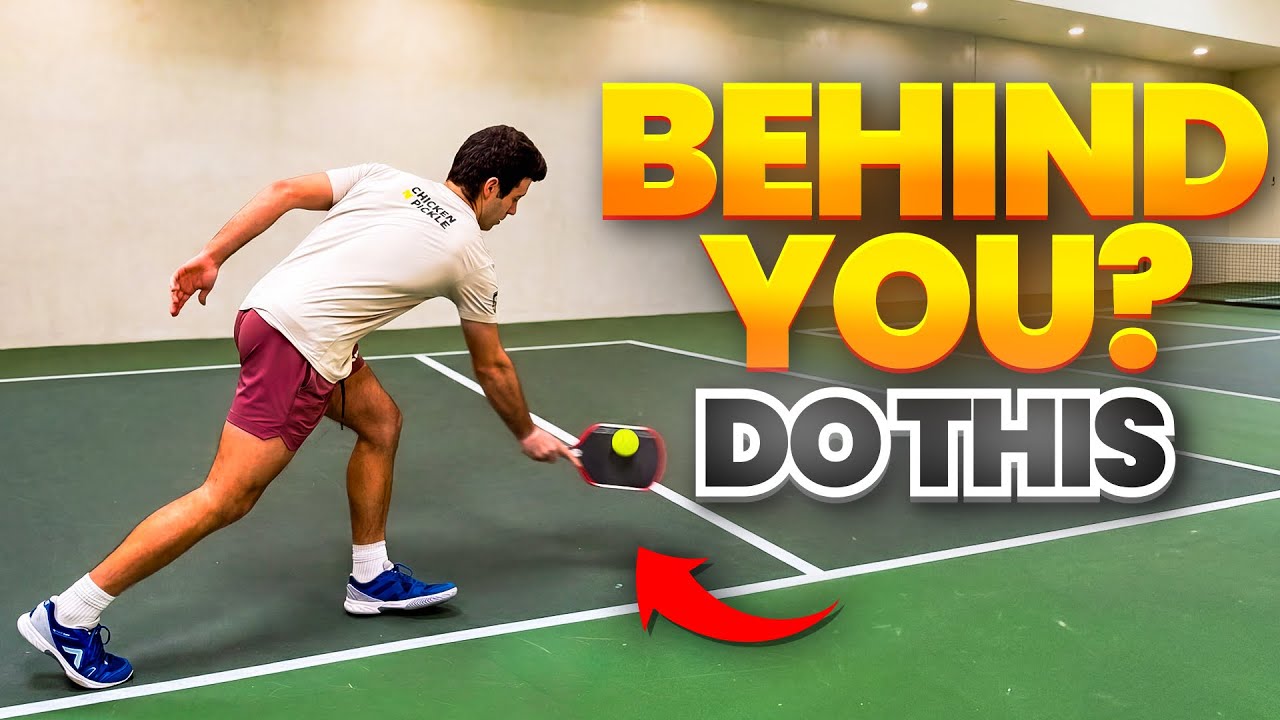
Skill #3: Feel, Fix, Forward
This third pickleball skill is more mental than physical, but it might be the one that changes your results the fastest.
The framework is simple: feel, fix, forward. Here's how it works.
Feel
When you miss a shot, it's normal to feel frustrated. That doesn't mean something's wrong with you. It means you care. But what hurts players is when they either pretend they're not frustrated or they stay stuck in that frustration all the way into the next point.
You only have a few seconds between rallies. If you spend all of them replaying the miss in your head, the next point starts before your brain has even reset.
So the first step is to let yourself feel it for a second. Not for ten seconds, not for the next three rallies, but for a brief moment. Acknowledge it. Yes, that was annoying. Yes, you wish you made that shot. Fine. Let that emotion be there for a moment instead of trying to bury it. Unacknowledged frustration has a way of leaking into the next point anyway.
 The Dink Media Team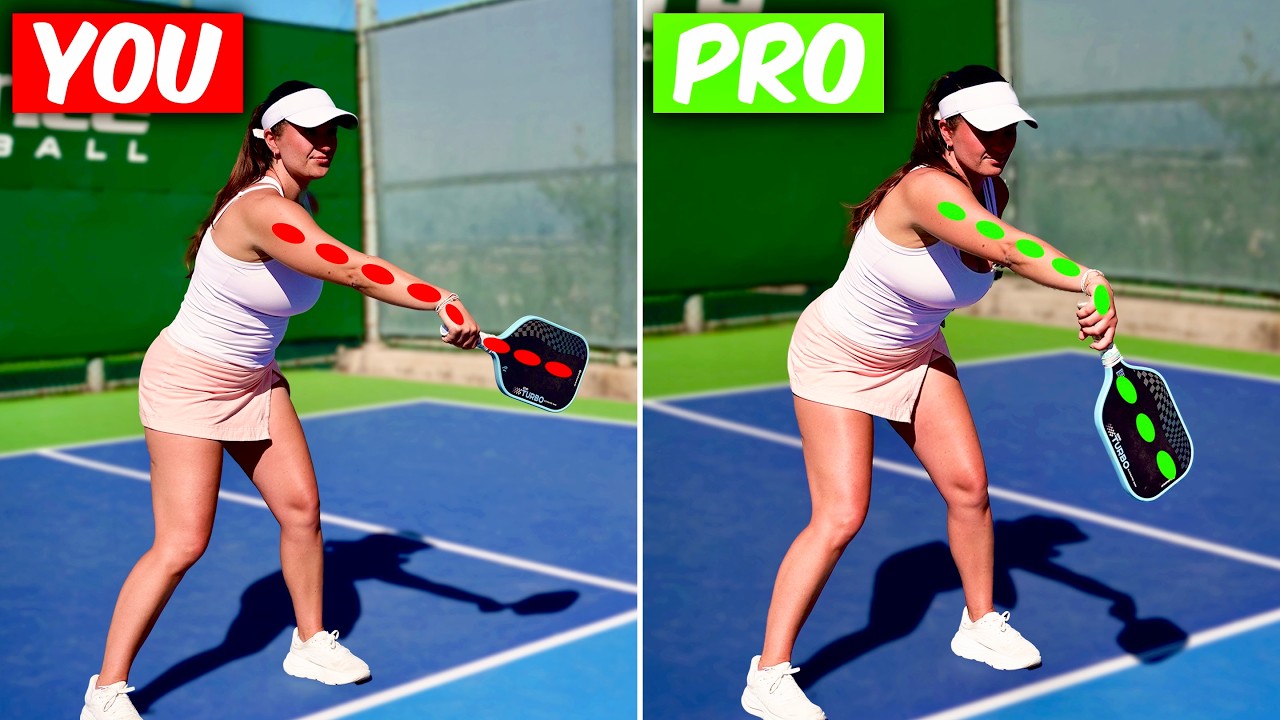
Fix
This is where you ask yourself a much better question than most players ask. Instead of asking "Why did I miss that?" ask "Did I like my decision?"
That question is powerful because you're probably not going to rebuild your mechanics in six seconds, but you can absolutely adjust your decision-making.
- Maybe the miss happened because you went for too much from a bad position.
- Maybe the speed-up was the wrong choice.
- Maybe you attacked from below net height when you should have reset.
If the decision was bad, great. Now you know what to change. If the decision was good and the execution just missed, that's also useful information. It means you may need to trust the choice and just make a better swing next time.
Heads up: hundreds of thousands of pickleballers read our free newsletter. Subscribe here for cutting edge strategy, insider news, pro analysis, the latest product innovations and more.
Forward
Once you've felt the emotion and checked the decision, you have to move on. Lift your eyes up, take a breath, get ready for the next rally. The point is over. Hanging on to it doesn't help you.
The best competitors aren't the ones who never get annoyed. They're the ones who recover quickly enough to think clearly again. This pickleball skill separates players who let one bad point spiral into three bad points from those who compartmentalize and stay sharp.
 The Dink Media Team
Why These Three Skills Matter More Than You Think
You might be wondering why these three pickleball skills matter more than learning a new shot or perfecting your serve. The answer is simple: they're the foundation everything else is built on.
When you stop attacking from disadvantage, you stop losing points you shouldn't lose. When you know your safe zones , you make better decisions under pressure. When you master feel, fix, forward, you recover mentally faster and stay competitive throughout a match.
None of these ideas are flashy. None of them will look cool on a highlight reel. But that's exactly why they work. They clean up the messiest parts of your game. They help you stop donating points to yourself. They make you more stable, more intentional, and harder to beat.
Real progress in pickleball usually doesn't happen by learning everything at once. It happens by mastering a few pickleball skills that keep showing up every single game.
Frequently Asked Questions
What's the difference between a neutral rally and a disadvantaged position?
A neutral rally is when everybody is balanced, in decent position, and nobody has created a clear edge yet. A disadvantaged position is when you're stretched out, off balance, pushed off the line, or dealing with a ball near your feet. Recognizing the difference is crucial because it determines whether you should attack or neutralize.
How do I know which safe zone to target?
Start by identifying your opponent's weaker side (usually the backhand for most players) and their uncomfortable contact points. Practice targeting these zones in low-pressure situations first, then rely on them when the game speeds up and you need to make quick decisions.
Can I use the feel, fix, forward method during a match?
Absolutely. You only have a few seconds between points, so the process needs to be quick. Feel the frustration for a moment, ask yourself if your decision was sound, and then move on. The faster you can cycle through this, the better you'll perform on the next rally.
Is it really necessary to master these skills before learning advanced shots?
Yes. These three pickleball skills form the foundation of consistent play. Once you've mastered them, advanced shots become much more effective because you're making better decisions about when and where to use them.
How long does it take to develop these pickleball skills?
It depends on your current level and practice frequency, but most players see noticeable improvement within 2 to 4 weeks of focused practice on these fundamentals. The key is consistency and intentional practice rather than just hitting balls.
Love Pickleball? Join 100k+ readers for free weekly tips, news & gear deals.
Subscribe to The DinkGet 15% off pickleball gear at Midwest Racquet Sports